Maths · Preschool–Kindergarten
Free number flashcards
Ten number flashcards for preschool and kindergarten, one for each number from 1 to 10. Each card shows the number word, hands holding up that many fingers, and the numeral in large purple print.
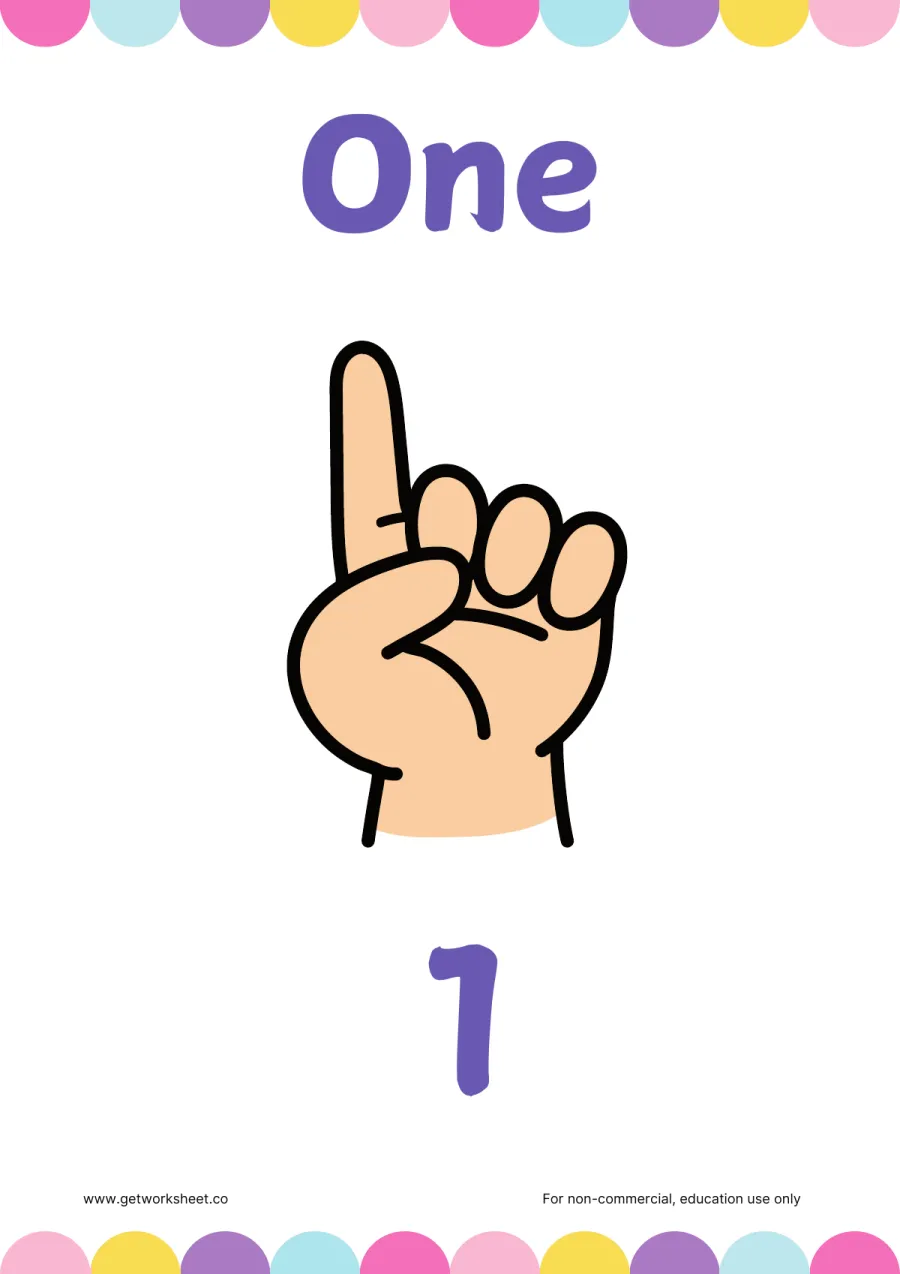
Number 1 flashcard: One with 1 finger held up
Flashcard showing the word One, a hand picture holding up one finger on one hand, and the numeral 1 in large purple print.
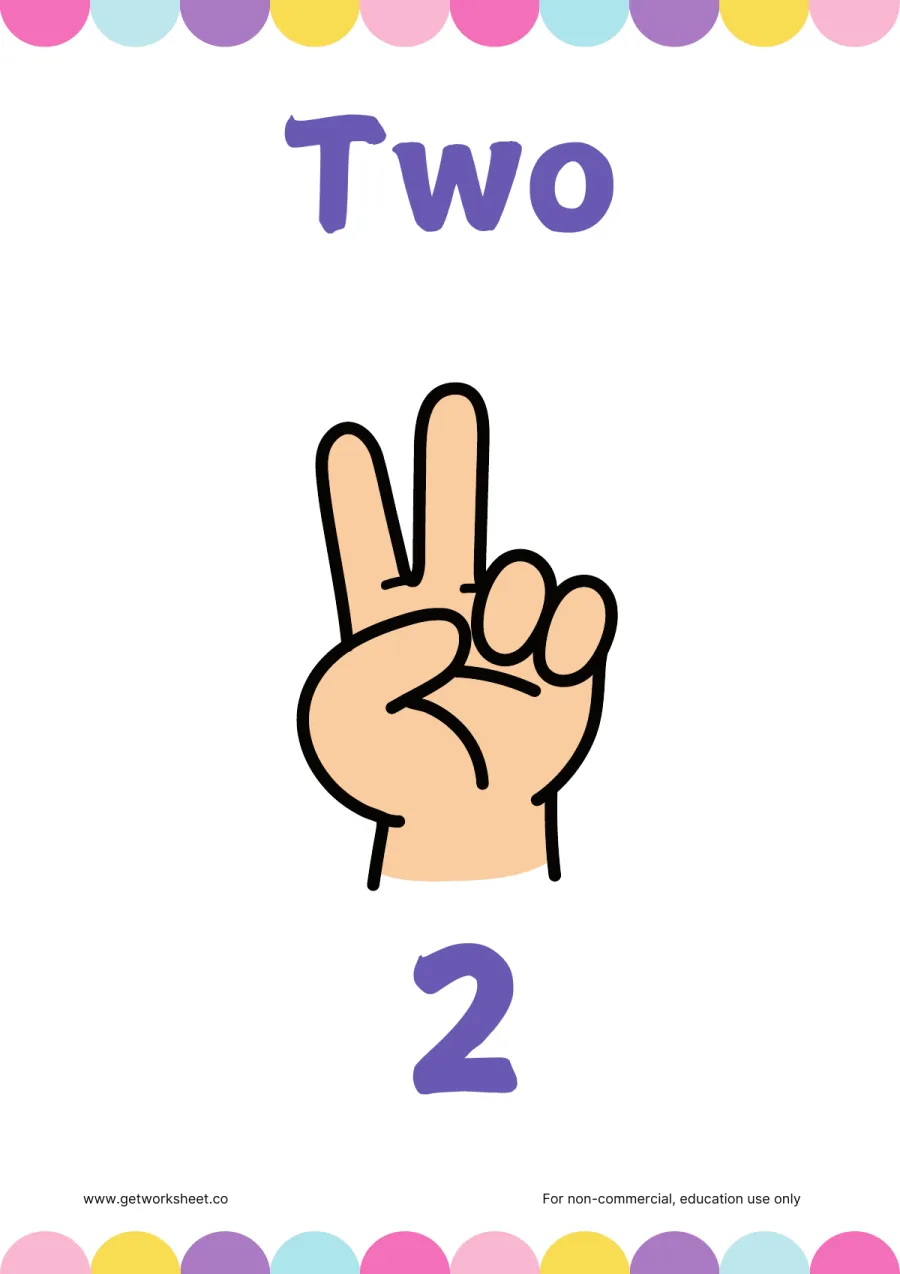
Number 2 flashcard: Two with 2 fingers held up
Flashcard showing the word Two, a hand picture holding up two fingers on one hand, and the numeral 2 in large purple print.
Whole set
All 10 in one PDF
- Every sheet on this page, one file
- No ads, no countdowns, print as often as you like
- Instant download, ad-free, no account needed
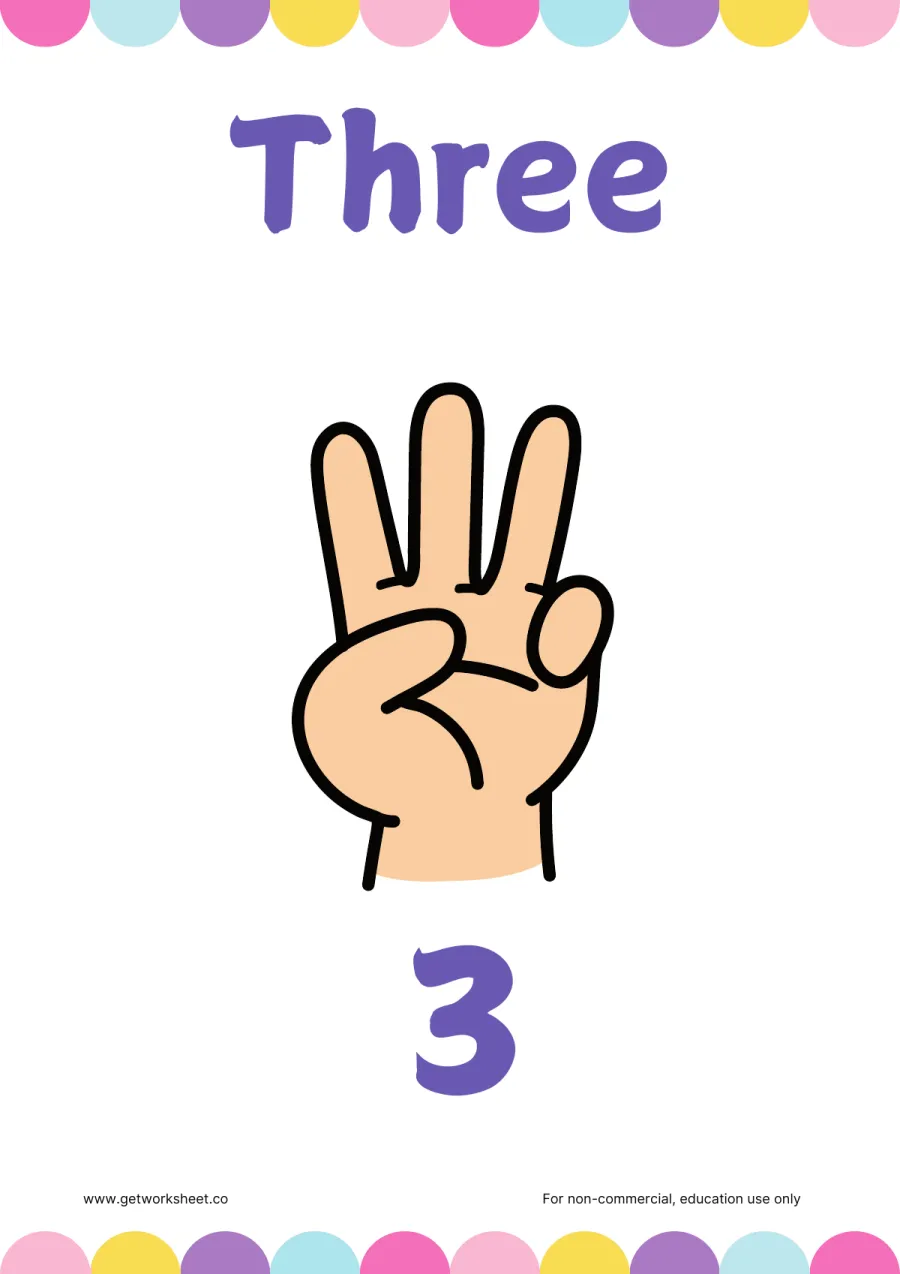
Number 3 flashcard: Three with 3 fingers held up
Flashcard showing the word Three, a hand picture holding up three fingers on one hand, and the numeral 3 in large purple print.
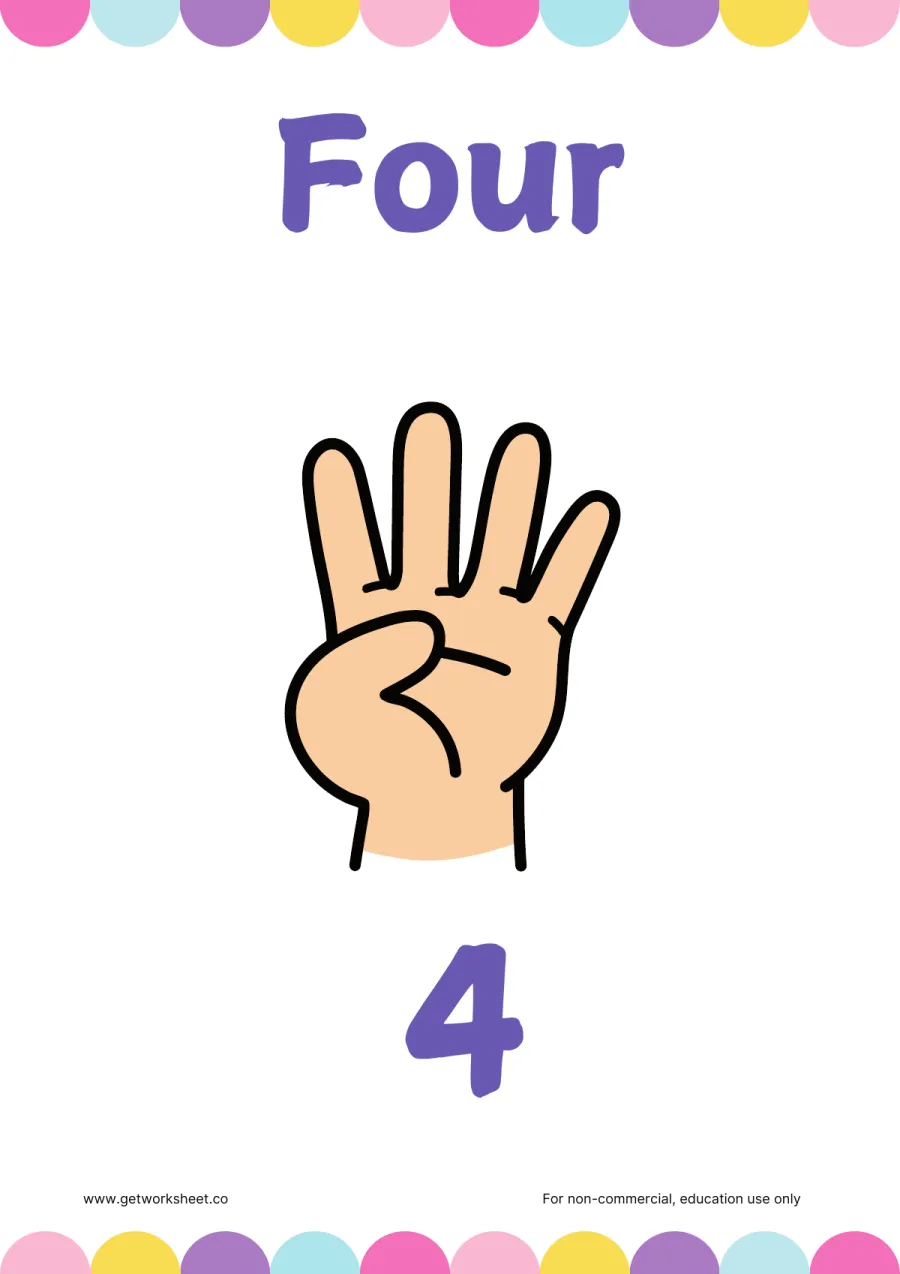
Number 4 flashcard: Four with 4 fingers held up
Flashcard showing the word Four, a hand picture holding up four fingers on one hand, and the numeral 4 in large purple print.
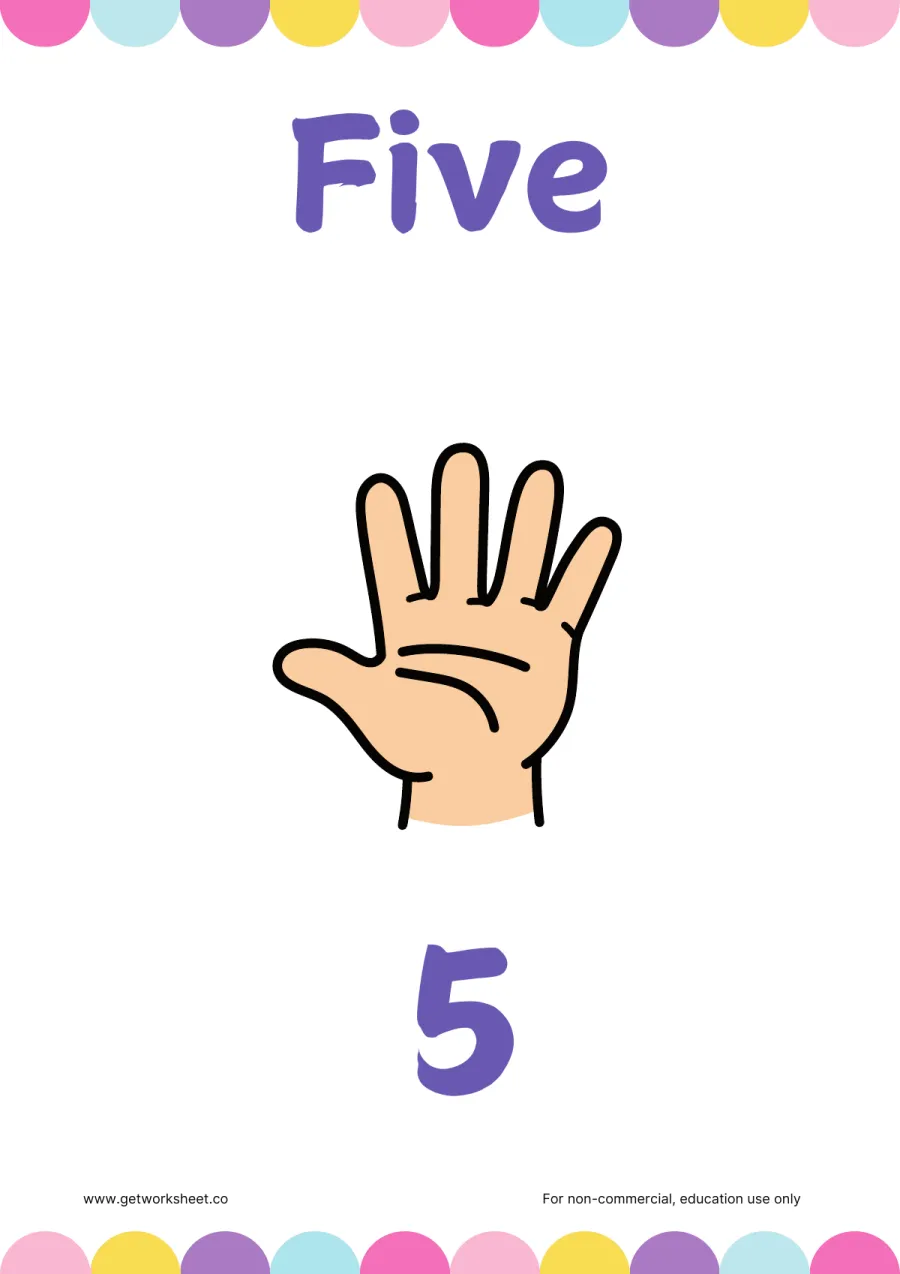
Number 5 flashcard: Five with 5 fingers held up
Flashcard showing the word Five, a hand picture holding up five fingers on one hand, and the numeral 5 in large purple print.
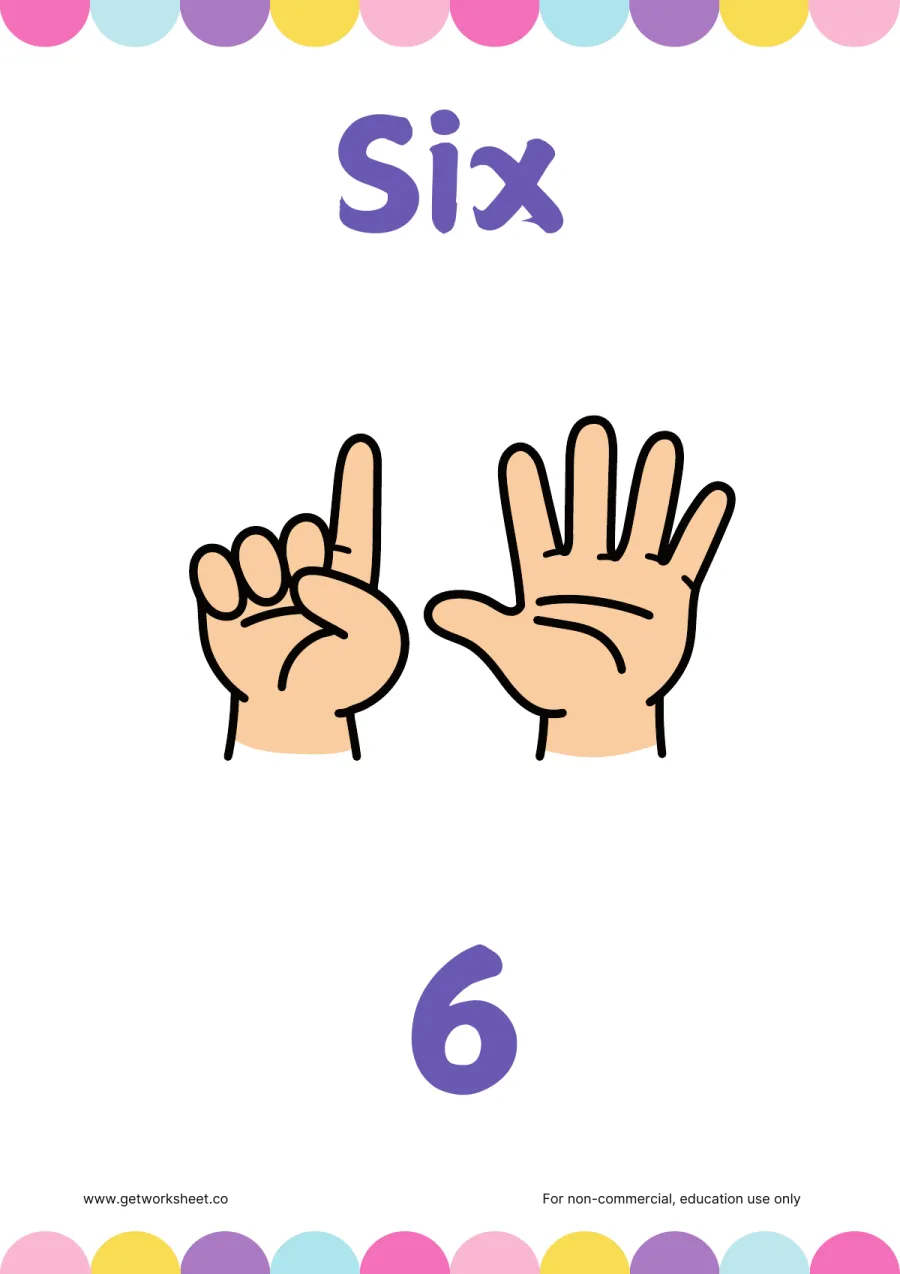
Number 6 flashcard: Six with 6 fingers held up
Flashcard showing the word Six, a hand picture holding up five fingers and one finger on two hands, and the numeral 6 in large purple print.
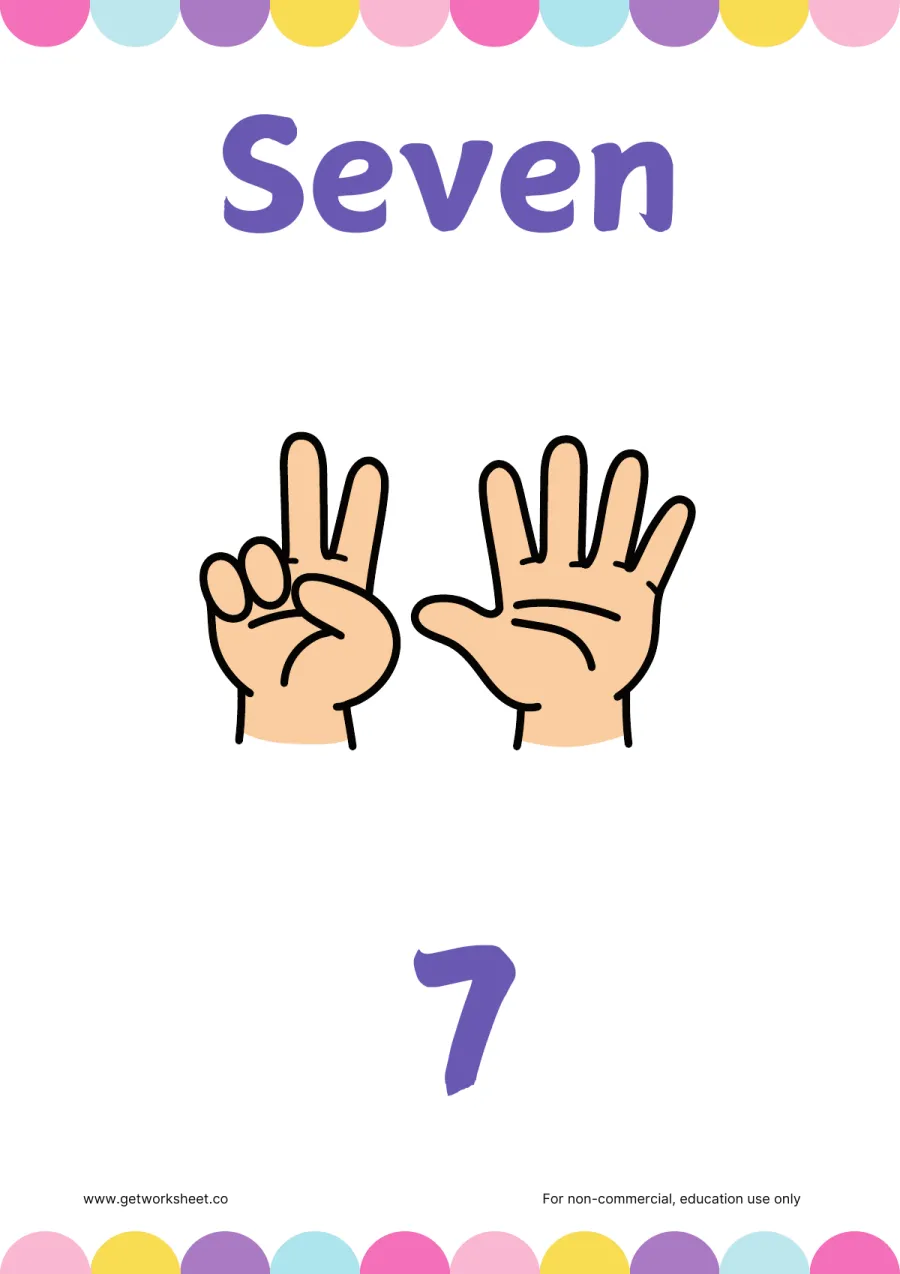
Number 7 flashcard: Seven with 7 fingers held up
Flashcard showing the word Seven, a hand picture holding up five and two fingers on two hands, and the numeral 7 in large purple print.
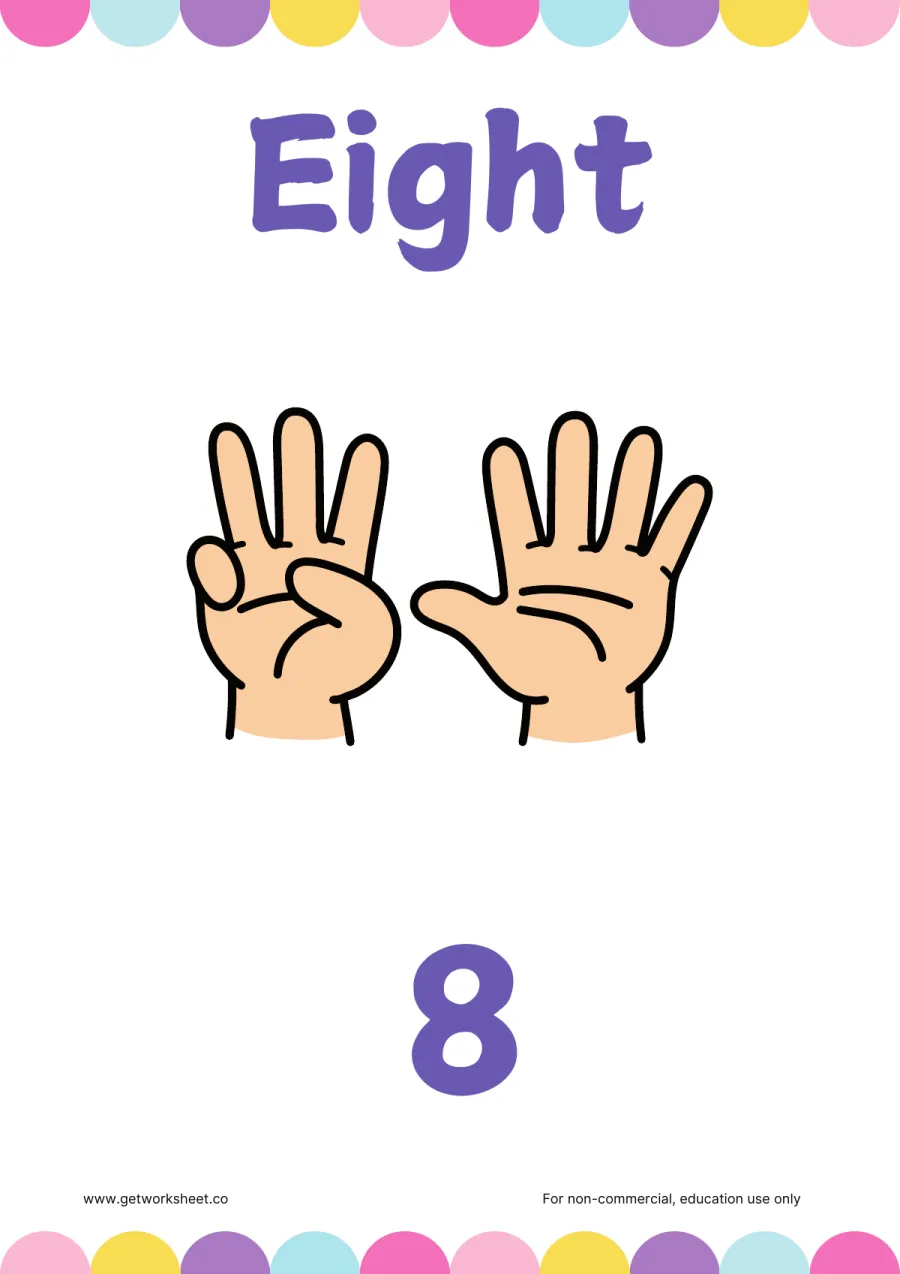
Number 8 flashcard: Eight with 8 fingers held up
Flashcard showing the word Eight, a hand picture holding up five and three fingers on two hands, and the numeral 8 in large purple print.
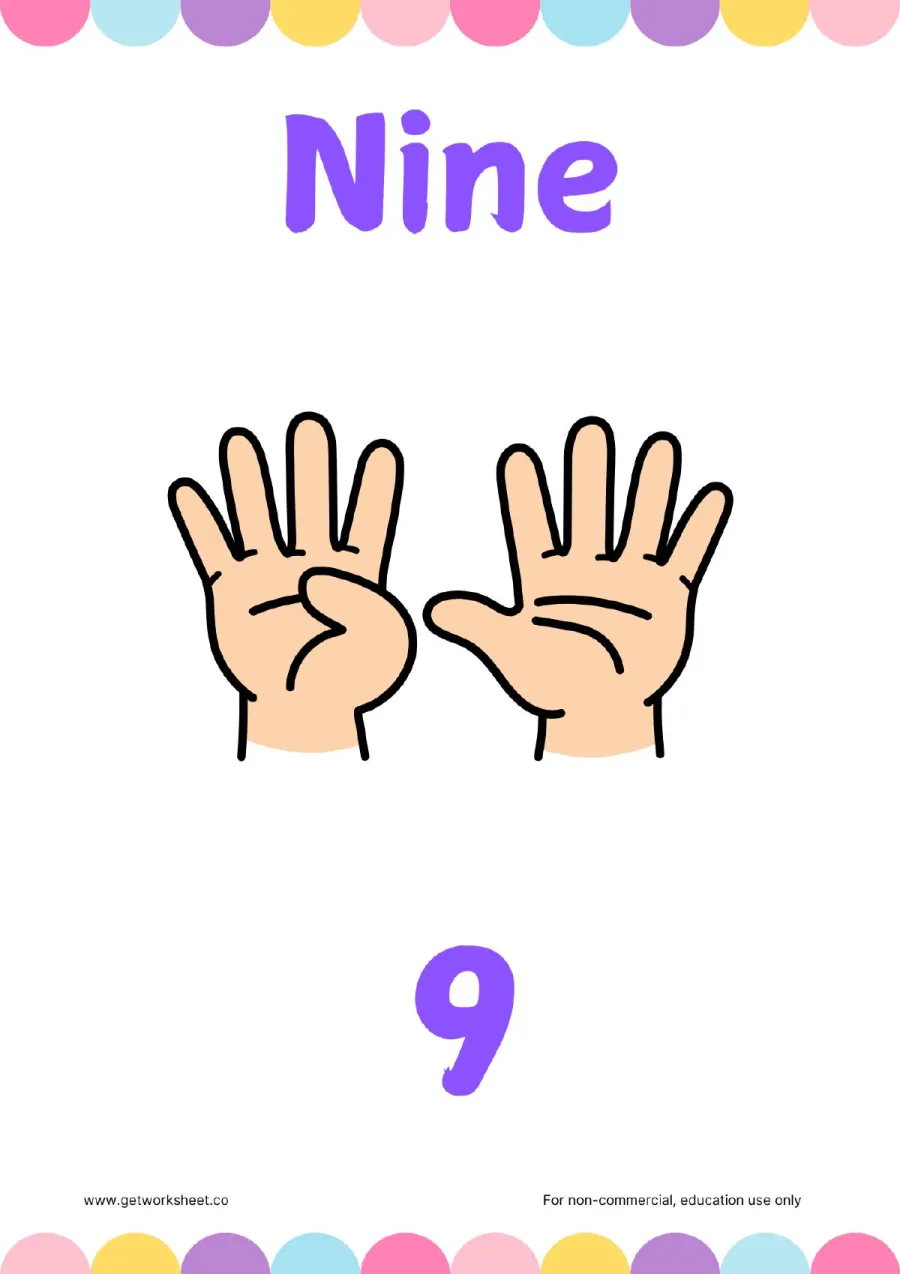
Number 9 flashcard: Nine with 9 fingers held up
Flashcard showing the word Nine, a hand picture holding up five and four fingers on two hands, and the numeral 9 in large purple print.
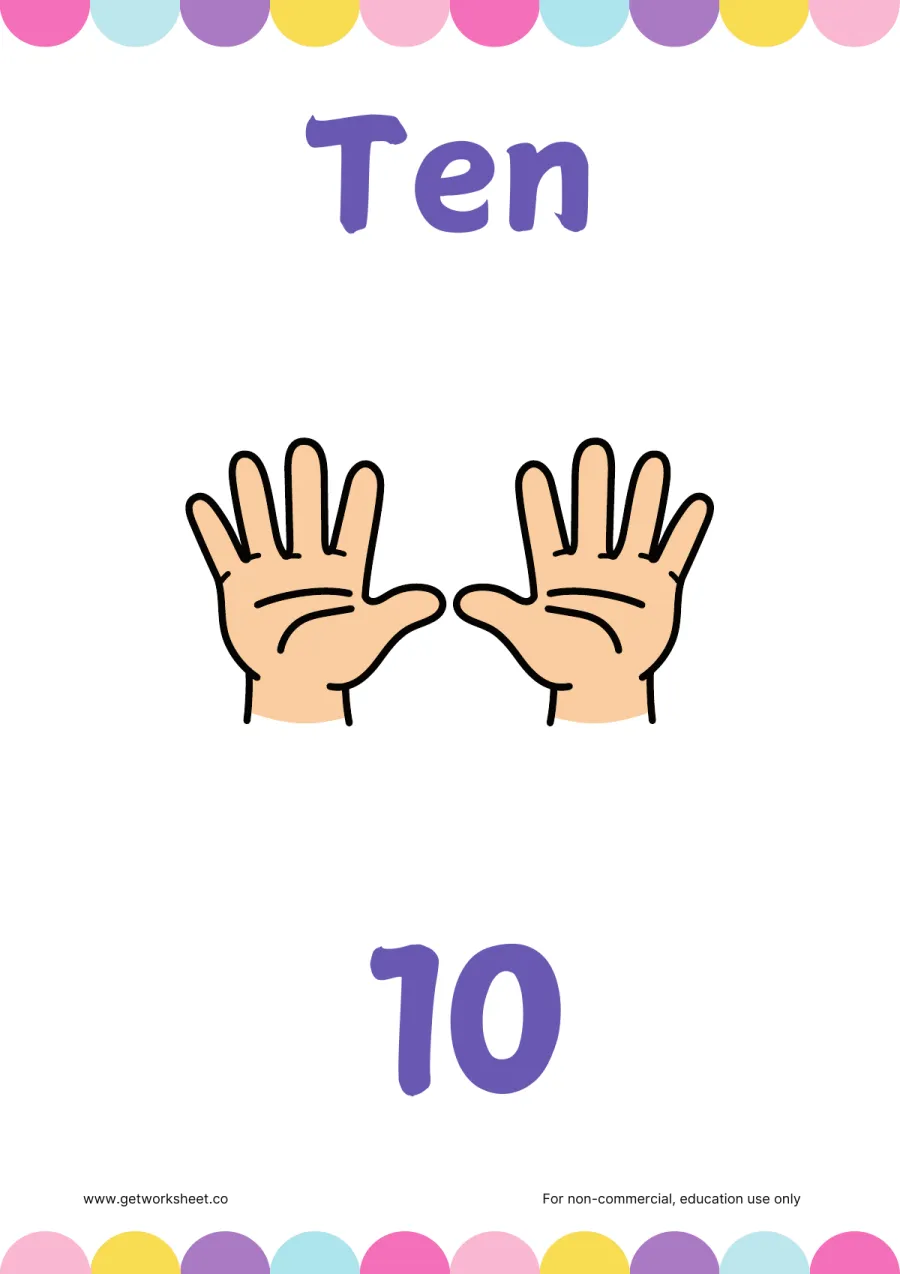
Number 10 flashcard: Ten with 10 fingers held up
Flashcard showing the word Ten, a hand picture holding up all ten fingers on two hands, and the numeral 10 in large purple print.
AI worksheet generator
Make a worksheet like this for your class
The 10 sheets above are fixed. The generator writes a new number flashcards worksheet for your grade, with the question types and count you choose, in about 20 seconds. Pick a grade to start:
What you get
- A fresh set of questions on number flashcards, not a copy of the sheets above
- Multiple choice, fill in the blanks, true or false, open ended
- Answer key and print-ready PDF with Pro
Free account, 1 worksheets a week. No card.
This set has ten number flashcards, one for each number from 1 to 10. Every card has the same three parts: the number word (One, Two, Three and so on), a picture of hands holding up that many fingers, and the numeral in large purple print. Cards 1 to 5 show fingers on one hand. Cards 6 to 9 show a full hand of five plus one, two, three or four fingers on the second hand, and the 10 card shows all ten fingers.
Fingers are the counting tool every child already carries, so linking each numeral to a hand picture helps the child see quantity, not just a shape. The five-and-some layout on cards 6 to 10 also plants the idea that 7 is 5 and 2, which is the first step toward number bonds. Print the set, cut the cards apart, and use them for recognition, ordering and quick games.
What Students Will Practice
- Recognizing the numerals 1 to 10 on sight, in and out of order
- Matching each numeral to a quantity by copying the fingers shown on the card
- Seeing 6, 7, 8 and 9 as five fingers plus some more
- Reading the number words One to Ten alongside the numerals
- Putting the ten cards in order and saying which comes before and after
Free printable makers
Make your own number flashcards sheets
Type your own words or numbers and print in about 30 seconds. No account, no AI, answer key where it applies.
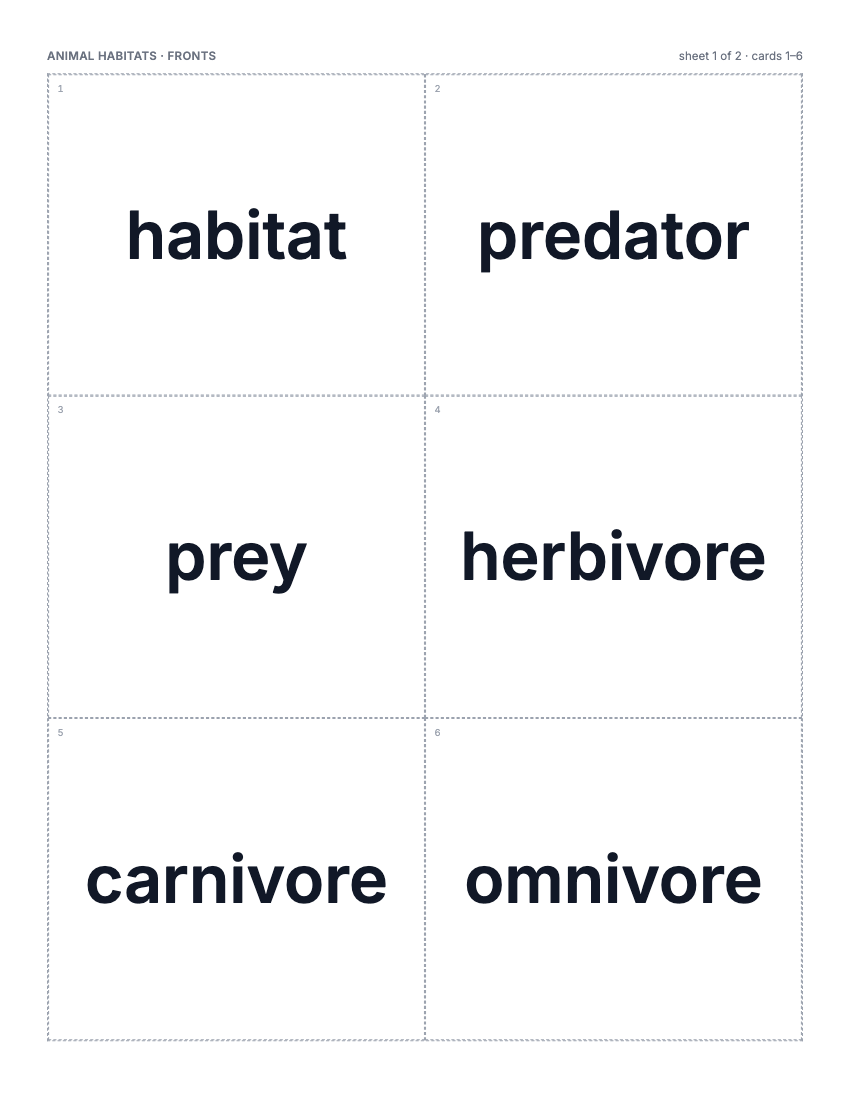 Flashcard makerVocabulary, math fact or sight word cards, 2-8 a page, two-sided or fold-over. Free to print.
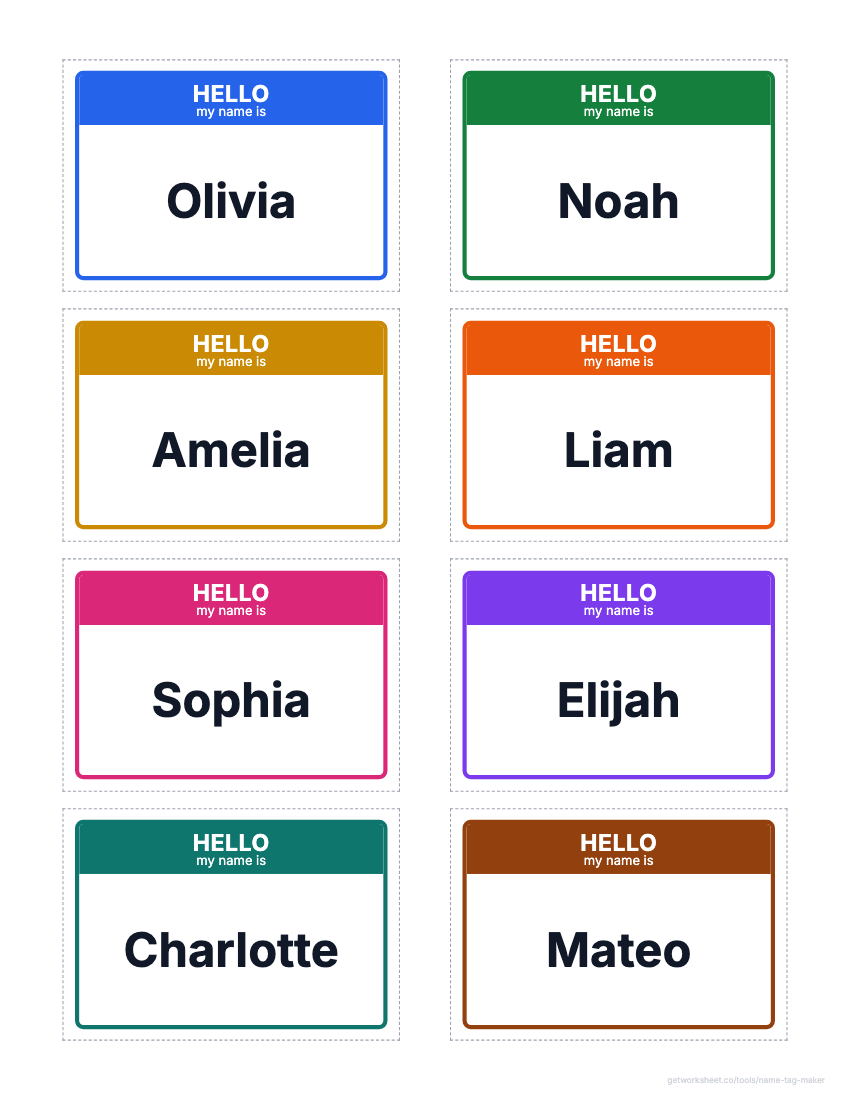 Name tag and label makerDesk name plates, name tags, labels and locker tags from a class list, on Avery grids. Free to print.
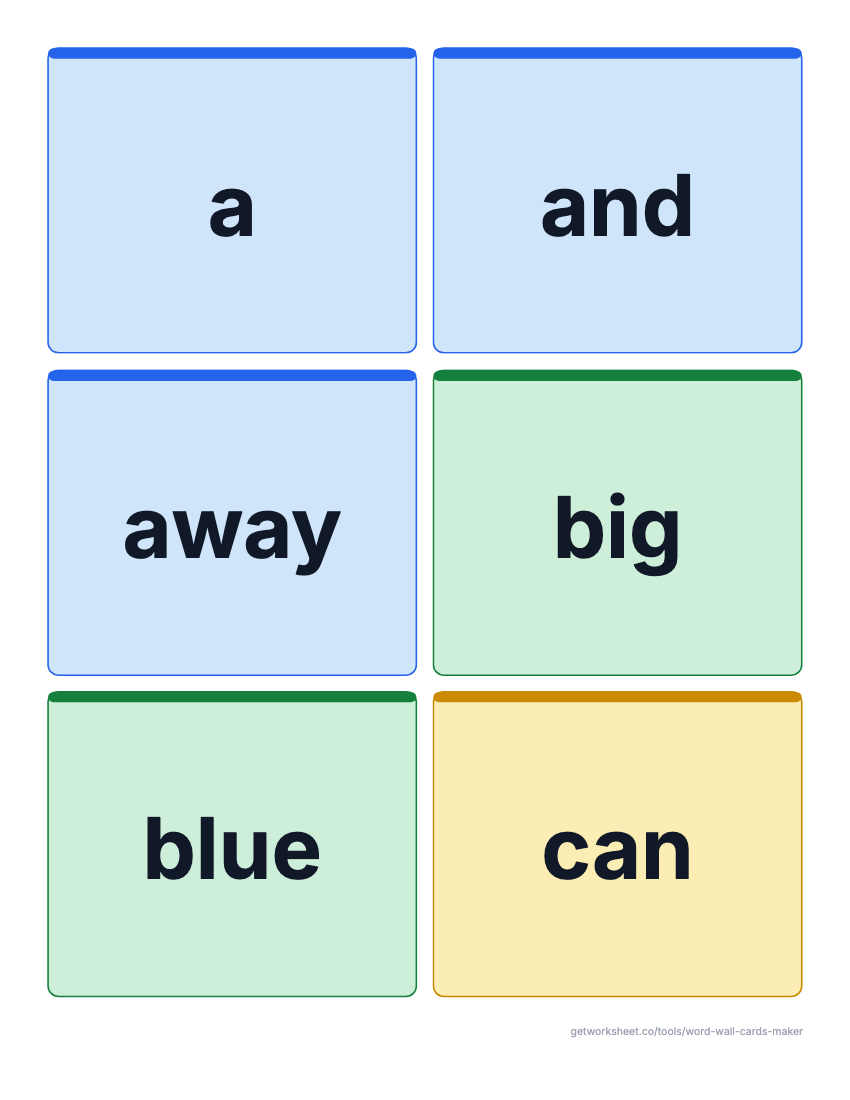 Word wall cards makerDolch, Fry or your own words as big-print cards, colour-coded, with A-Z headers. Free to print.
AI worksheet generator
Need a different number flashcards worksheet?
Generate a custom number flashcards worksheet: pick the grade, question types and count, and print it in about 20 seconds. Free accounts get 1 generation a week.
Teaching tips and common mistakes
How to use these flashcards
Print at 100% on A4 or US Letter, ideally on cardstock so the cards survive handling, then cut them apart along the card edges. Laminating or slipping each card into a photo sleeve helps if a toddler will hold them. There is no answer key: the numeral, the word and the fingers all appear on the same side of the card.
- Cards 1 to 5. These show fingers on one hand, so ask your child to copy the picture with their own hand before saying the number. Matching the hand shape first makes the numeral mean an amount rather than a squiggle.
- Cards 6 to 9. Each of these shows a full hand of five plus one, two, three or four on the second hand. Cover the second hand with your thumb and ask "five and how many more?" so the child reads 8 as five and three.
- The 10 card. Use it as the end point of the line. Lay out all ten cards, then count on from any card to 10 so your child hears how close each number is to ten.
- The number words. The words One to Ten sit on every card, so the set doubles as early sight word practice. Cover the numeral with a finger and ask your child to read the word instead.
- The purple numerals. Once recognition is solid, flash the card and ask for the number in under two seconds. Deal the cards face down and race to order them 1 to 10, or hide one card and ask which number is missing.
Common mistakes to watch for
- Counting the printed fingers every time. Recounting the picture is fine at first, but the goal is to see the numeral and know it. Flash the card for a second so there is no time to count.
- Always practicing in order. A child who chants one to ten may still not recognize 7 on its own. Shuffle the cards before every session.
- Mixing up 6 and 9. The two numerals are mirror images. Put the cards next to each other and count the fingers on each so the quantity settles the question.
- Long sessions. Three minutes with ten cards beats twenty minutes once a week. Stop while your child still wants another turn.
Frequently asked questions
What age are these number flashcards for?
Ages 3 to 6, so preschool and kindergarten. Younger toddlers can use cards 1 to 5 on their own, and the finger pictures on 6 to 10 suit children who are ready to count past five.
What is on each card?
Three things: the number word, hands holding up that many fingers, and the numeral in large purple print. Cards 1 to 5 use one hand and cards 6 to 10 use two.
Do the cards print in black and white?
Yes. The numerals print gray instead of purple, and everything stays readable. If you want the purple, print in color on cardstock and keep one set for the classroom.
Do I need to cut them out?
Yes, the cards print several to a page and you cut along the edges. If you would rather not cut, keep the sheet whole and point to one card at a time.
Can I use these in a classroom?
Yes, they are free to print and use with a class, a center or a small group, and you can print as many sets as you need.
More practice
After recognition comes writing, so move on to number tracing worksheets for 1 to 20. To show the same quantities in a different layout, use ten frame worksheets, and for order and sequence try missing number worksheets. The matching shapes flashcards work the same way for circles, squares and triangles.
Free library
Related collections
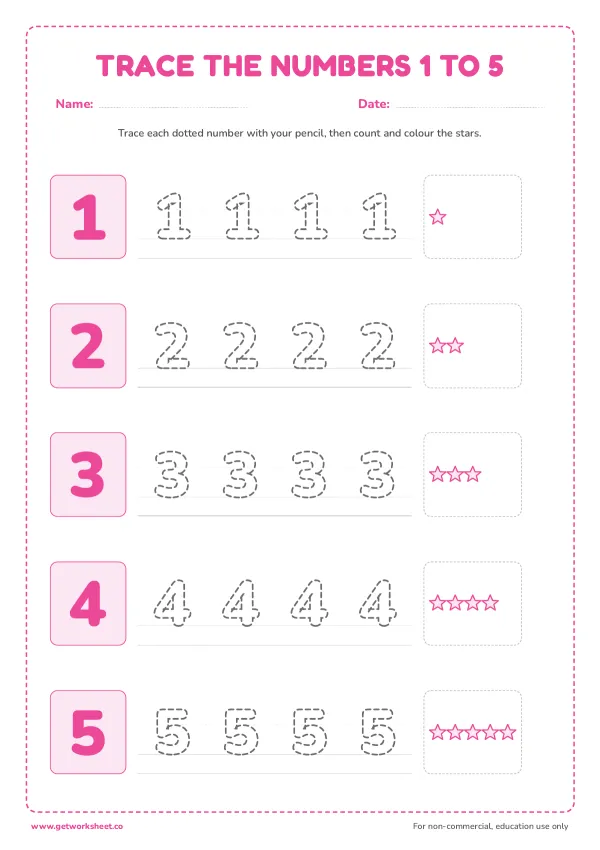
Free number tracing worksheets (1-20)
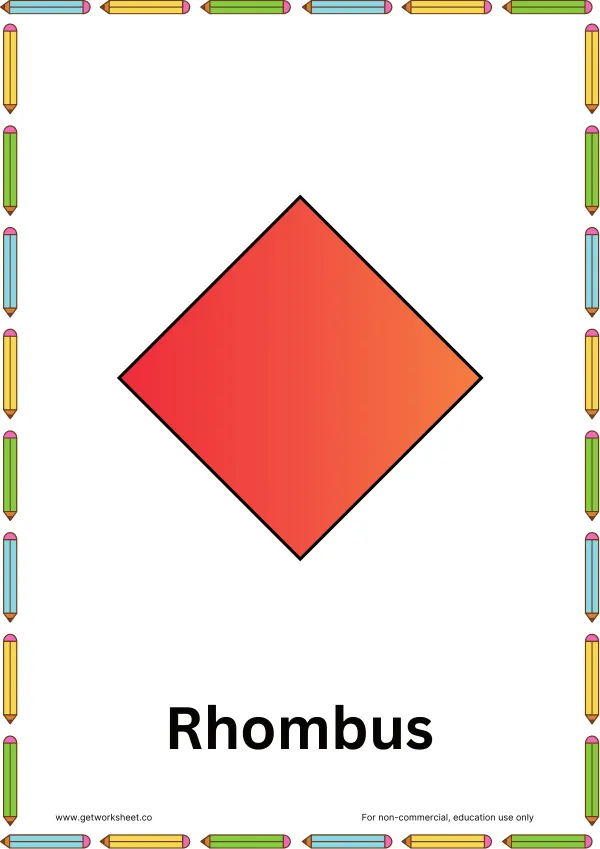
Free shapes flashcards
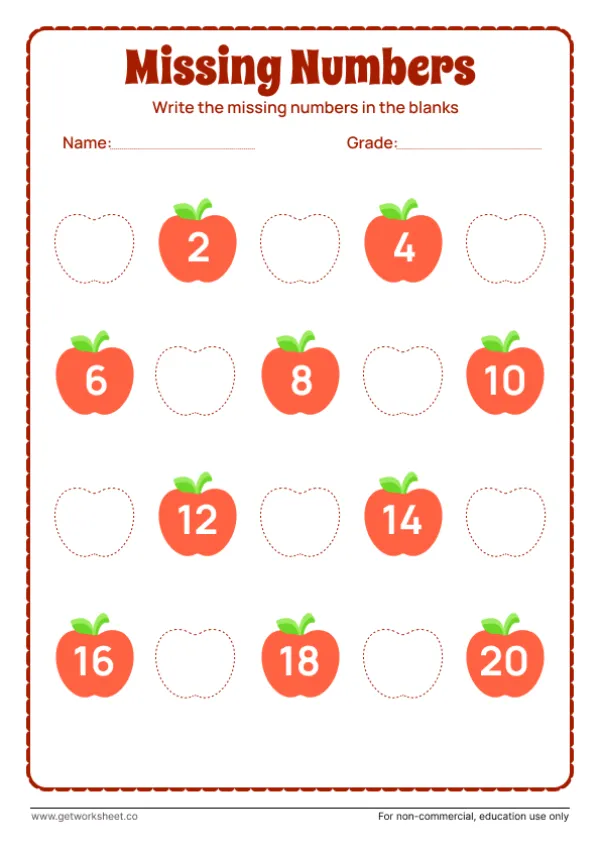
Free missing number worksheets
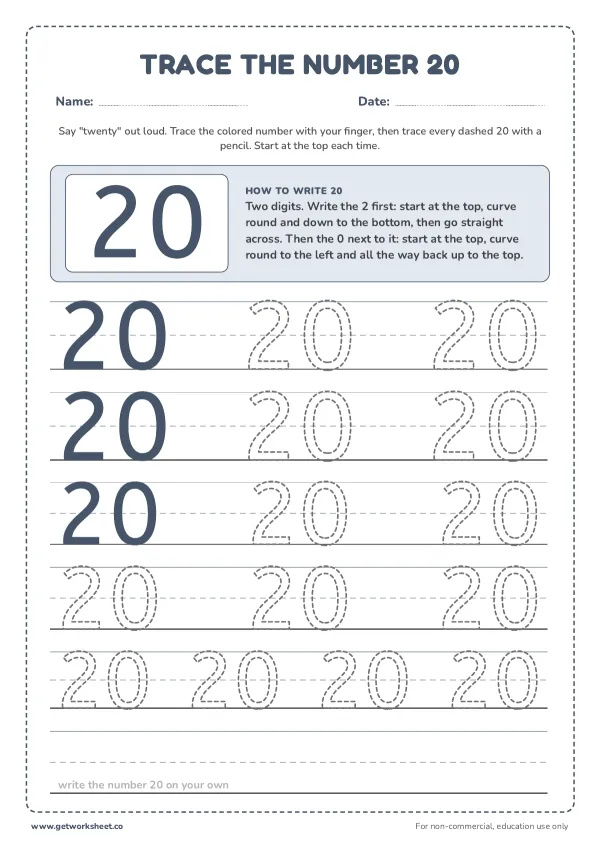
Free number 20 tracing worksheets
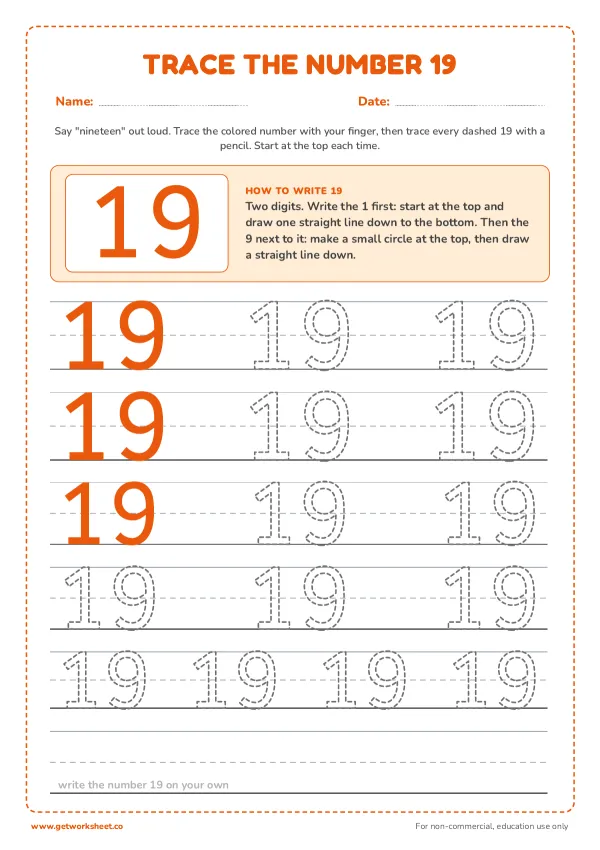
Free number 19 tracing worksheets
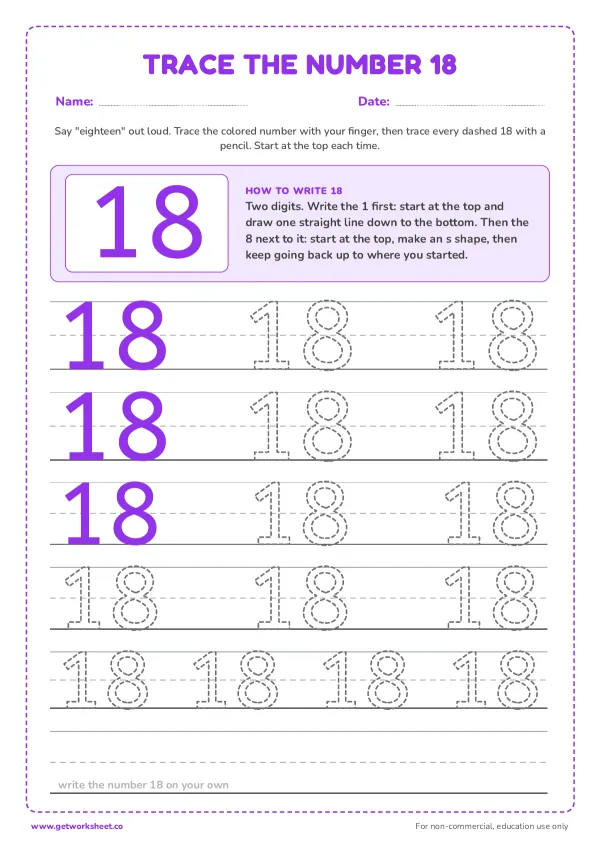
Free number 18 tracing worksheets
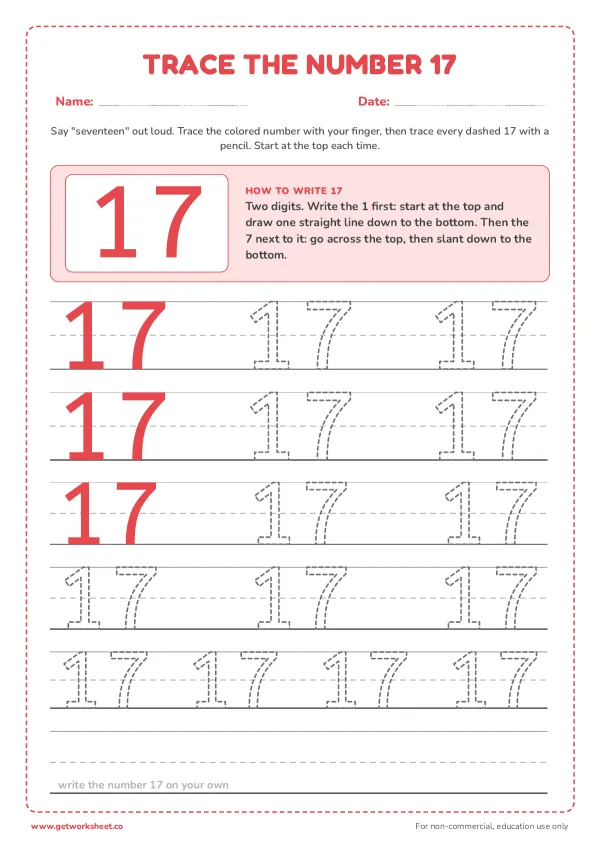
Free number 17 tracing worksheets
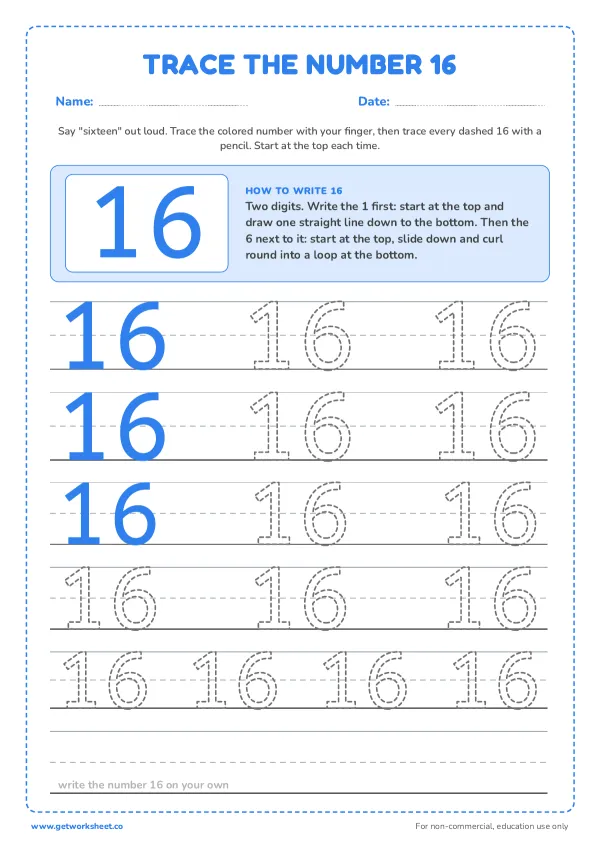
Free number 16 tracing worksheets
More worksheets
- Free number 15 tracing worksheets
- Free number 14 tracing worksheets
- Free number 13 tracing worksheets
- Free number 12 tracing worksheets
- Free number 11 tracing worksheets
- Free number 10 tracing worksheets
- Free number 9 tracing worksheets
- Free number 8 tracing worksheets
- Free number 7 tracing worksheets
- Free number 6 tracing worksheets
- Free number 5 tracing worksheets
- Free number 4 tracing worksheets