Maths · Grades 2–5
Free multiplication worksheets
Five printable multiplication worksheets with 20 column problems each: four sheets of 2-digit by 1-digit up to 99 × 9, and one sheet of 2-digit by 2-digit up to 85 × 99. Grades 3 to 5.
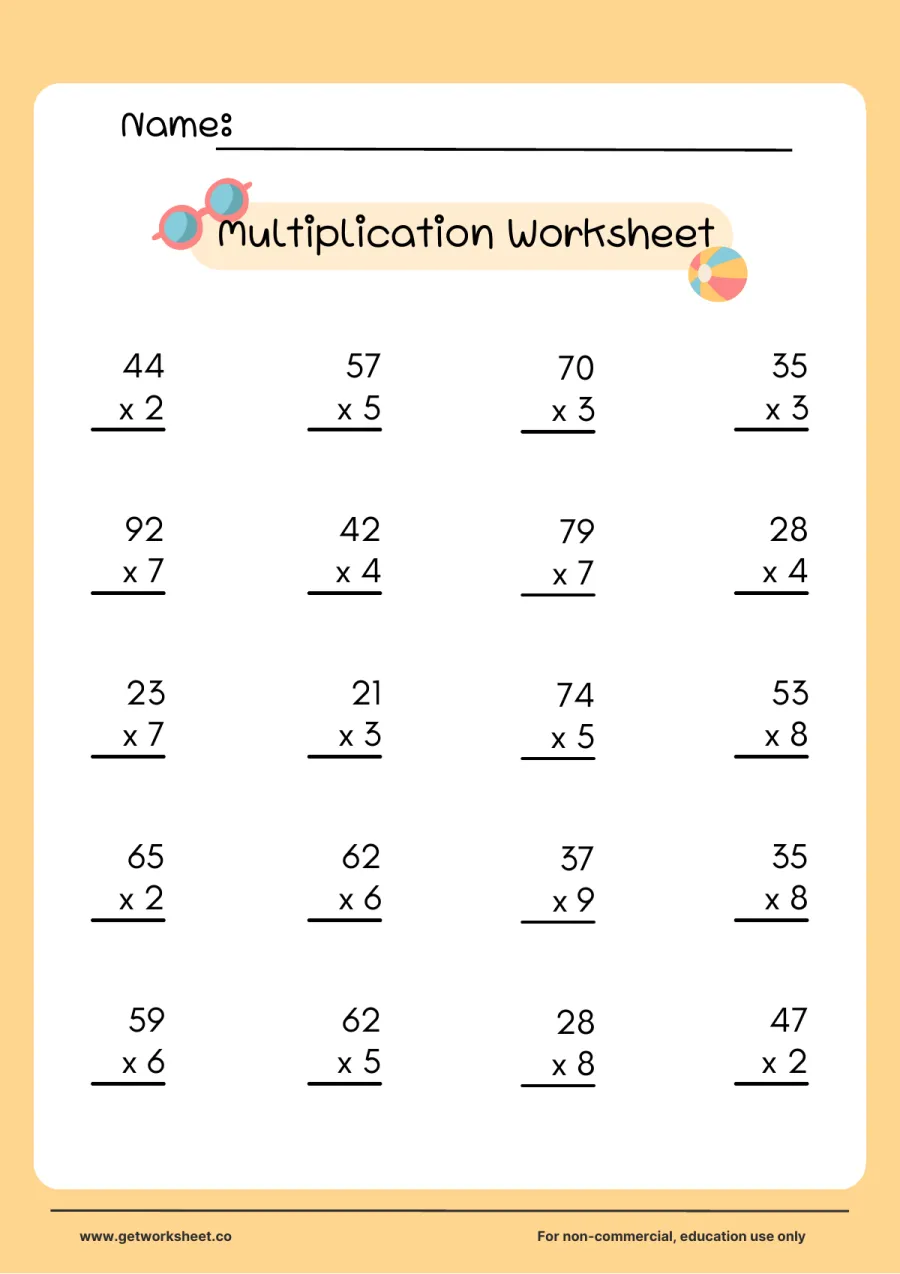
2-digit by 1-digit multiplication: 20 problems, up to 92 x 7
Multiply two-digit numbers by single digits from 2 to 9 in column format, such as 57 x 5 and 92 x 7; 20 problems in five rows.
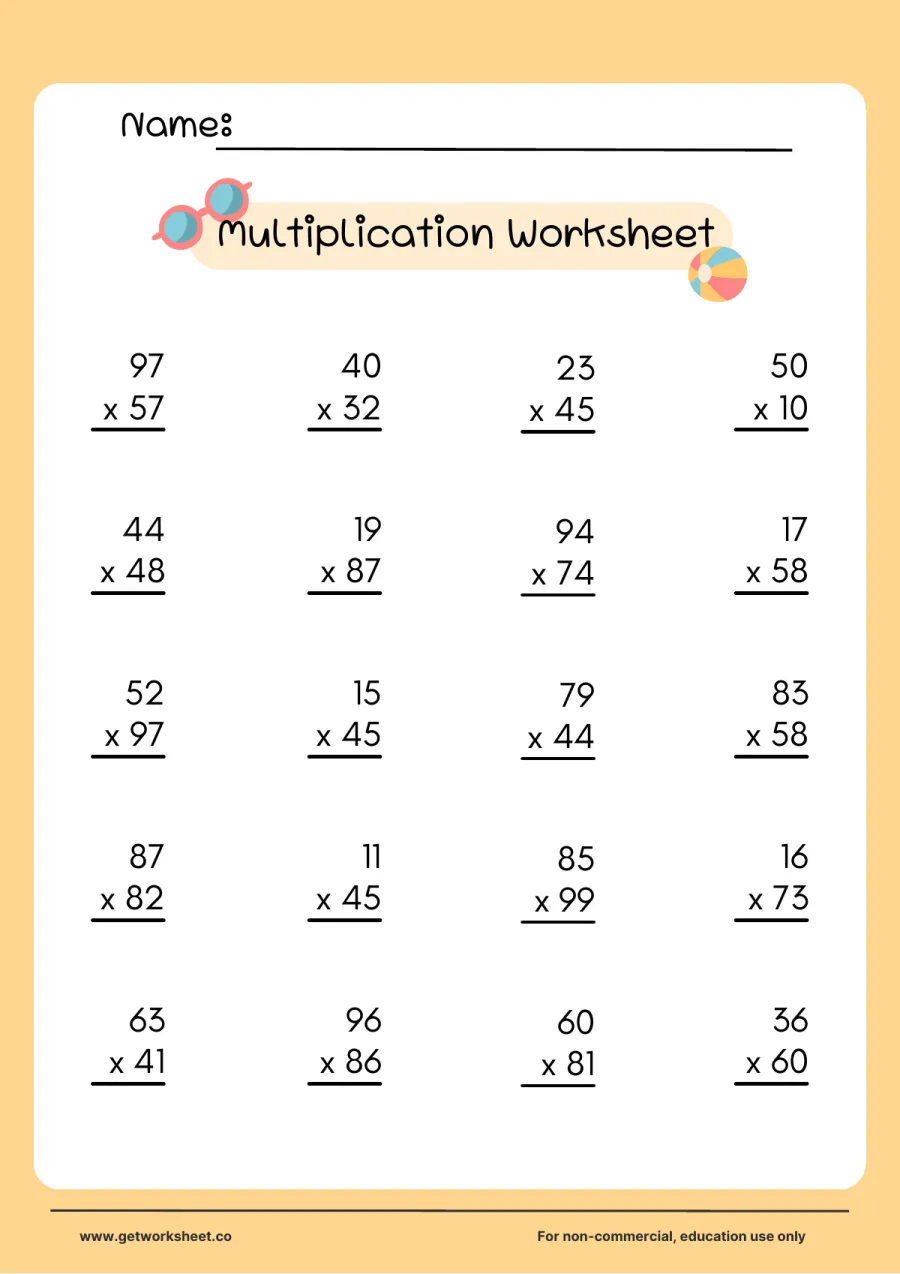
2-digit by 2-digit multiplication: 20 problems to 85 x 99
Multiply pairs of two-digit numbers in column format, such as 97 x 57, 23 x 45 and 96 x 86; 20 problems in five rows.
Complete pack
All 5 + 5 bonus, one PDF
- The 5 free sheets on this page
- 5 bonus sheets you will not find anywhere else
- Instant download, ad-free, no account needed
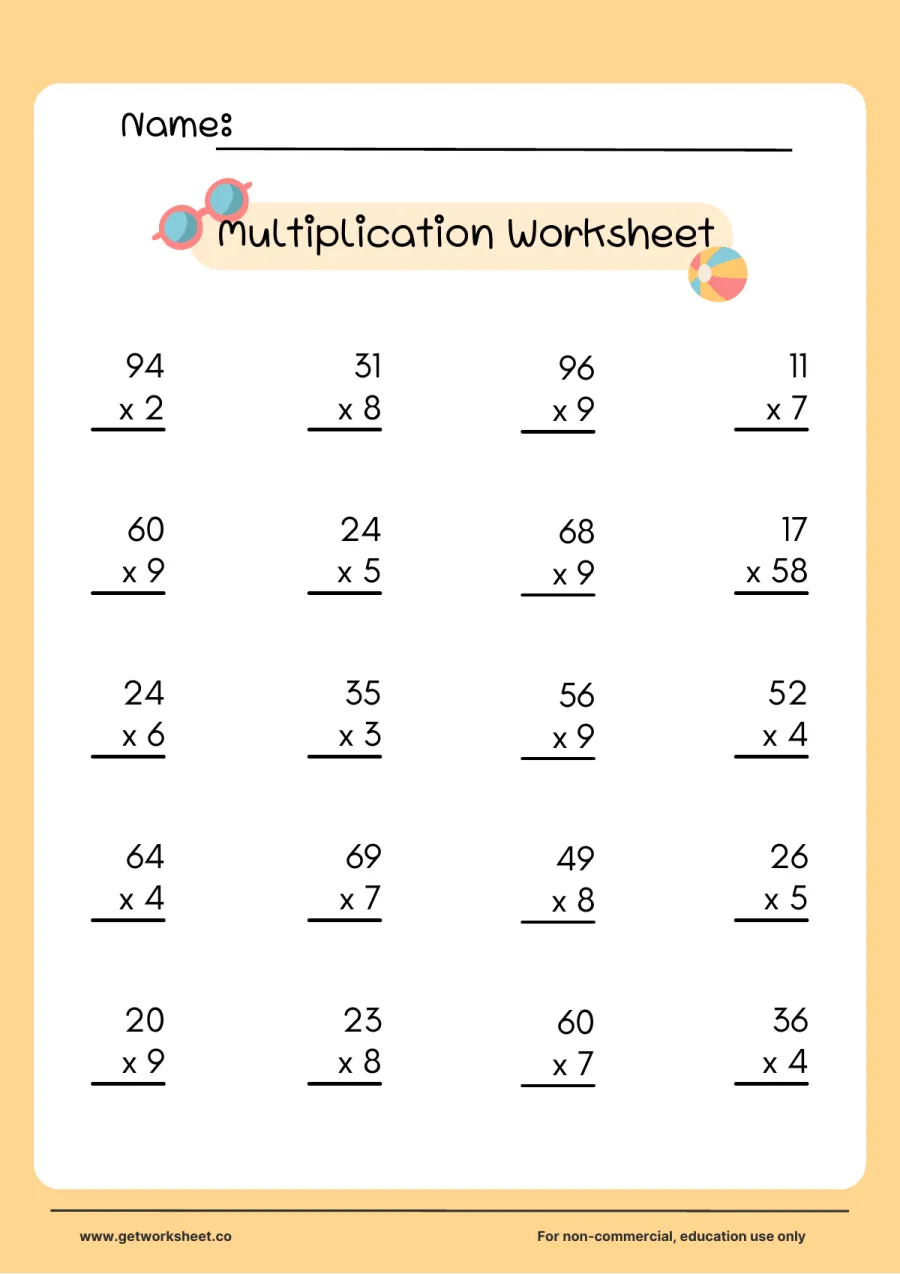
2-digit by 1-digit multiplication: 20 problems to 96 x 9
Multiply two-digit numbers by single digits in column format, such as 94 x 2, 60 x 9 and 56 x 9; 20 problems, one of them 17 x 58.
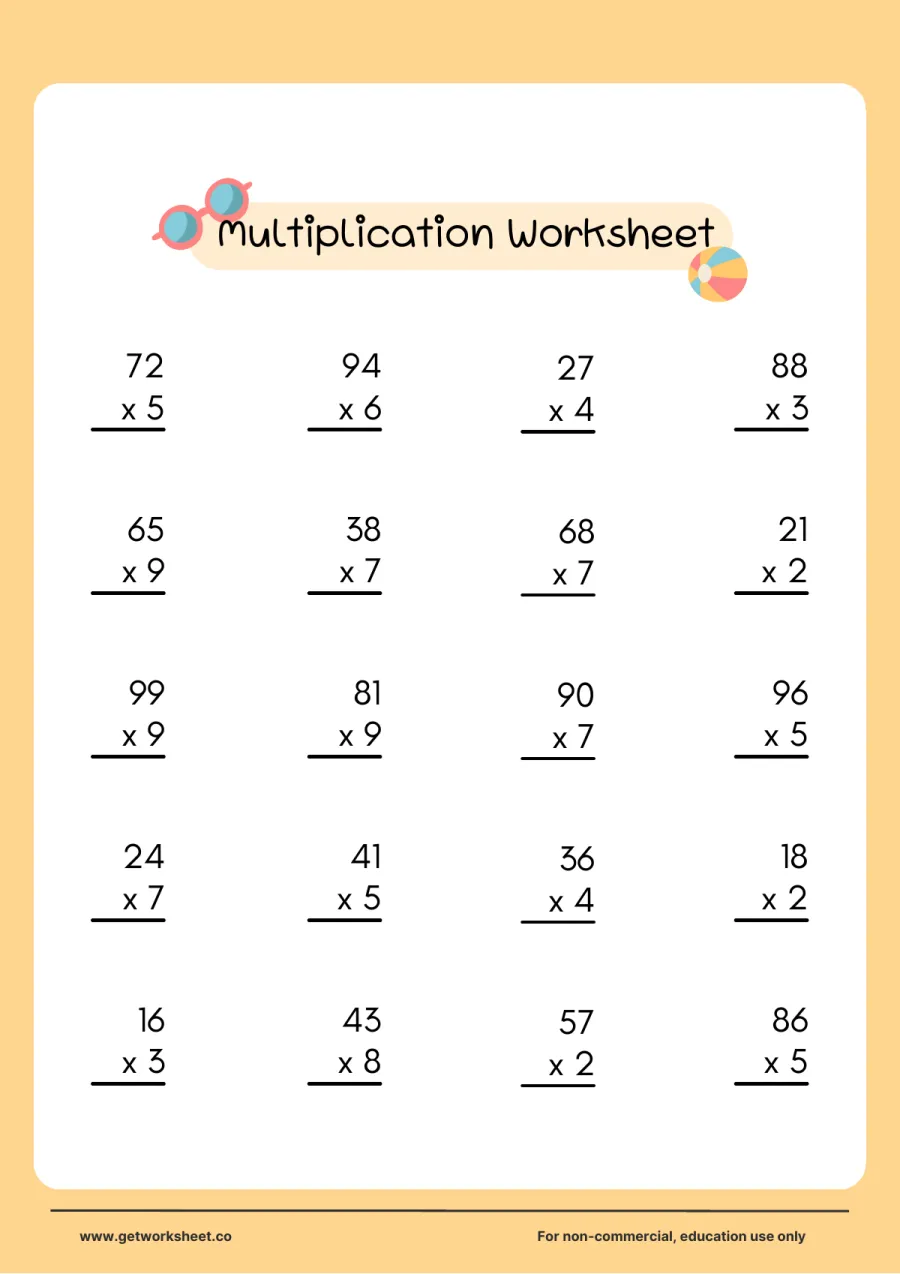
2-digit by 1-digit multiplication: 20 problems up to 99 x 9
Multiply two-digit numbers by single digits in column format, from 18 x 2 and 16 x 3 up to 99 x 9 and 81 x 9; 20 problems.
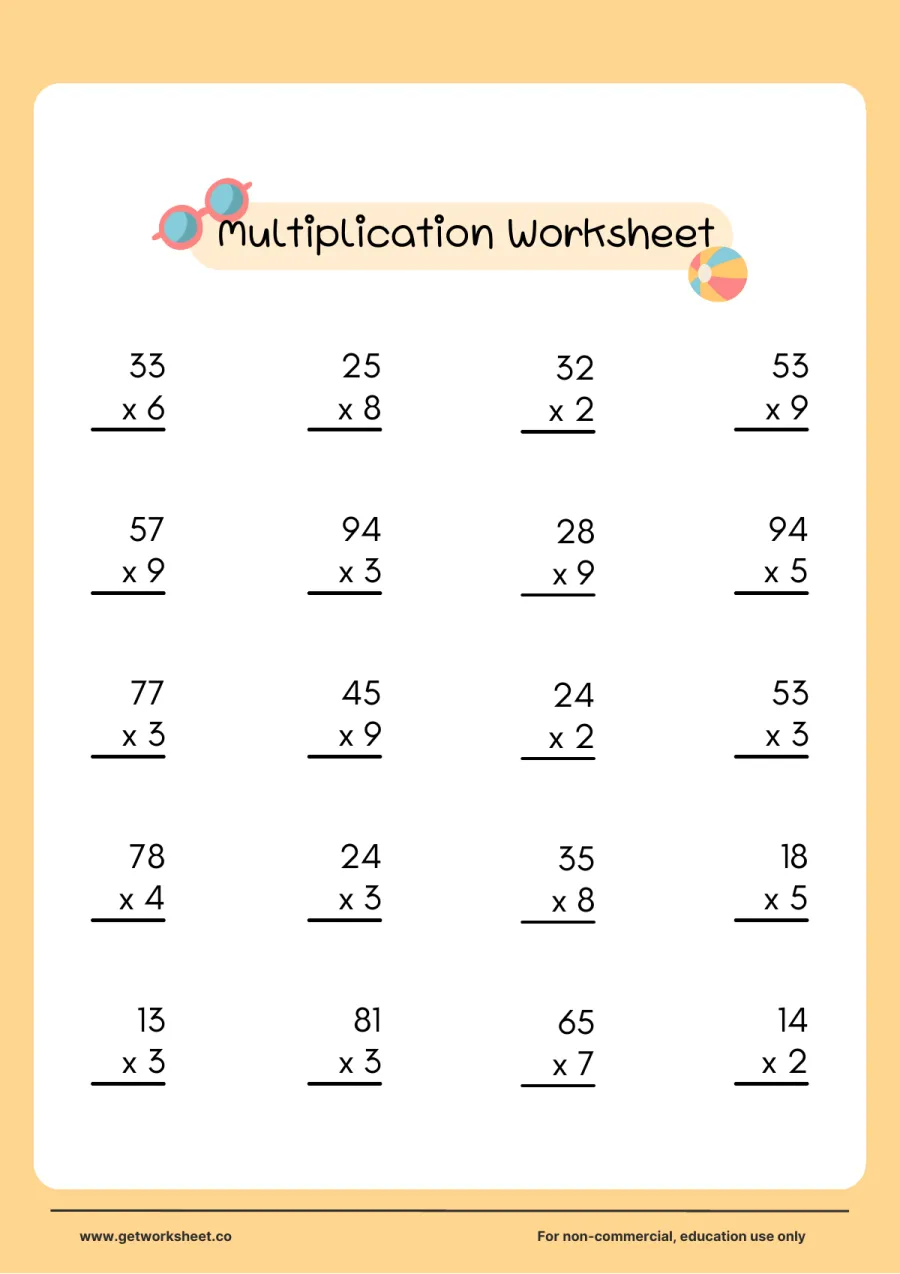
2-digit by 1-digit multiplication: 20 problems to 94 x 5
Multiply two-digit numbers by single digits from 2 to 9 in column format, such as 33 x 6, 53 x 9 and 13 x 3; 20 problems in five rows.
AI worksheet generator
Make a worksheet like this for your class
The 5 sheets above are fixed. The generator writes a new multiplication worksheet for your grade, with the question types and count you choose, in about 20 seconds. Pick a grade to start:
What you get
- A fresh set of questions on multiplication, not a copy of the sheets above
- Multiple choice, fill in the blanks, true or false, open ended
- Answer key and print-ready PDF with Pro
Free account, 1 worksheets a week. No card.
These five multiplication worksheets are all column multiplication with two-digit numbers, 20 problems per sheet and 100 in total. Sheet one multiplies two-digit numbers by single digits from 2 to 9, such as 57 × 5 and 92 × 7. Sheet two is the step up: 20 two-digit by two-digit problems such as 97 × 57, 23 × 45 and 96 × 86, up to 85 × 99. Sheets three, four and five return to two-digit by one-digit: sheet three includes 94 × 2 and 56 × 9 (with one 17 × 58 mixed in), sheet four runs from 18 × 2 up to 99 × 9, and sheet five has problems such as 33 × 6 and 53 × 9.
Column multiplication puts times table facts to work: every problem needs a fact from the 2s to the 9s and usually a carry, and the two-digit multiplier sheet adds a second row and a final addition.
What Students Will Practice
- Multiplying a two-digit number by a one-digit number in columns, ones first, then tens
- Carrying from the ones column to the tens (57 × 5: 7 × 5 = 35, write 5, carry 3)
- Multiplying by a two-digit number: two partial products, a placeholder zero, then adding
- Recalling times table facts from 2 through 9 at speed, 20 problems a sheet
- Keeping digits lined up so the final addition is correct
The 2-digit by 1-digit sheets suit grades 3 and 4; the 2-digit by 2-digit sheet suits grades 4 and 5.
Free printable makers
Make your own multiplication sheets
Type your own words or numbers and print in about 30 seconds. No account, no AI, answer key where it applies.
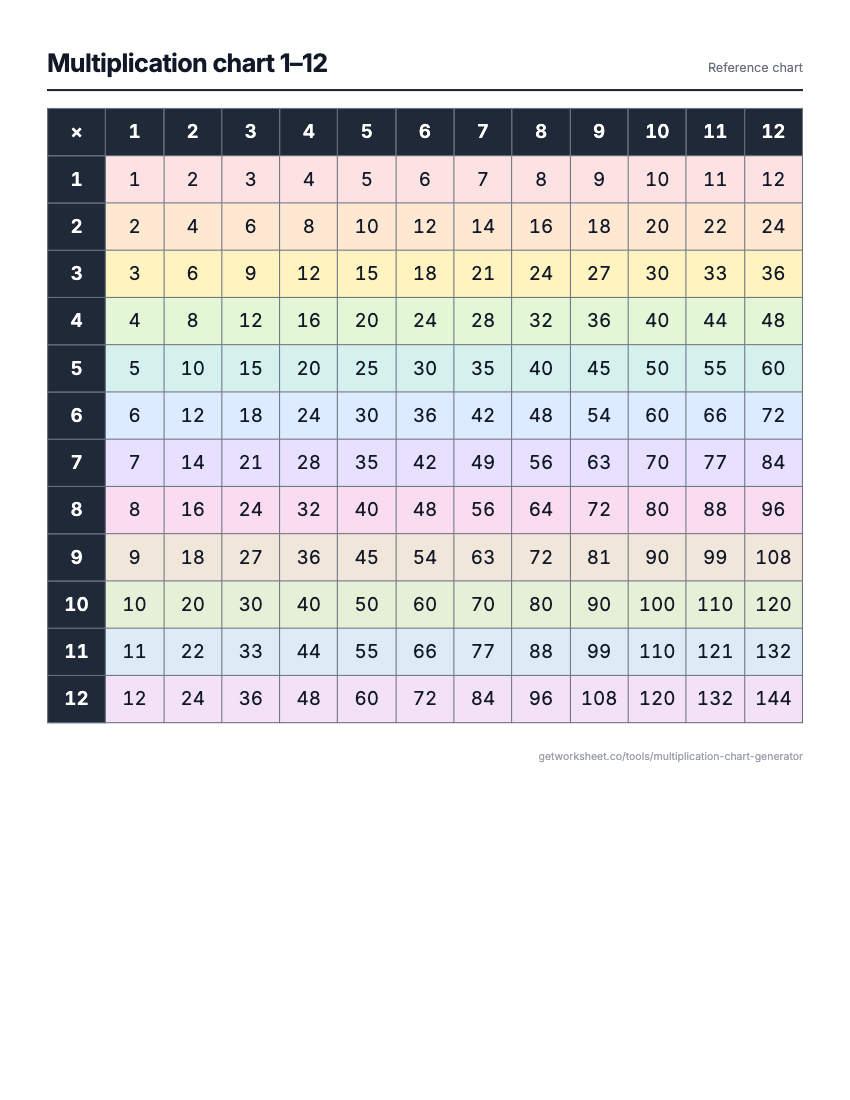 Multiplication chart generatorCharts to 15, full, blank or coloured, and times table tests with key. Free to print.
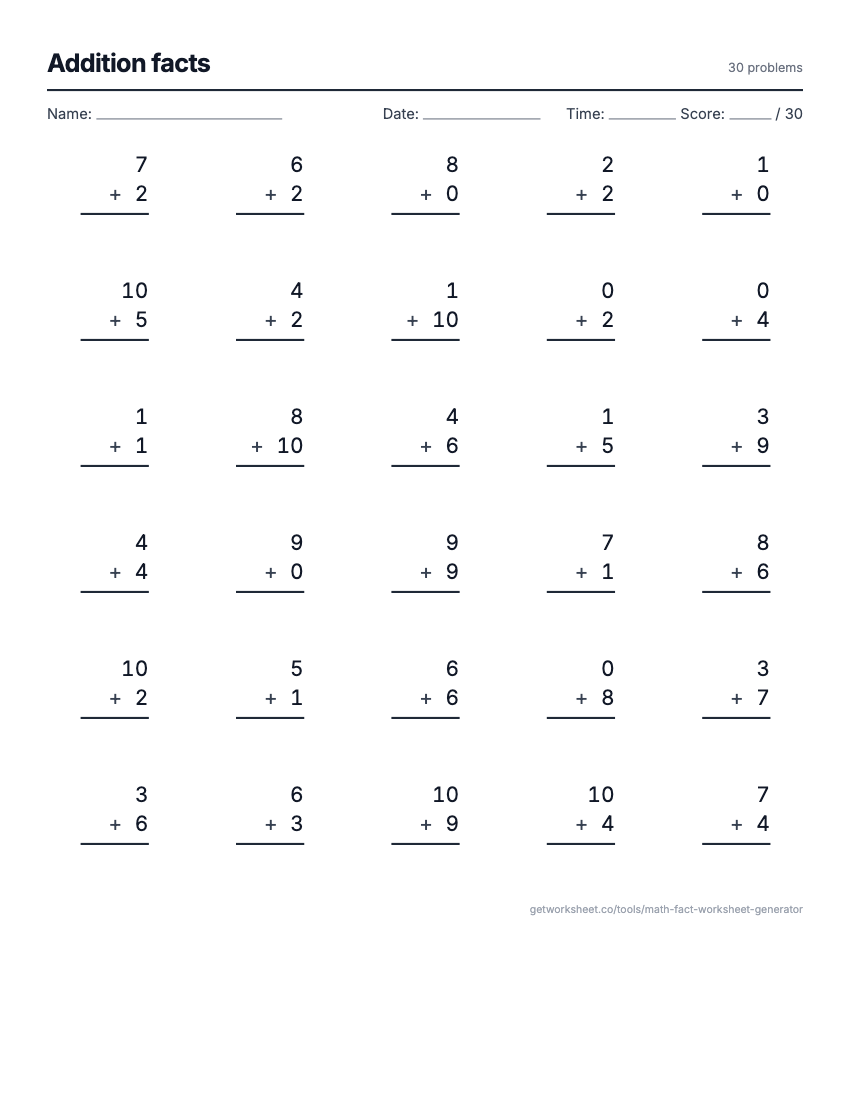 Math fact worksheet generatorAddition to division drills with an answer key. Free to print.
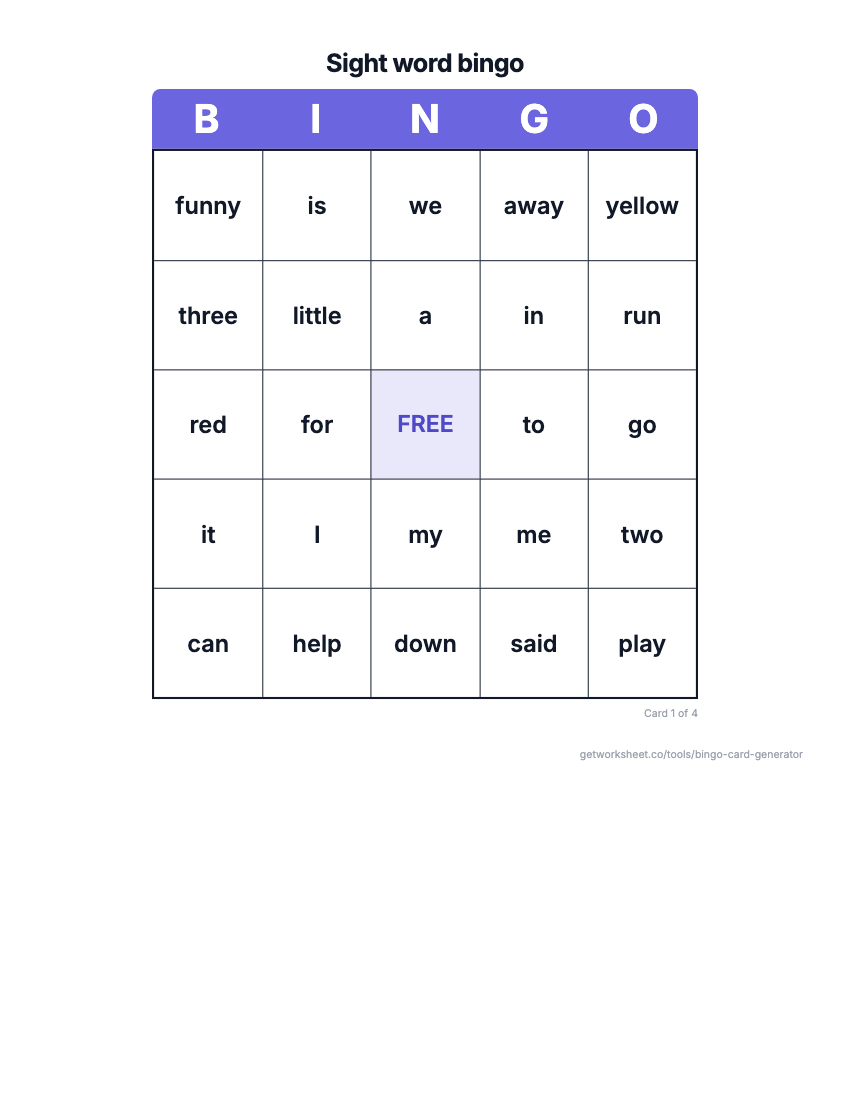 Bingo card generatorSight word, number, math fact or custom bingo cards with a call sheet. Free to print.
AI worksheet generator
Need a different multiplication worksheet?
Generate a custom multiplication worksheet: pick the grade, question types and count, and print it in about 20 seconds. Free accounts get 1 generation a week.
Complete pack · $2.99
All 5 sheets above, plus 5 bonus sheets you will not find on this page
5 free sheets + 5 bonus sheets in one print-ready PDF with a contents page. Instant, no ads, no account; the link is emailed to you so it works on any device. The 5 sheets above stay free.
- BonusTimes tables 2 to 10: 60-fact timed drill
- BonusMissing factors: times tables 2 to 12
- Bonus3-digit × 1-digit multiplication: 16 problems
- Bonus2-digit × 2-digit multiplication: 12 problems with key
- BonusMultiplication wheels: 6, 7, 8 and 9 times tables
One-time payment of $2.99. Card, Apple Pay or Google Pay. For home and classroom use.
- Bonus
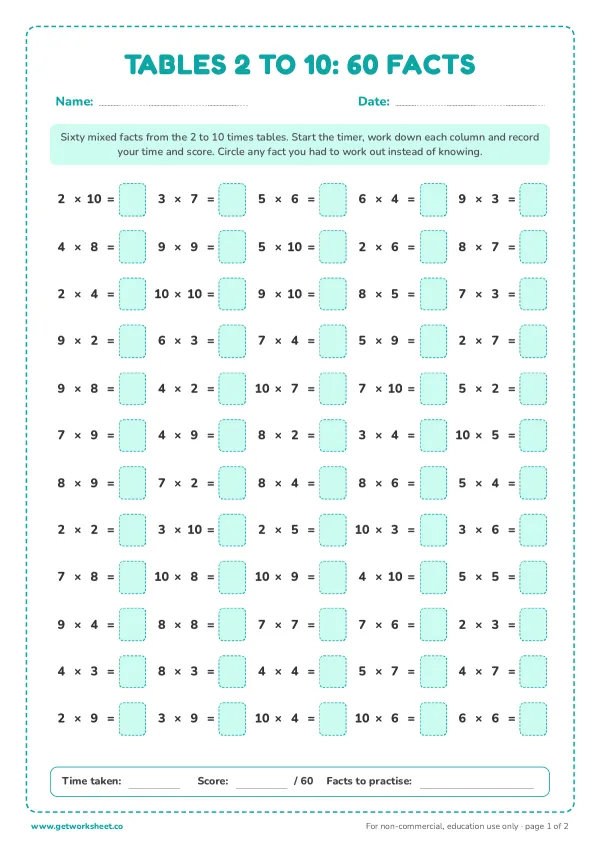 Times tables 2 to 10: 60-fact timed drill
 - Bonus
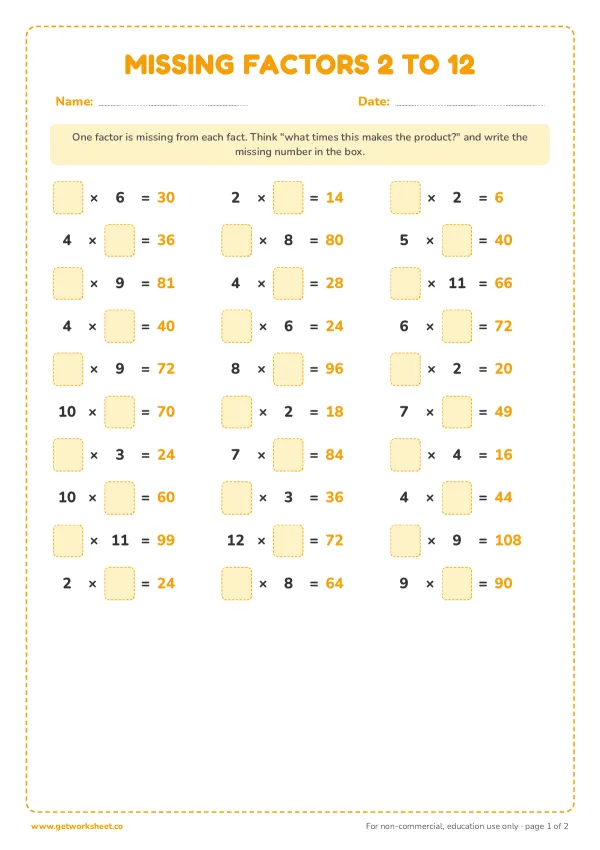 Missing factors: times tables 2 to 12
 - Bonus
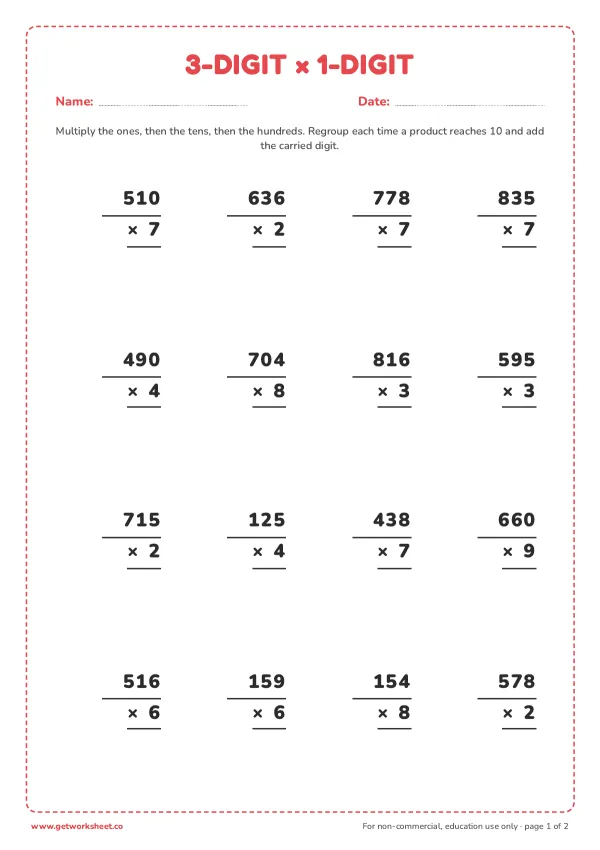 3-digit × 1-digit multiplication: 16 problems
 - Bonus
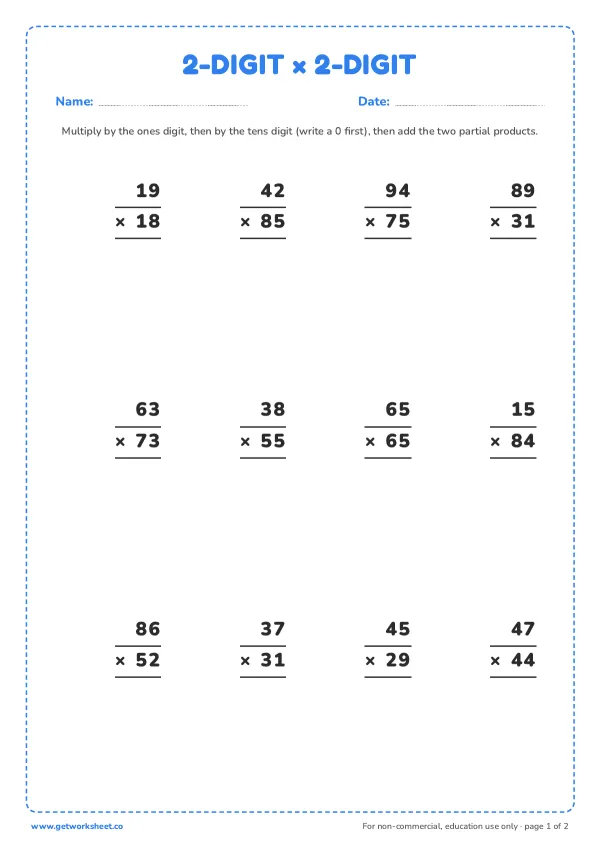 2-digit × 2-digit multiplication: 12 problems with key
 - Bonus
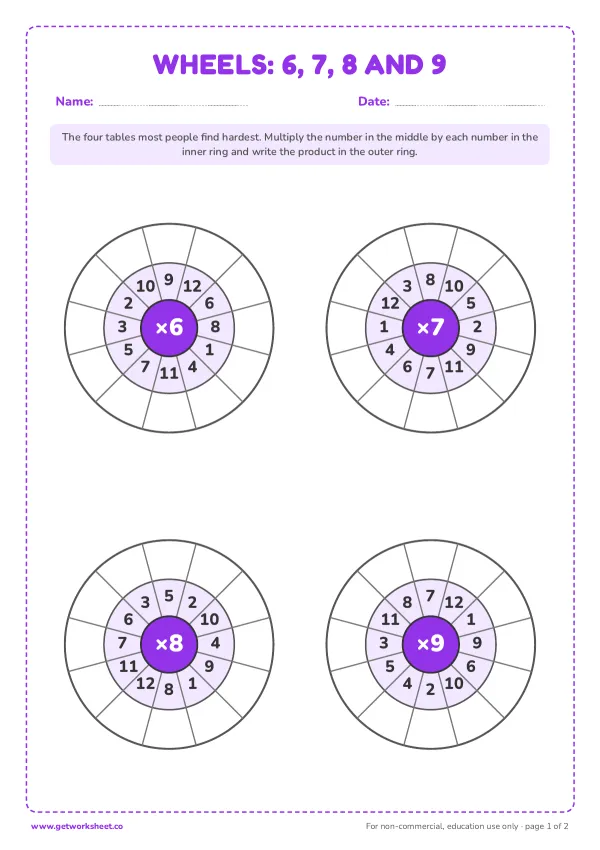 Multiplication wheels: 6, 7, 8 and 9 times tables
Teaching tips and common mistakes
How to use these worksheets
Print at 100% on A4 or US Letter so the columns stay wide enough to write carries above the problem. There is no answer key, so keep a calculator beside you. Twenty problems is one sitting for a fourth grader and two for a third grader: split a page in half if accuracy drops.
- Sheet 1: 2-digit by 1-digit up to 92 x 7. Start here. Every problem is one row of work with a single carry, such as 57 x 5. Insist the carry is written above the tens column, not held in the head.
- Sheet 2: 2-digit by 2-digit up to 85 x 99. Save this until the one-digit sheets are accurate. Problems like 97 x 57 and 96 x 86 need two partial products, a placeholder zero and a final addition, so rule a line under each partial product.
- Sheet 3: 2-digit by 1-digit up to 96 x 9. Mostly problems like 94 x 2 and 56 x 9, but one, 17 x 58, has a two-digit multiplier. Point it out first, or let your child find it and say why it is different.
- Sheet 4: 18 x 2 up to 99 x 9. The range runs from easy to hard, so use this page for a timed run. Once the 9s are known, 99 x 9 should be no slower than 18 x 2.
- Sheet 5: 33 x 6, 53 x 9 and 13 x 3. Keep this one back and use it a week later as a retest. Spacing the same skill out is what moves it into recall.
Common mistakes to watch for
- Multiplying the carry instead of adding it. In 57 x 5, the carried 3 is added to 25, not multiplied. This single error is behind most wrong answers on the one-digit sheets.
- Dropping the placeholder zero. On the two-digit sheet, the second partial product starts one place to the left. Without that zero, 23 x 45 comes out roughly ten times too small.
- Digits drifting out of line. Column work fails at the final addition when the ones and tens do not line up. Squared paper fixes this faster than reminders.
- Weak facts dressed up as a method problem. If errors cluster in the 6s, 7s and 8s, the method is fine and the tables are not. Go back to fact practice for a few days.
Frequently asked questions
What grades are these multiplication worksheets for?
The 2-digit by 1-digit sheets suit grades 3 and 4, and the 2-digit by 2-digit sheet suits grades 4 and 5. A strong second grader who knows the tables can try sheet 1.
Are answers included?
No. Each PDF is 20 problems with space to work, and there is no answer key, so check with a calculator or solve a copy yourself while your child works.
What should my child know before starting?
The times tables from 2 to 9. Every problem here needs a fact recalled quickly, and a child who counts up to find 7 x 8 will run out of patience long before problem 20.
Do they print in black and white?
Yes. The sheets are plain black problems on white, so a mono printer is fine and the ink cost per page is tiny.
Can I use these in my classroom?
Yes, free for classroom and home use. Twenty problems works as a full lesson task, and one row of four works as an exit ticket.
More practice
To go further, multi-digit multiplication worksheets take the same column method to three digits. If the facts need shoring up first, start with the 2 times table worksheets and the 5 times table worksheets. When column multiplication is secure, decimal division worksheets are a natural next step.
Free library
Related collections
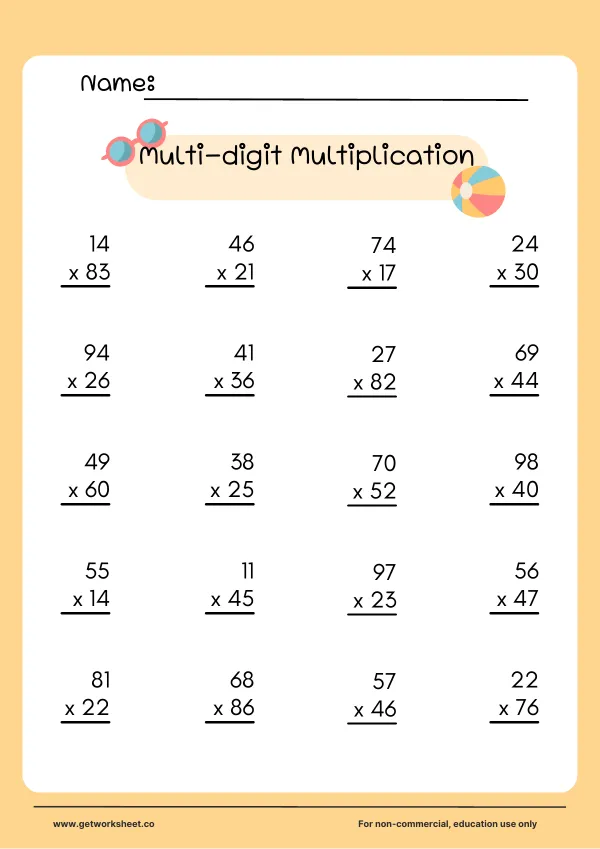
Free multi-digit multiplication worksheets
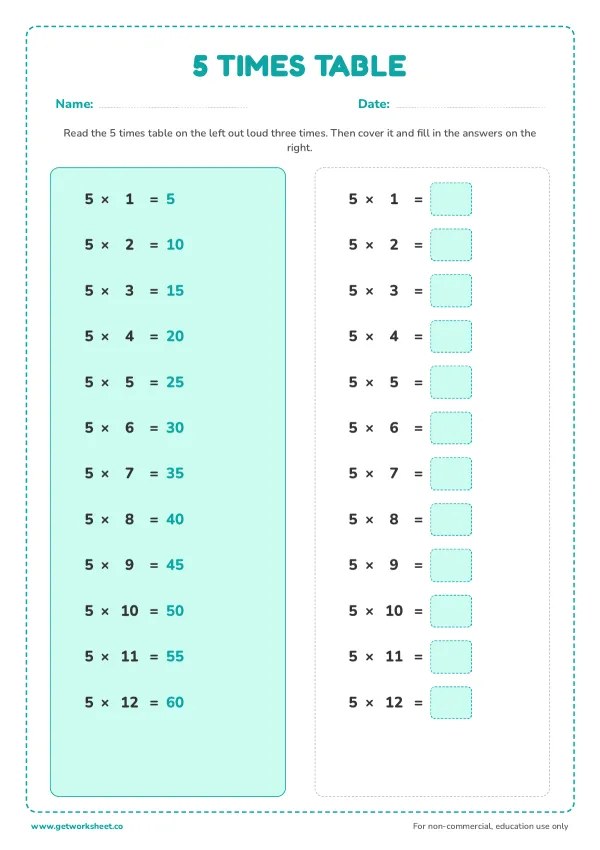
Free 5 times table worksheets
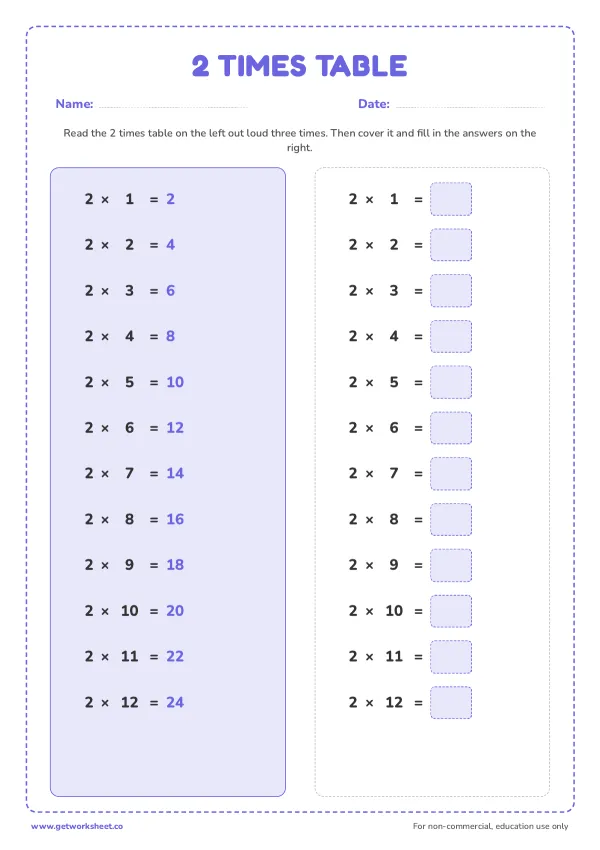
Free 2 times table worksheets
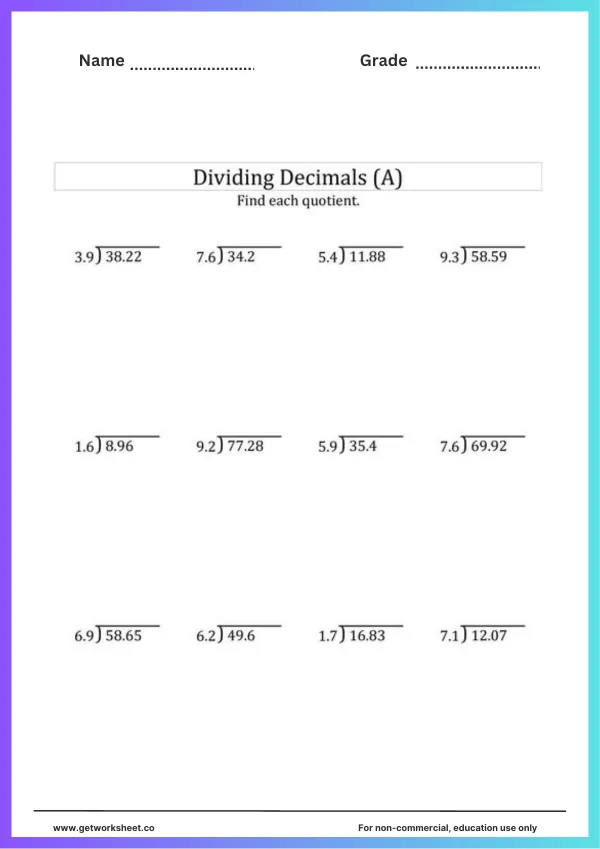
Free decimal division worksheets
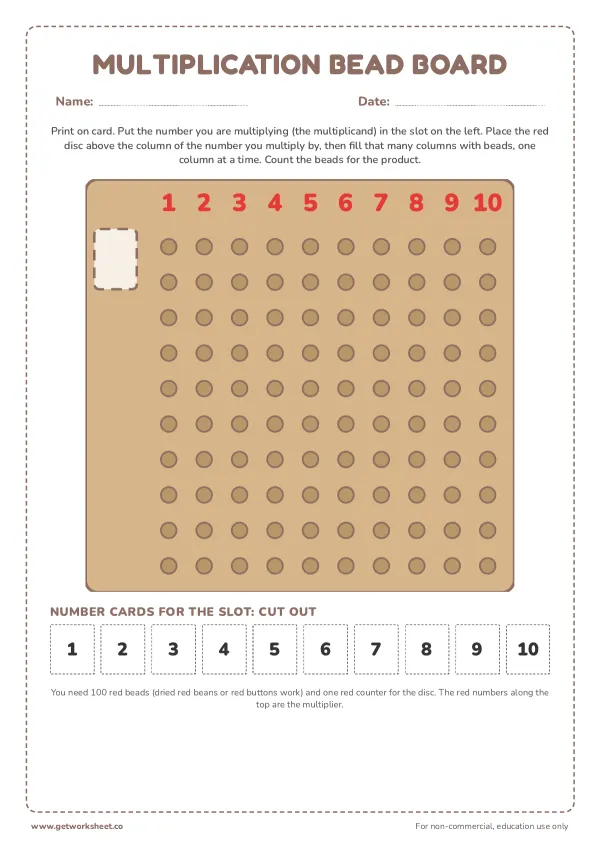
Free Montessori multiplication board worksheets
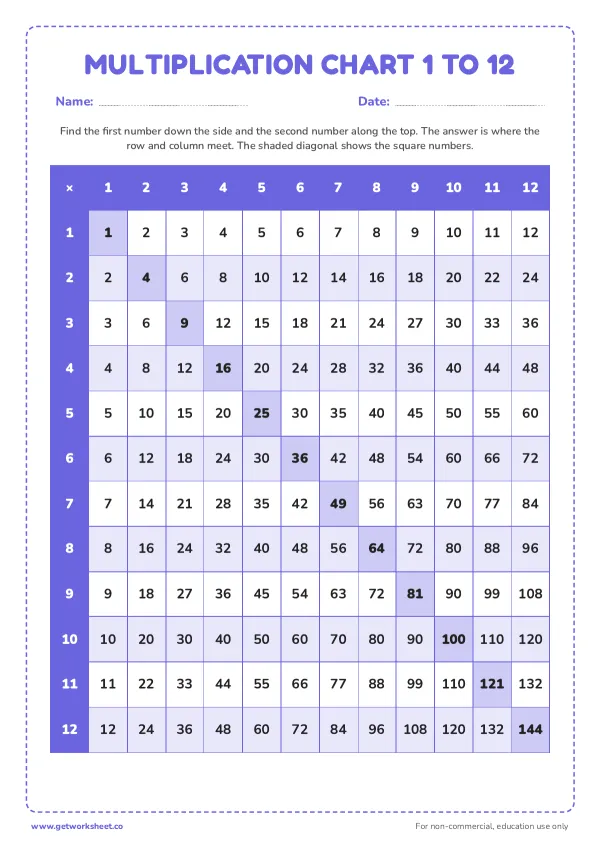
Free printable multiplication charts
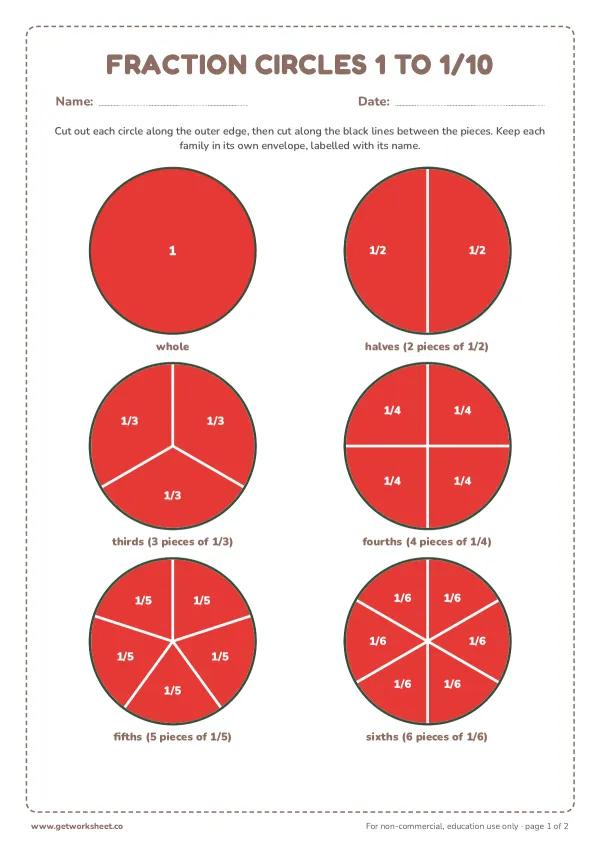
Free Montessori fraction circles worksheets
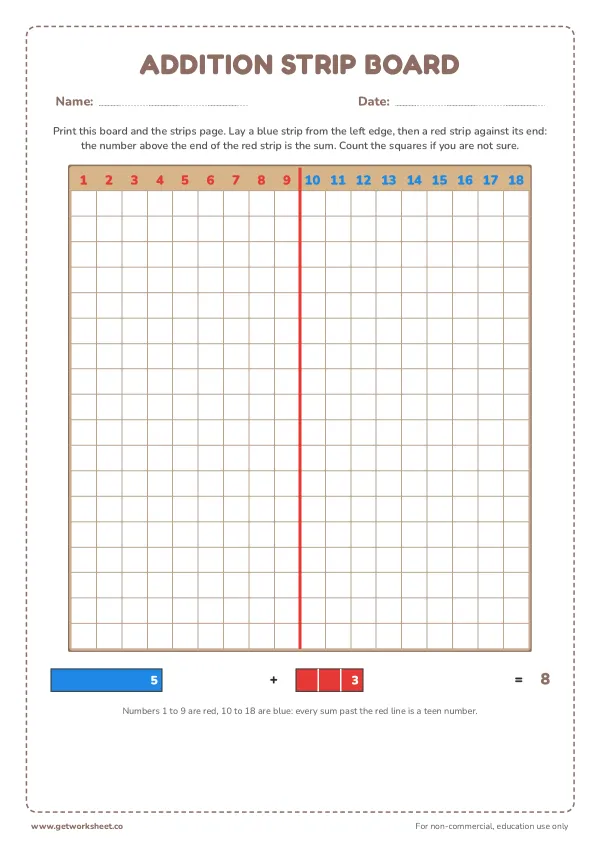
Free Montessori addition strip board worksheets
More worksheets
- Free 100th day of school worksheets
- Free penguin worksheets
- Free snowman worksheets
- Free winter worksheets for preschool and kindergarten
- Free winter tracing worksheets
- Free winter break packet worksheets
- Free long division worksheets
- Free Thanksgiving math worksheets
- Free greater than less than worksheets
- Free counting money worksheets (US coins)
- Free 2-digit addition worksheets
- Free math word problems worksheets (grades 1 to 5)