Free multi digit multiplication worksheets
Free multi-digit multiplication worksheets with answer keys. Practice 2-digit and 3-digit multiplication step by step — printable PDFs for grades 3-6.
Multi-digit multiplication is where basic times tables meet the standard algorithm — and where many students hit a wall. Multiplying 34 x 27 requires not just knowing that 4 x 7 = 28, but understanding place value, carrying, partial products, and keeping everything aligned. These worksheets build the skill systematically, from 2-digit by 1-digit problems up through 3-digit by 2-digit multiplication.
What Students Will Practice
- Multiplying 2-digit numbers by 1-digit numbers (e.g., 45 x 3 = 135) — the entry point for multi-digit work
- Multiplying 2-digit by 2-digit numbers using the standard algorithm (e.g., 34 x 27 = 918)
- Understanding partial products: 34 x 27 means (34 x 7) + (34 x 20) = 238 + 680 = 918
- Carrying (regrouping) when a column product exceeds 9
- Multiplying 3-digit by 1-digit and 3-digit by 2-digit numbers
- Estimating products before calculating to verify reasonableness (e.g., 34 x 27 is roughly 30 x 30 = 900)
Multi-digit multiplication is a core standard in grades 3-6 and is prerequisite knowledge for long division, algebra, and virtually all higher math that involves computation.
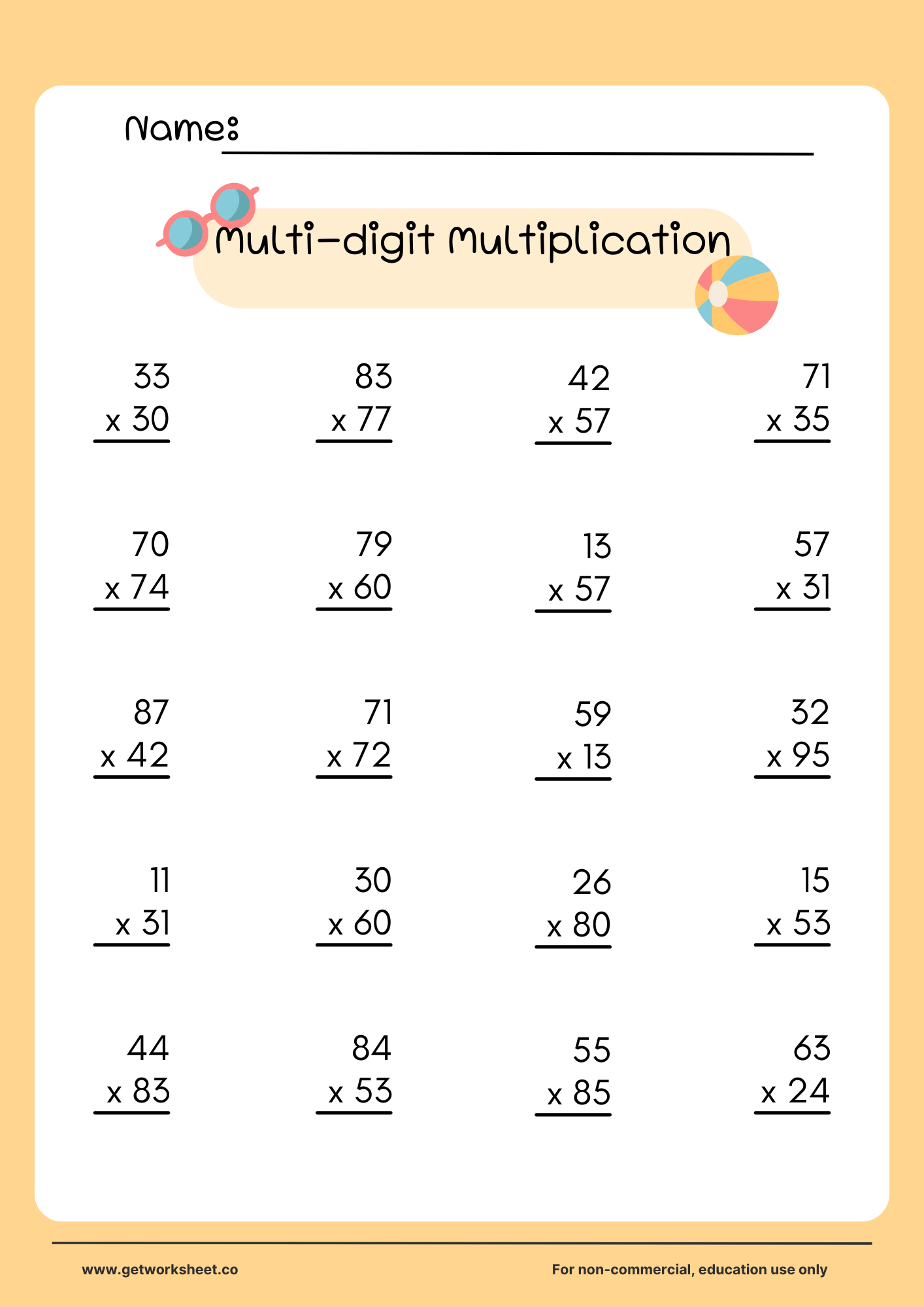
Multi digit multiplication printable 5
Multi digit multiplication printable 5
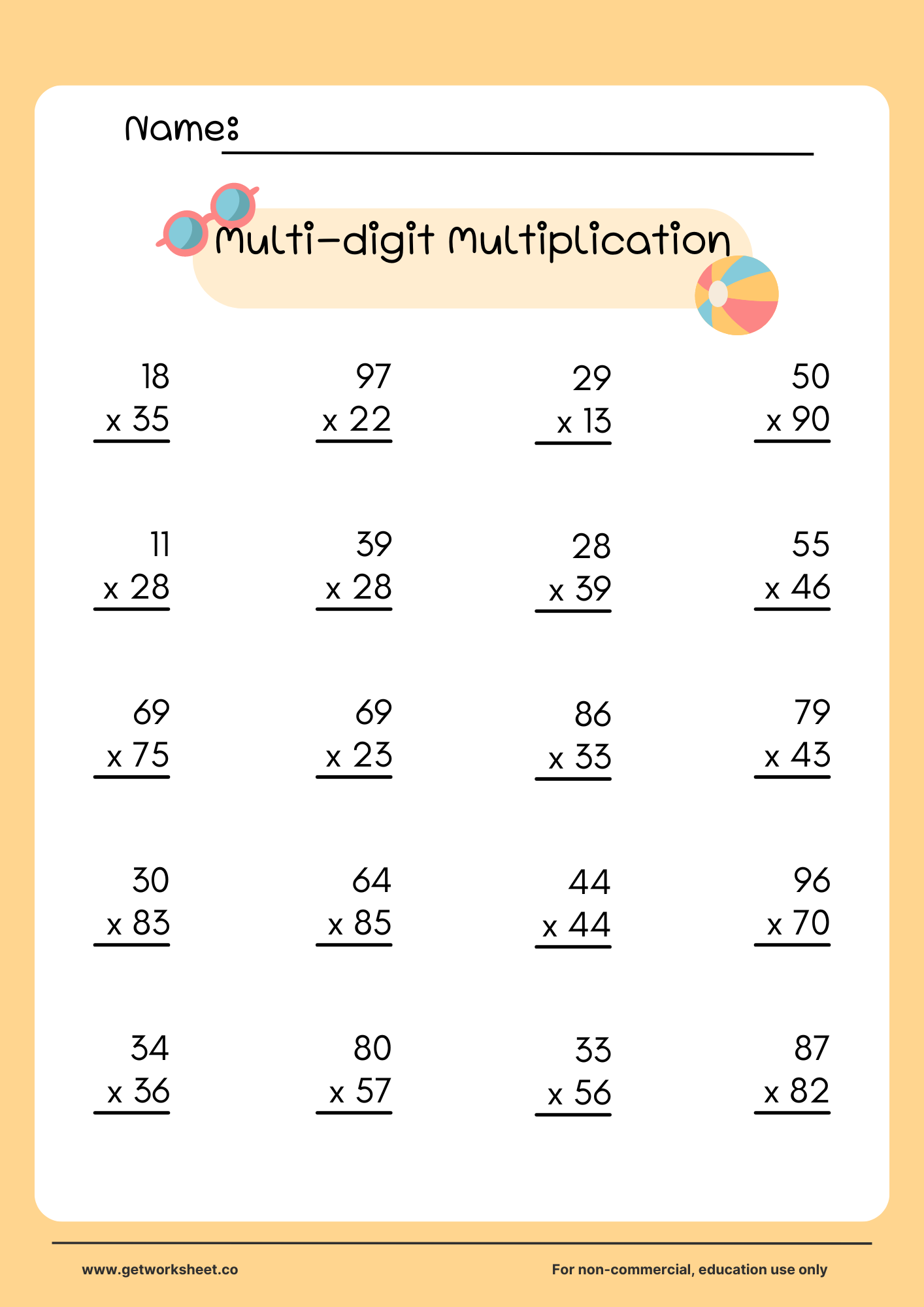
Multi digit multiplication printable 4
Multi digit multiplication printable 4
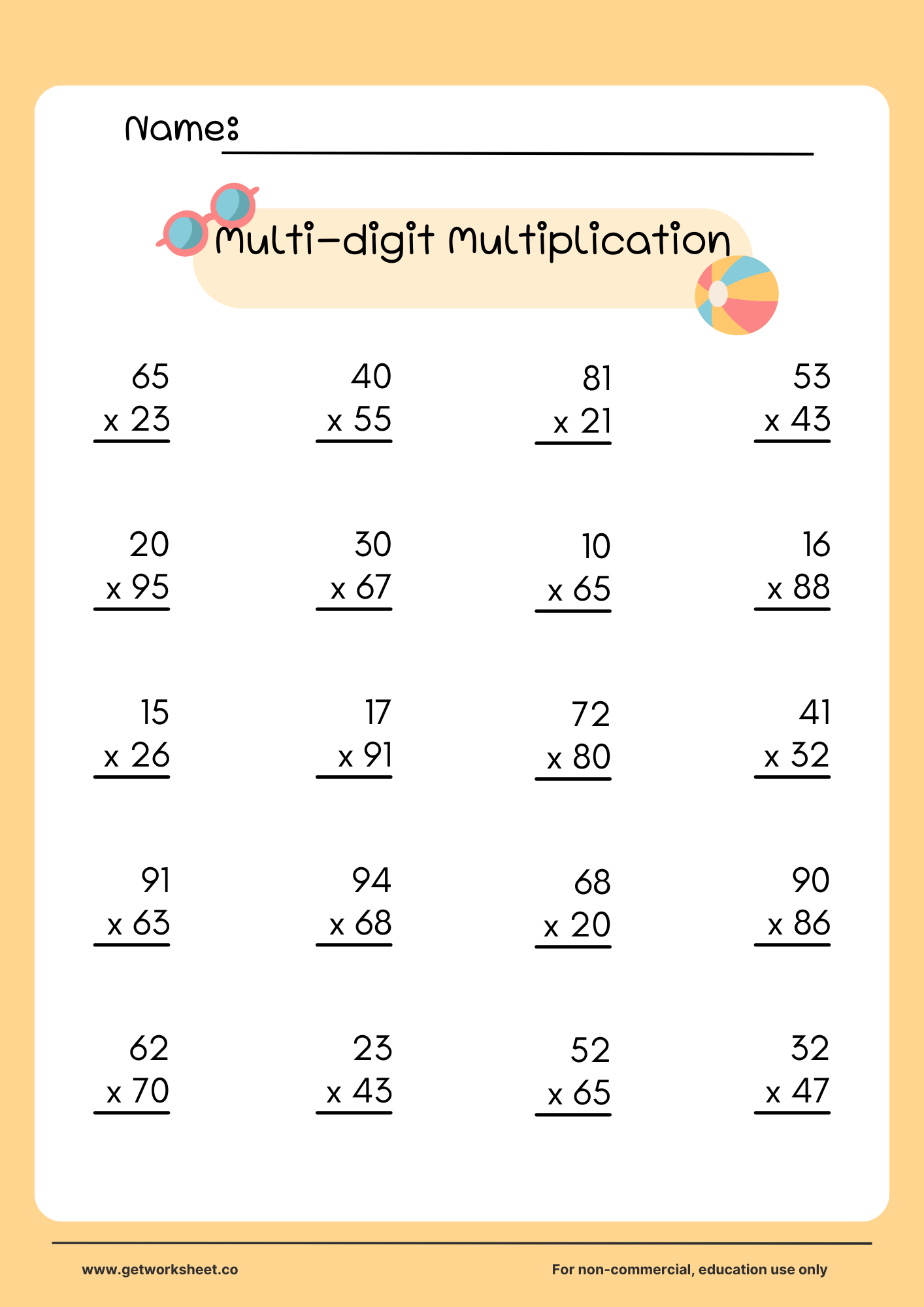
Multi digit multiplication printable 3
Multi digit multiplication printable 3
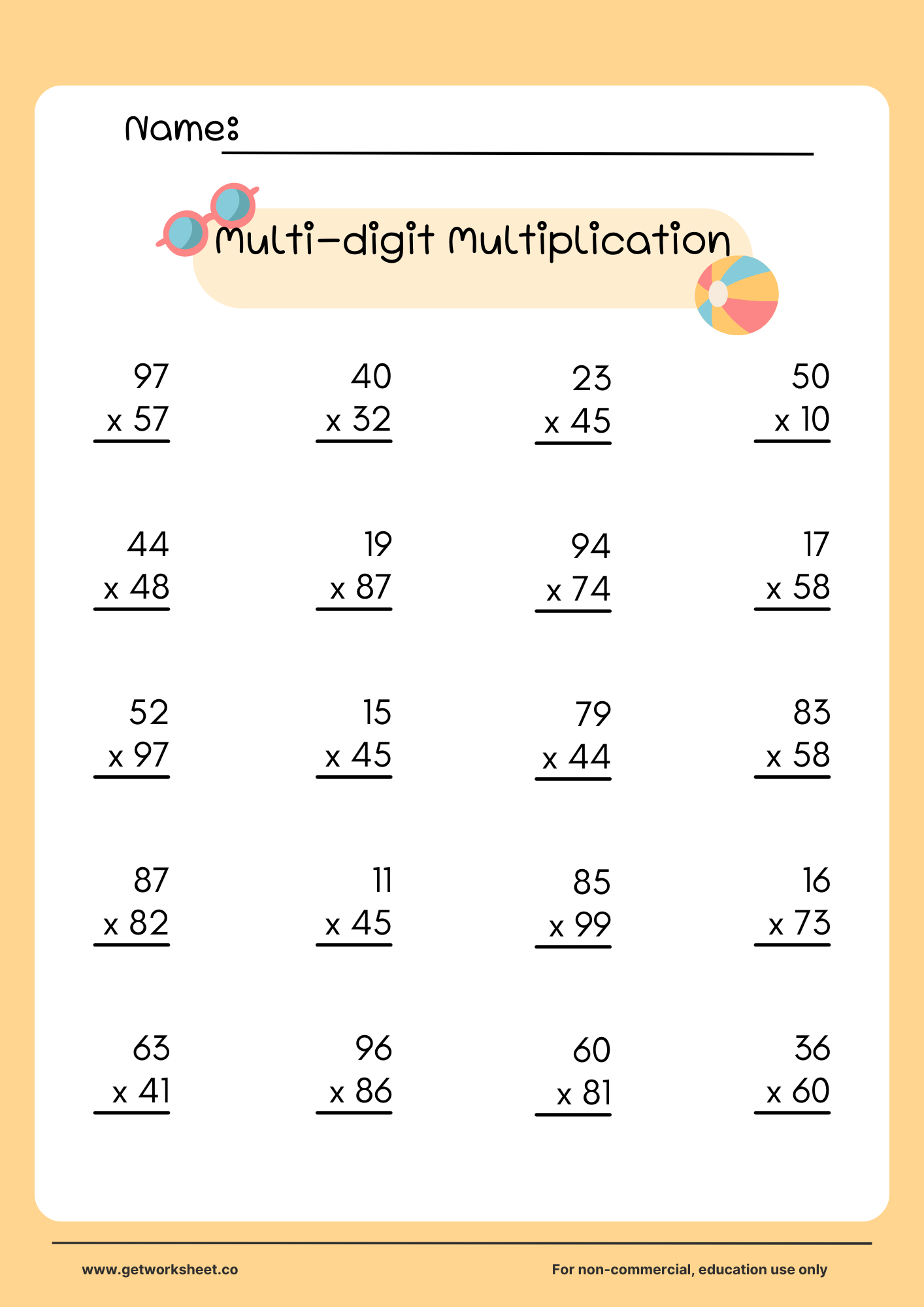
Multi digit multiplication printable 2
Multi digit multiplication printable 2
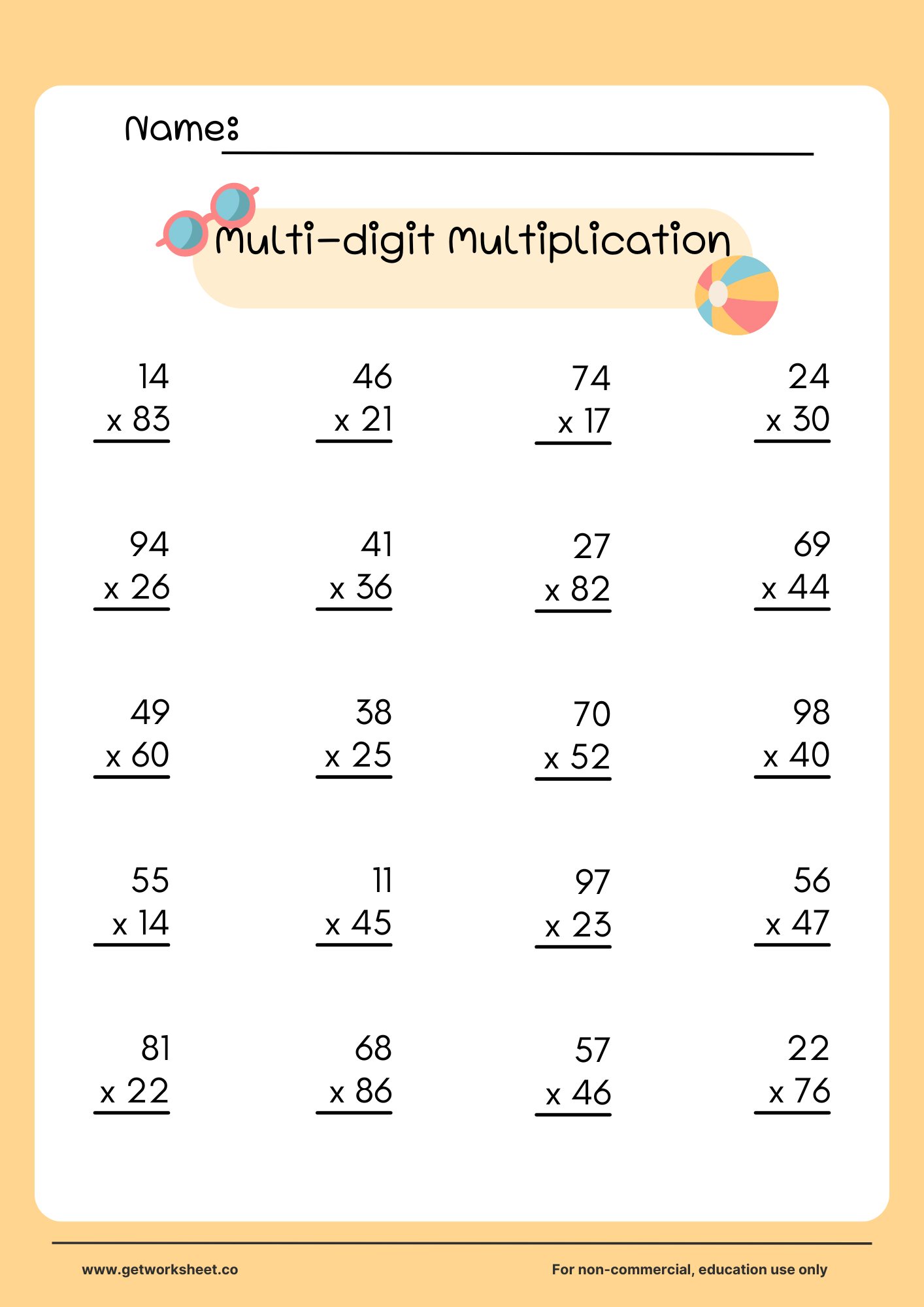
Multi digit multiplication printable 1
Multi digit multiplication printable 1
How to Use These Worksheets
The standard algorithm has several moving parts — teach them one at a time.
- Make sure basic multiplication facts are solid before starting multi-digit work. A student who has to count on their fingers for 6 x 7 will struggle with the algorithm because they're managing too many things at once. Fact fluency frees up mental energy for the procedure.
- Start with 2-digit by 1-digit problems (like 36 x 4) which only involve one row of multiplication plus carrying. Once this is smooth, introduce 2-digit by 2-digit problems where students must manage two rows of partial products and then add them.
- Use graph paper or turn lined paper sideways so each digit gets its own column. Misaligned digits are the number one cause of wrong answers in multi-digit multiplication. Clean columns prevent place value errors.
- Teach estimation as a non-negotiable first step. Before calculating 48 x 23, estimate: 50 x 20 = 1,000. The exact answer should be near 1,000. If a student gets 11,040 or 104, estimation catches the error immediately. This habit prevents careless mistakes from going unnoticed.
Common Mistakes to Watch For
- Forgetting to add the carried number: In 47 x 6: 6 x 7 = 42, write 2, carry 4. Then 6 x 4 = 24... but they need to add the carried 4 to get 28, making the answer 282. Students often write 242 because they forget to add the carry.
- Not using a placeholder zero in the second partial product: When multiplying 34 x 27, the second step is 34 x 20 (not 34 x 2). Students must write a 0 in the ones place of the second row before multiplying. Forgetting this zero makes the second partial product 10 times too small.
- Misaligning partial products when adding: The two rows of partial products must be added with proper alignment. If the second row's digits shift left or right, the sum will be wrong. Graph paper solves this alignment problem.
- Multiplying instead of adding partial products: After finding both partial products (238 and 680), students occasionally multiply them together instead of adding. The final step is always addition. Reinforce: multiply to get partial products, add to get the final answer.
Frequently Asked Questions
When should my child learn multi-digit multiplication?
2-digit by 1-digit multiplication is typically introduced in 3rd grade. 2-digit by 2-digit is a 4th grade standard. 3-digit and larger multiplication comes in 5th grade. Students need solid single-digit multiplication facts before starting multi-digit work.
Should I teach the standard algorithm or the area/box method?
Both are valid. The area (box) method breaks the multiplication into smaller, visible pieces and is excellent for building understanding. The standard algorithm is more compact and faster once mastered. Many teachers start with the area method for understanding, then transition to the standard algorithm for efficiency. Both produce the same answer.
My child makes careless errors but understands the process. What helps?
Careless errors in multi-digit multiplication are almost always alignment or carrying mistakes. Use graph paper for alignment. Write carried numbers small but clearly above the correct column. And always estimate first — if the estimate and answer are far apart, re-check the work. These habits eliminate most careless errors.
Is it okay to use a calculator?
For checking work, absolutely. But students must be able to perform multi-digit multiplication by hand to develop number sense and procedural understanding. A student who relies entirely on a calculator won't notice if they accidentally enter the wrong numbers. Hand calculation builds the ability to estimate, verify, and understand what the numbers mean.
After mastering multi-digit multiplication, students are prepared for long division, order of operations with larger numbers, and eventually algebraic expressions that require distributing and combining terms.