Maths · Kindergarten–Grade 2
Free doubles addition worksheets
Free doubles addition worksheets with answer keys for K to grade 2: a doubles chart with pictures, 24 mixed doubles facts, near doubles, which double makes it, word problems, doubles and halves to 50 and doubles dominoes to 20.
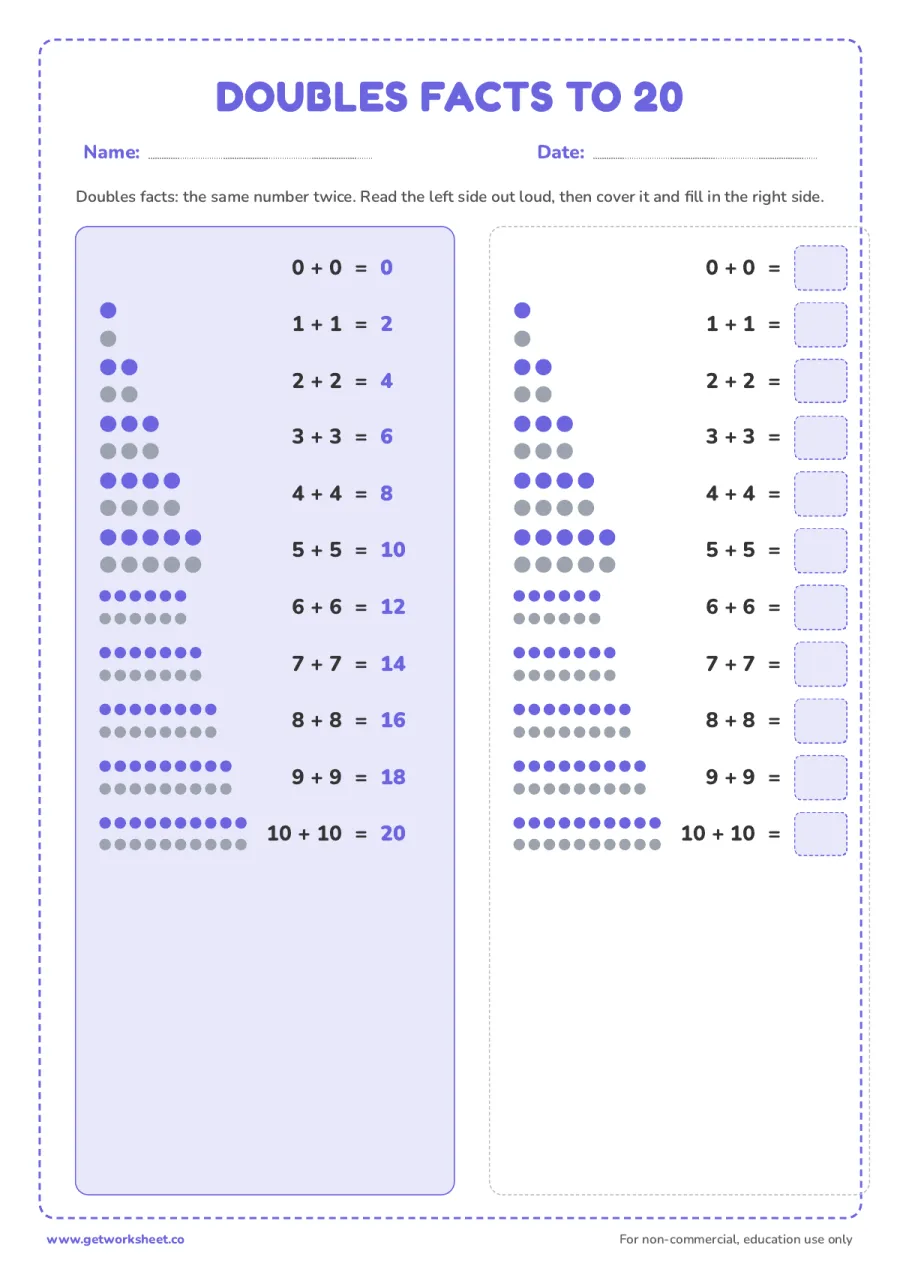
Doubles facts chart to 20 (with pictures)
Every double from 0 + 0 to 10 + 10 shown with two rows of dots, plus the same facts to fill in on the right. Free printable PDF.
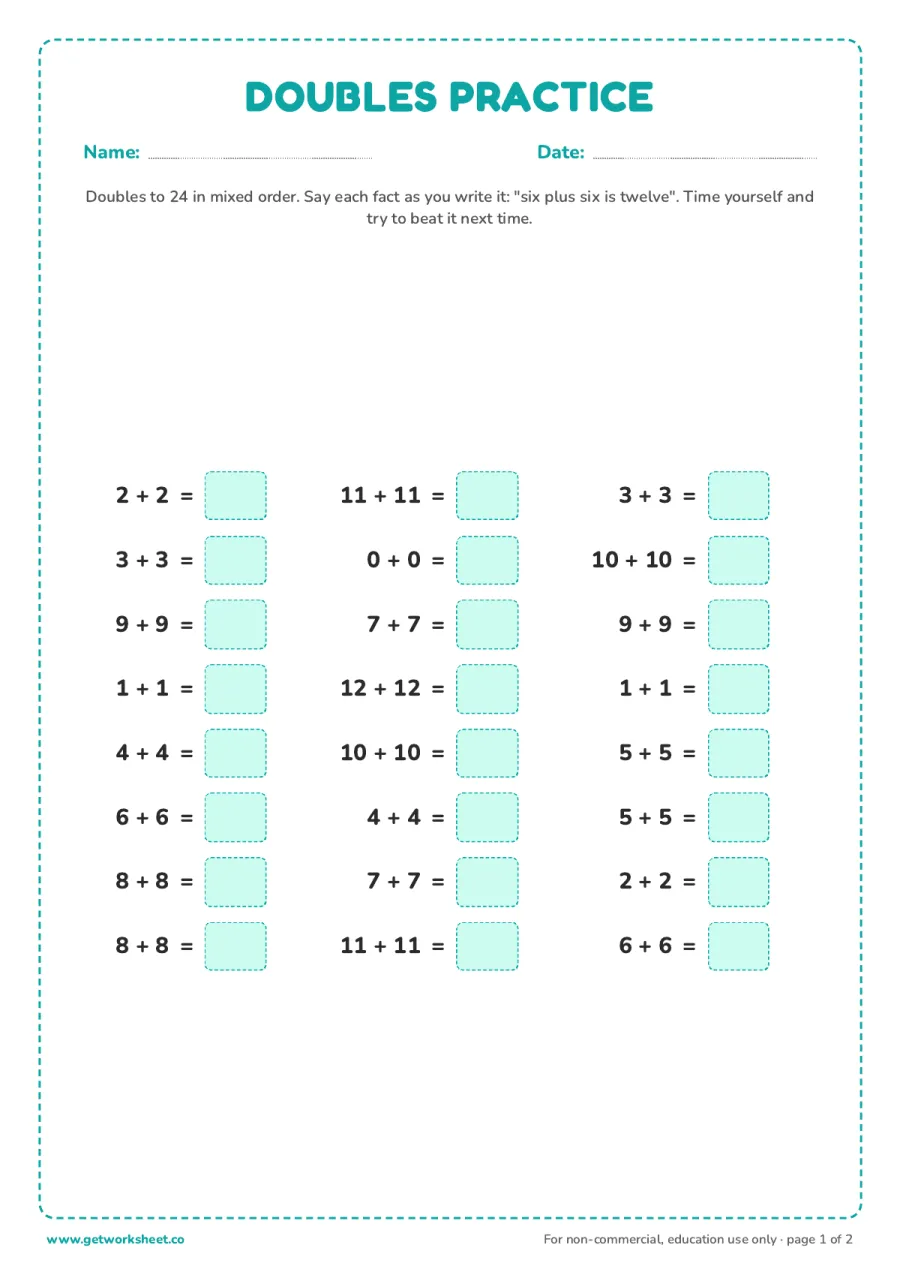
Doubles practice: 24 mixed facts
Doubles to 24 in mixed order for fluency practice. Answer key on page 2. Free printable PDF.
Complete pack
All 7 + 4 bonus, one PDF
- The 7 free sheets on this page
- 4 bonus sheets you will not find anywhere else
- Instant download, ad-free, no account needed
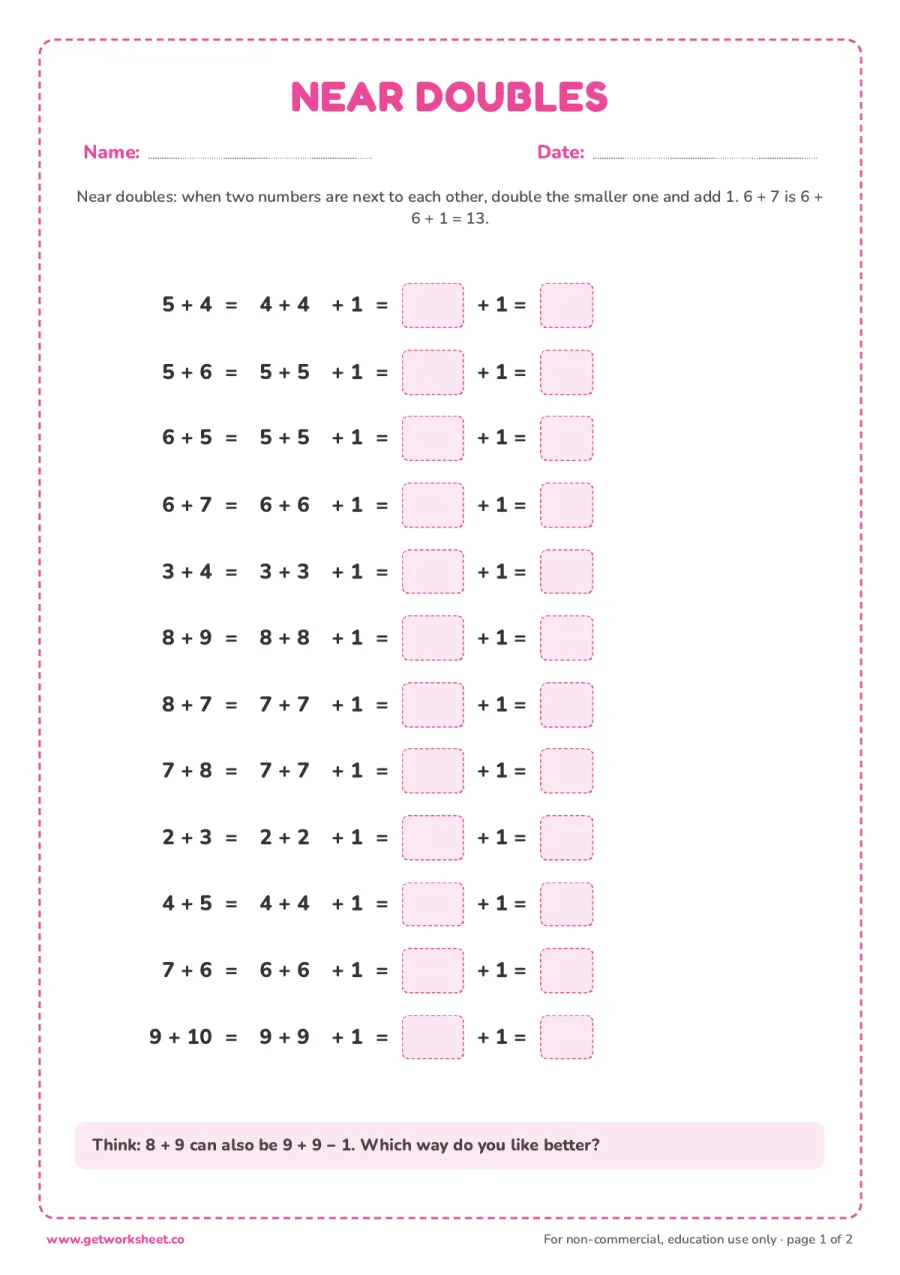
Near doubles: doubles plus one
Twelve scaffolded near-doubles facts such as 6 + 7 = 6 + 6 + 1. Answer key on page 2. Free printable PDF.
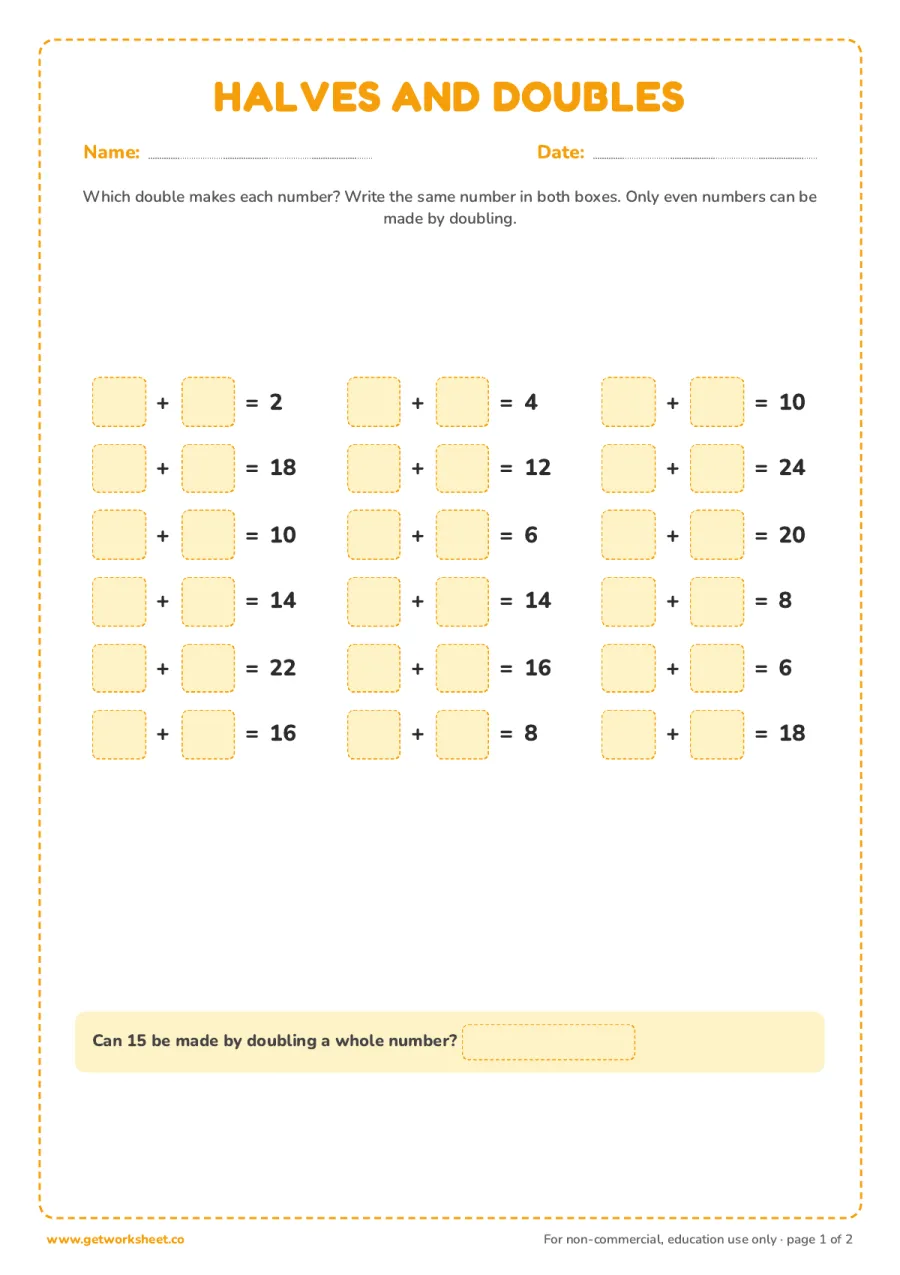
Which double makes it? Missing numbers
Eighteen even totals to 24; write the double that makes each one. Answer key on page 2. Free printable PDF.
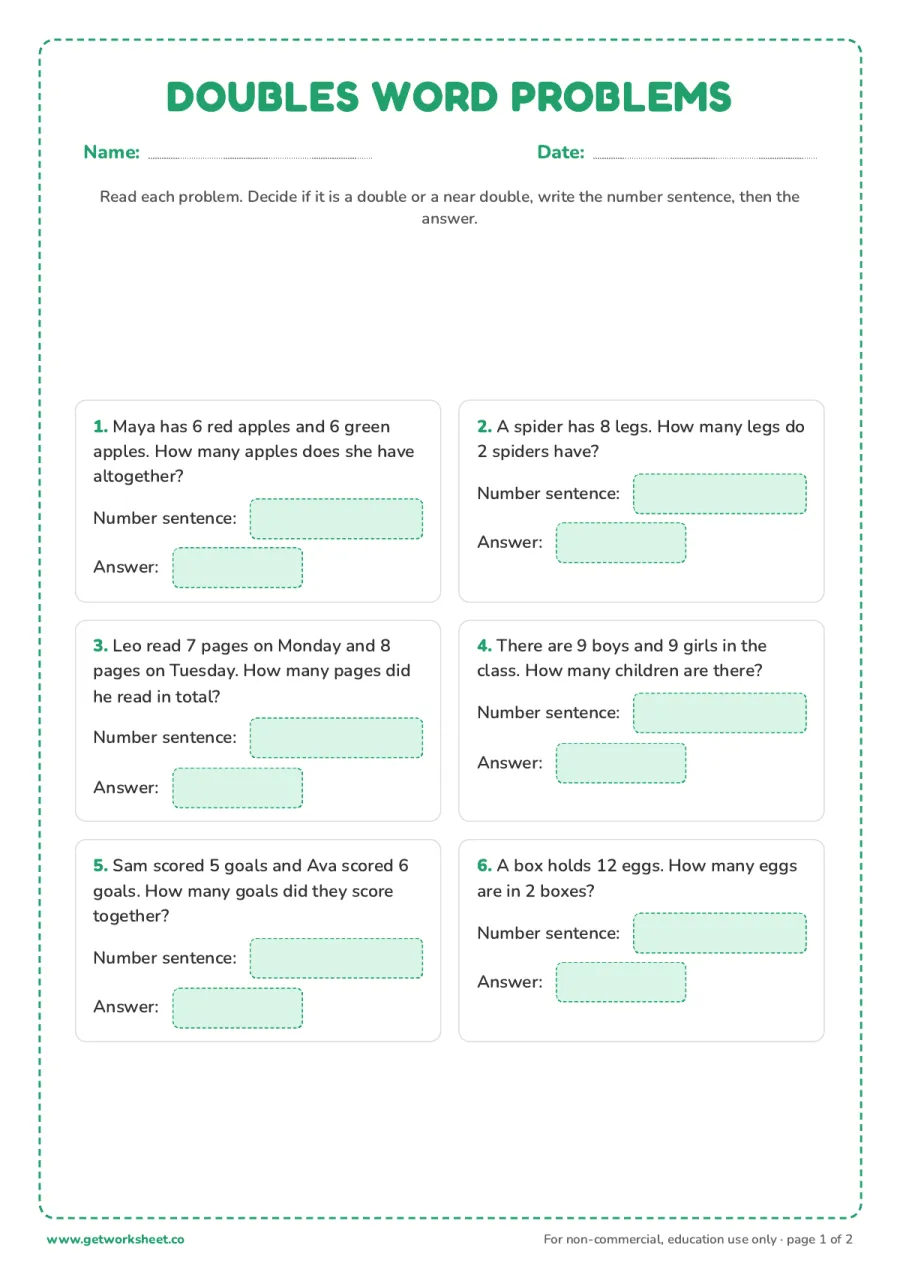
Doubles and near doubles word problems
Six real-life problems that use doubles and near doubles, with space for the number sentence and answer. Answer key on page 2. Free printable PDF.
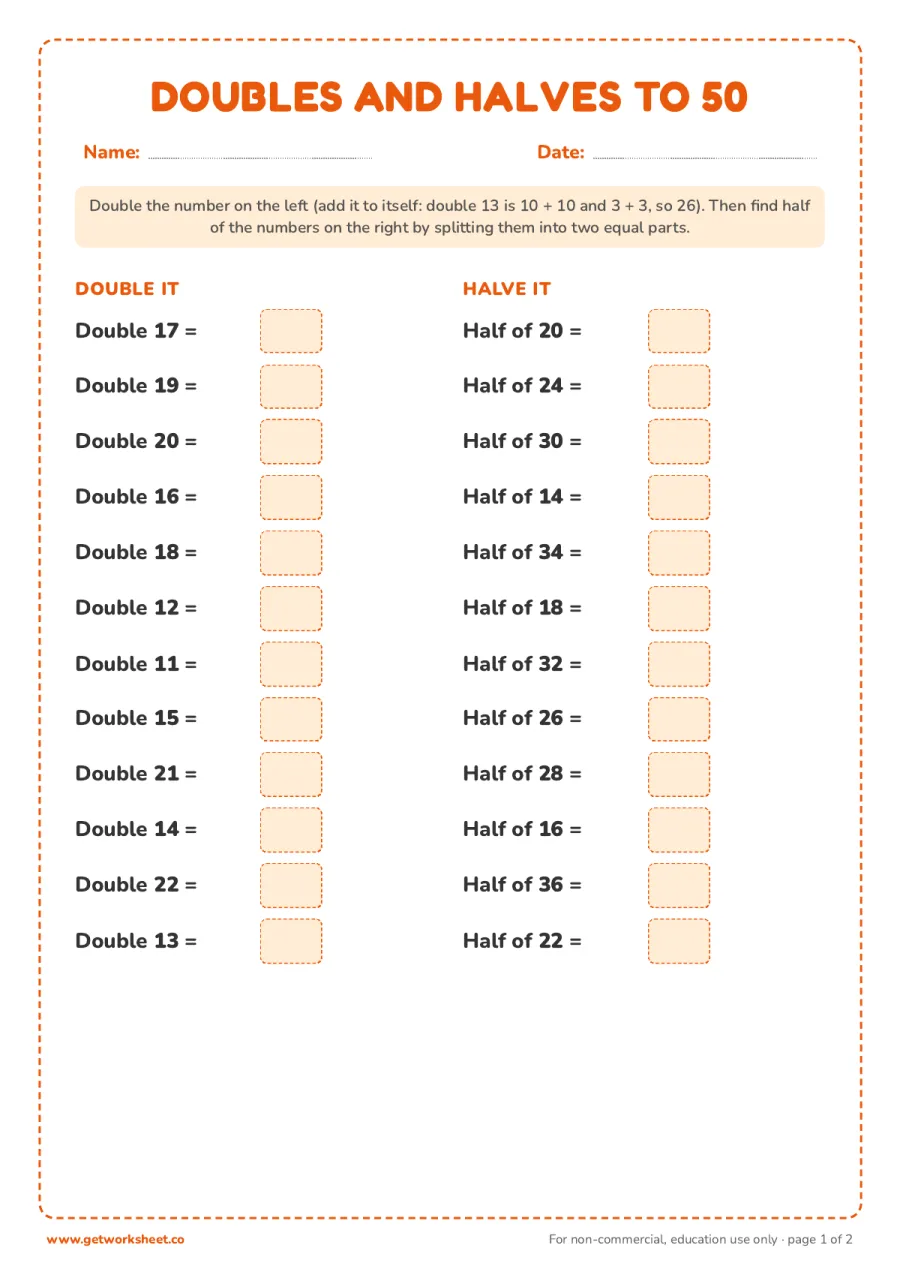
Doubles and halves to 50
Double the numbers 11 to 22 by splitting into tens and ones, then find half of even numbers to 36. Answer key on page 2. Free printable PDF.
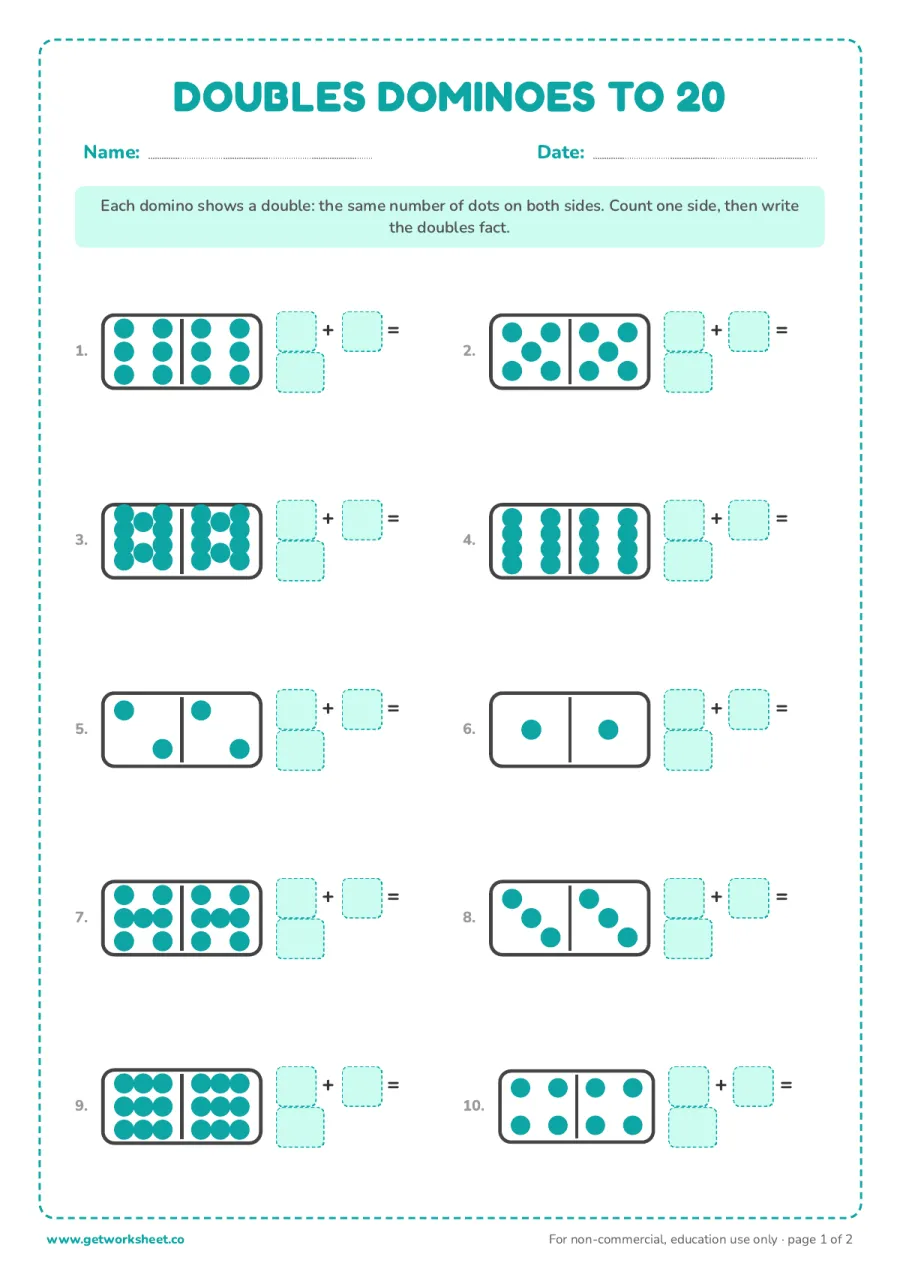
Doubles dominoes to 20
Ten dominoes with the same number of dots on both sides: count one side and write the doubles fact (7 + 7 = 14). Answer key on page 2. Free printable PDF.
AI worksheet generator
Make a worksheet like this for your class
The 7 sheets above are fixed. The generator writes a new doubles addition worksheet for your grade, with the question types and count you choose, in about 20 seconds. Pick a grade to start:
What you get
- A fresh set of questions on doubles addition, not a copy of the sheets above
- Multiple choice, fill in the blanks, true or false, open ended
- Answer key and print-ready PDF with Pro
Free account, 1 worksheets a week. No card.
Doubles facts (3 + 3, 7 + 7) are the first addition facts most children commit to memory, and they unlock a second set for free: near doubles, where 6 + 7 becomes 6 + 6 + 1. These worksheets teach both. The doubles chart shows every fact from 0 + 0 to 10 + 10 with two rows of dots, then mixed practice, near doubles with a scaffold, halves (which double makes 14?) and word problems build fluency. Every practice sheet has its answer key on page 2. Two more sheets extend the idea: doubling and halving numbers to 50, and doubles dominoes to count and record.
What Students Will Practice
- Recalling doubles to 10 + 10 and then to 12 + 12 without counting
- Seeing a double as two equal groups, which is the picture behind even numbers and later multiplication by 2
- Using a known double to solve a near double: 8 + 9 = 8 + 8 + 1 or 9 + 9 − 1
- Working backwards from a total to the double that makes it (halving)
- Choosing the doubles strategy in a word problem and writing the number sentence
Doubles and near doubles are named strategies in Common Core 1.OA.C.6 (add and subtract within 20 using strategies such as creating equivalent but easier sums) and appear in Year 1 and Year 2 of the UK national curriculum as number bonds and mental methods.
Free printable makers
Make your own doubles addition sheets
Type your own words or numbers and print in about 30 seconds. No account, no AI, answer key where it applies.
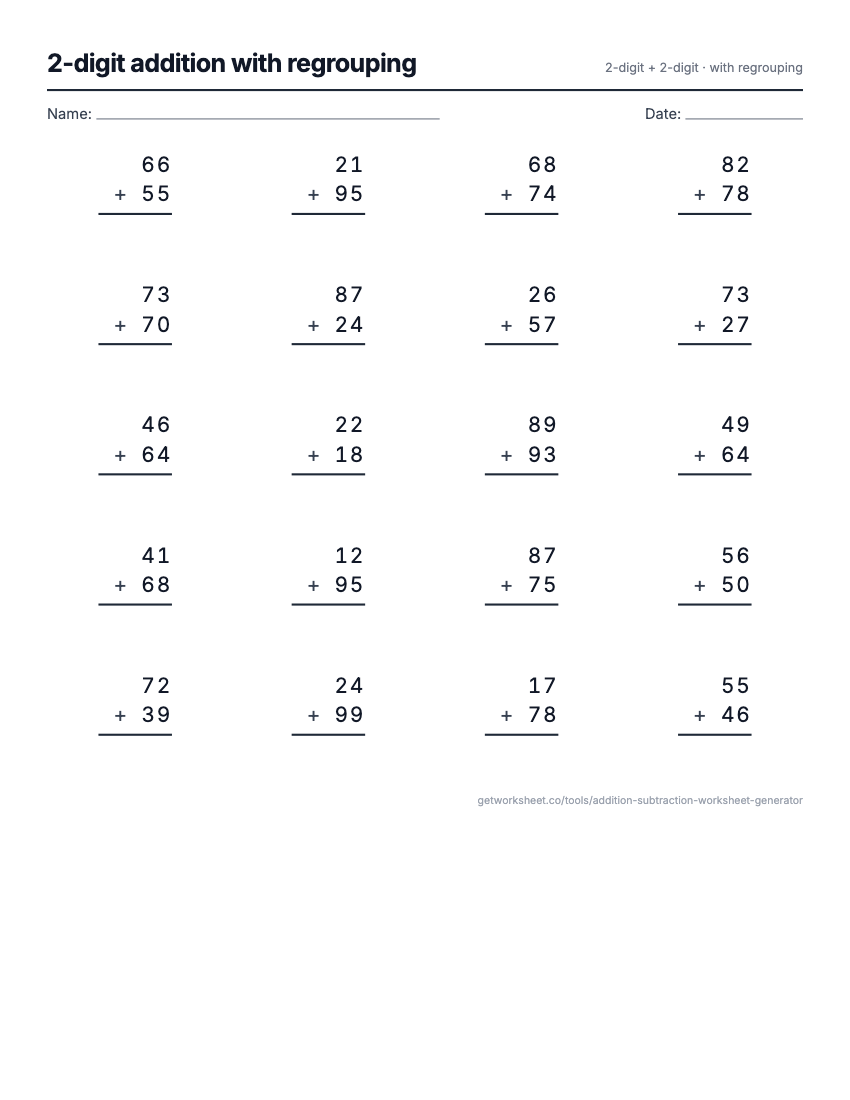 Addition and subtraction generatorColumn add and subtract, regrouping you control, boxes and key. Free to print.
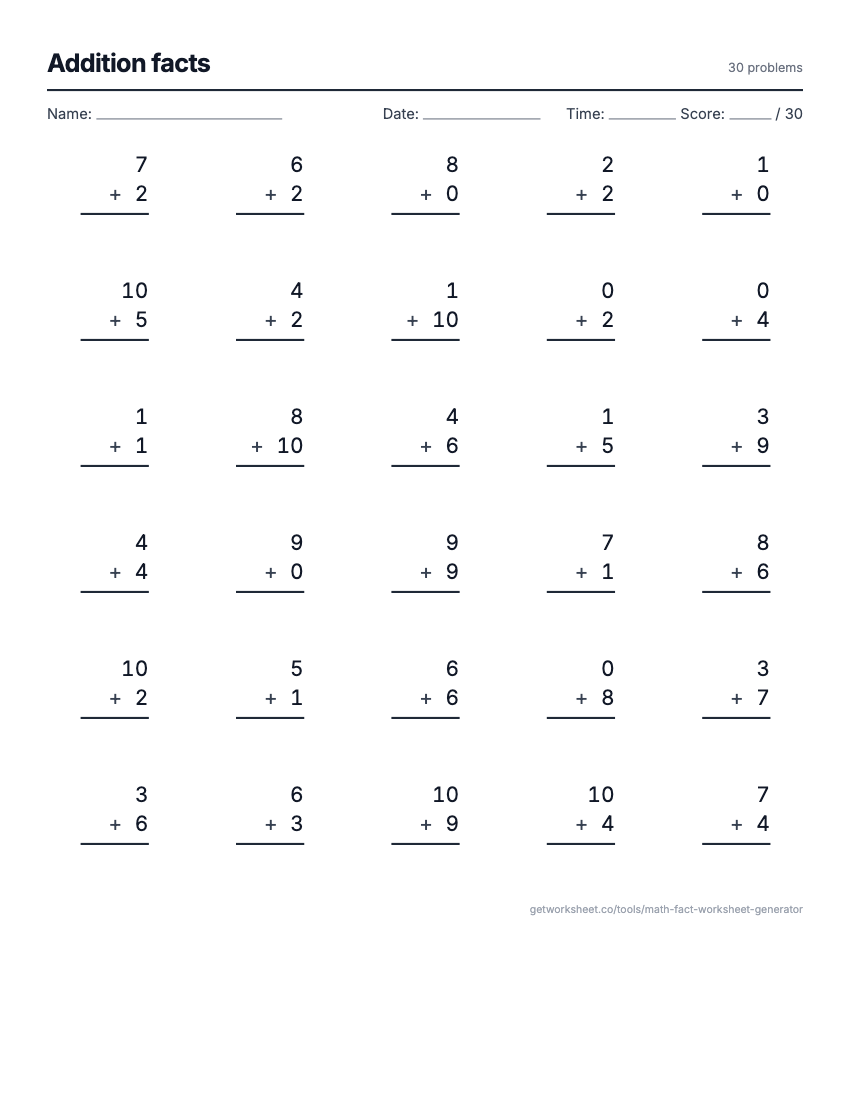 Math fact worksheet generatorAddition to division drills with an answer key. Free to print.
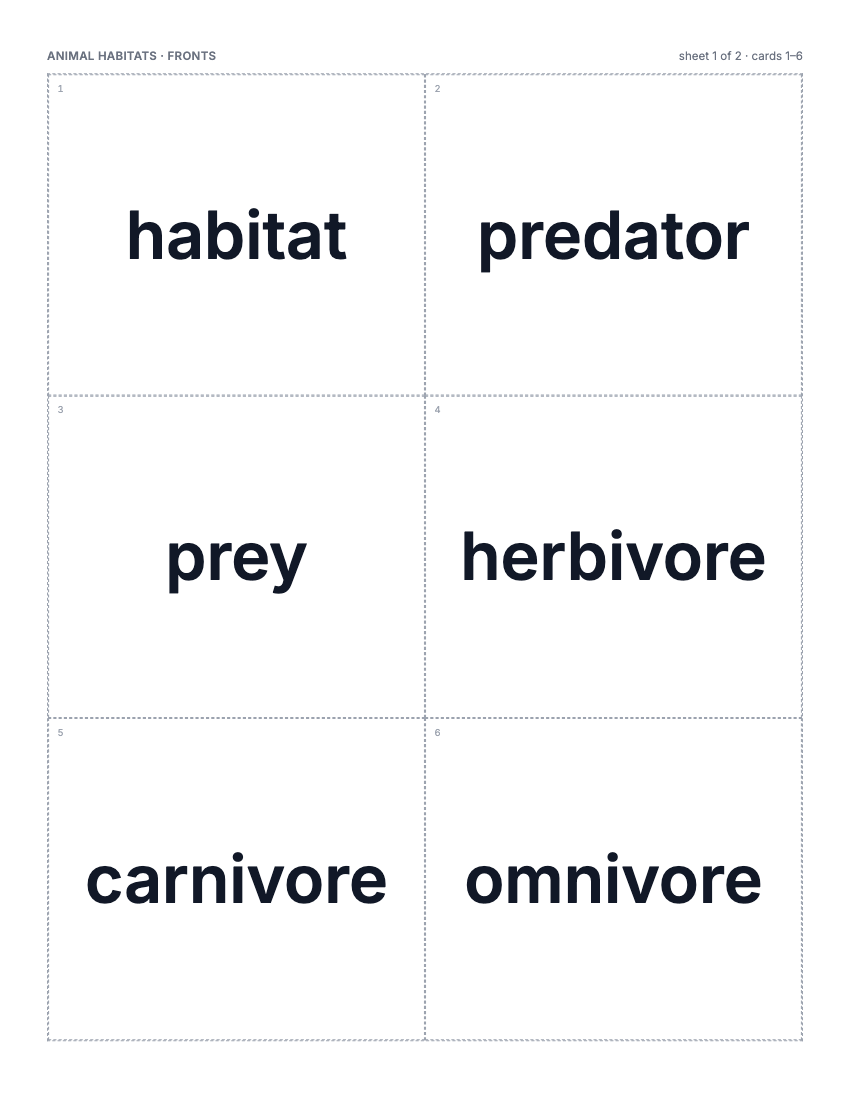 Flashcard makerVocabulary, math fact or sight word cards, 2-8 a page, two-sided or fold-over. Free to print.
AI worksheet generator
Need a different doubles addition worksheet?
Generate a custom doubles addition worksheet: pick the grade, question types and count, and print it in about 20 seconds. Free accounts get 1 generation a week.
Complete pack · $2.99
All 7 sheets above, plus 4 bonus sheets you will not find on this page
7 free sheets + 4 bonus sheets in one print-ready PDF with a contents page. Instant, no ads, no account; the link is emailed to you so it works on any device. The 7 sheets above stay free.
- BonusDoubles practice set 2: 24 mixed facts
- BonusDoubles practice set 3: 24 mixed facts
- BonusNear doubles set 2: doubles plus one
- BonusWhich double makes it? Set 2
One-time payment of $2.99. Card, Apple Pay or Google Pay. For home and classroom use.
- Bonus
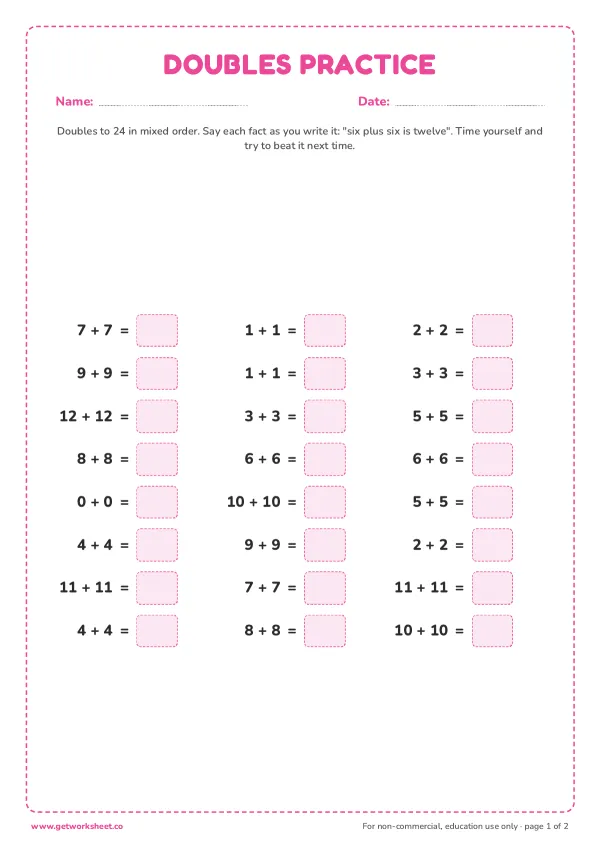 Doubles practice set 2: 24 mixed facts
 - Bonus
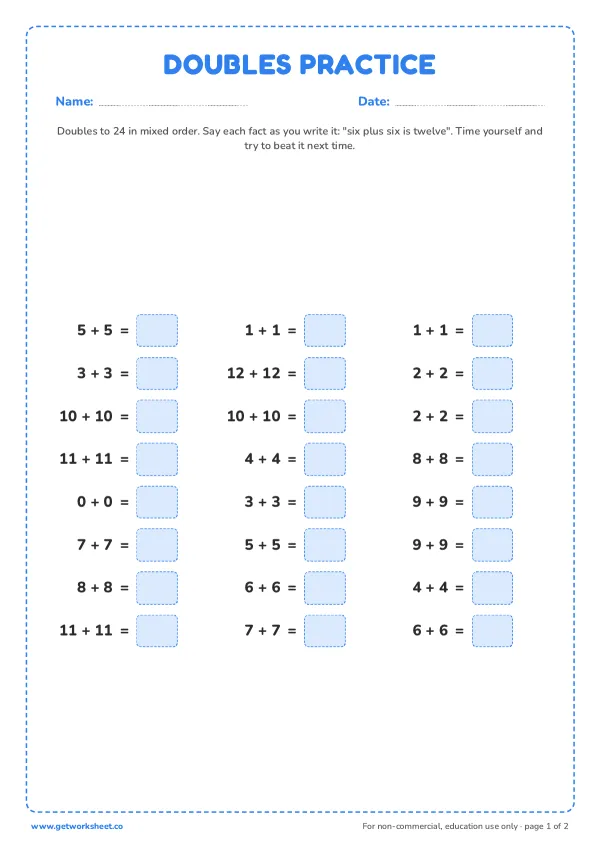 Doubles practice set 3: 24 mixed facts
 - Bonus
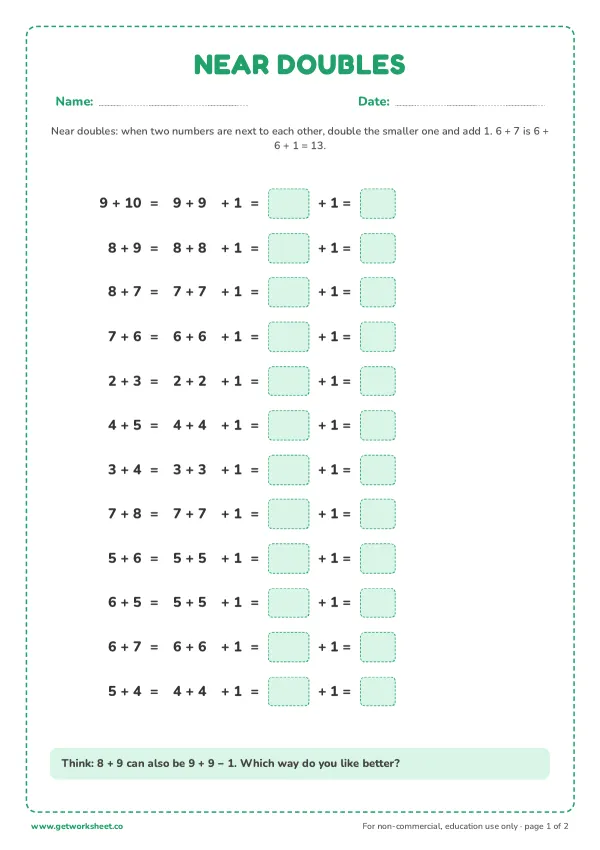 Near doubles set 2: doubles plus one
 - Bonus
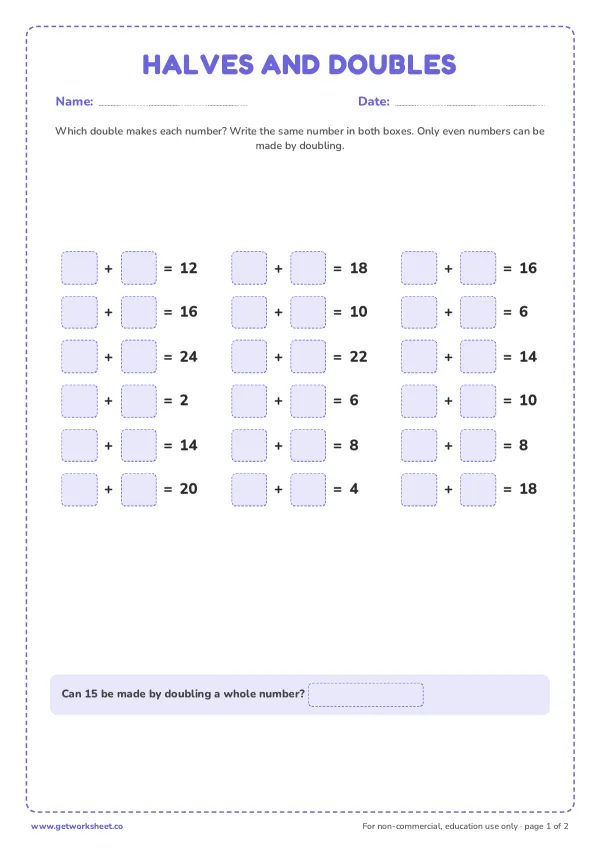 Which double makes it? Set 2
Teaching tips and common mistakes
How to Use These Worksheets
Print at 100% on A4 or US Letter. Teach the facts with the chart first; the practice sheets are for fluency, not for learning.
- Start with the doubles chart (sheet 6). Read the left side aloud with the dots, then cover it and fill in the right side. Do this three days in a row before moving on.
- Fluency: sheet 7. Twenty-four mixed doubles. Time it and record the time; children love beating yesterday.
- Near doubles: sheet 8. The scaffold does the thinking on paper: 6 + 7 = 6 + 6 + 1 = 12 + 1 = 13. Fade the scaffold by covering the middle once it clicks.
- Halves and word problems: sheets 9 and 10. Working backwards from the total and choosing the strategy in context is what shows the facts are really known.
Common Mistakes to Watch For
- Counting on fingers for every double: the goal is recall. Chant the doubles as a sequence: 2, 4, 6, 8 ... and the odd numbers between them are the near doubles.
- Adding 1 to the wrong double: for 6 + 7, double the smaller number and add 1, or double the larger and subtract 1. Either works; mixing them up does not.
- Thinking odd totals have a double: only even numbers are doubles. If a child writes 7 + 7 = 15, ask them to draw the dots.
- Forgetting to regroup in column addition: 91 + 79 needs a carry. Estimating first (90 + 80 is about 170) catches most slips.
Frequently Asked Questions
What are doubles in addition?
Doubles are addition facts where both numbers are the same: 1 + 1, 2 + 2 ... up to 10 + 10 or 12 + 12. They are among the easiest facts to memorize because the answers are the even numbers in order.
What are near doubles?
Facts where the two numbers differ by 1, such as 6 + 7 or 8 + 9. Children solve them by doubling one number and adjusting by 1: 6 + 7 = 6 + 6 + 1 = 13.
What grade learns doubles facts?
Kindergarten children meet doubles to 5 + 5 with objects; first graders are expected to know doubles to 10 + 10 and use near doubles; second graders use them for mental addition of larger numbers.
Do the worksheets have answer keys?
Sheets 7 to 10 have their answer key as page 2 of the PDF. The chart (sheet 6) contains the answers on its left side.
More Addition Practice
Doubles are the even numbers, so the skip counting worksheets (by 2s) reinforce the same sequence. For the picture behind doubles use the ten frame worksheets, and for the next step in mental addition try the hundreds chart worksheets.
Free library
Related collections
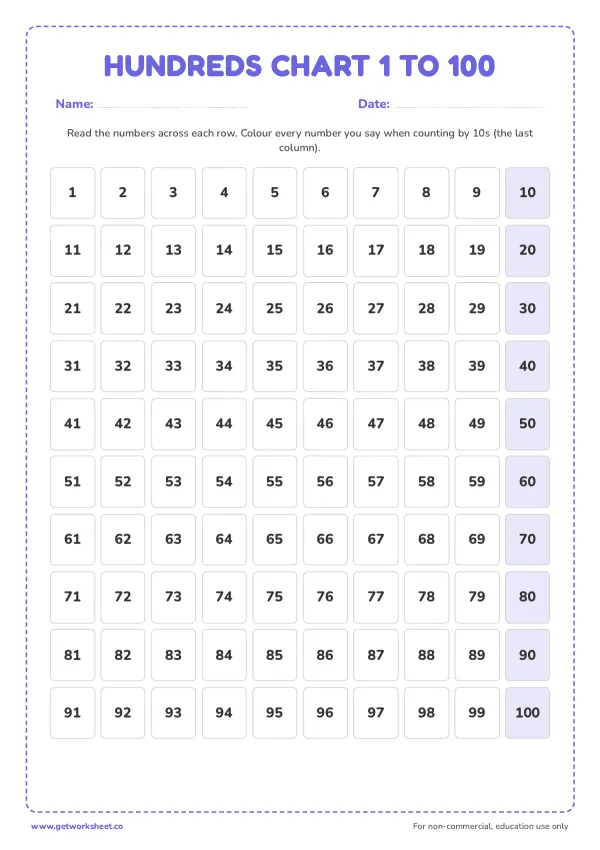
Free hundreds chart worksheets
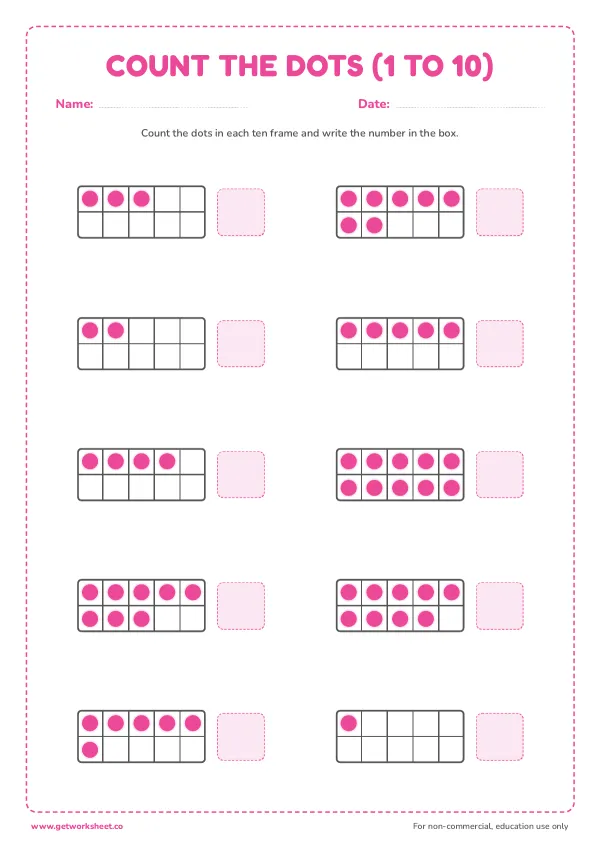
Free ten frame worksheets
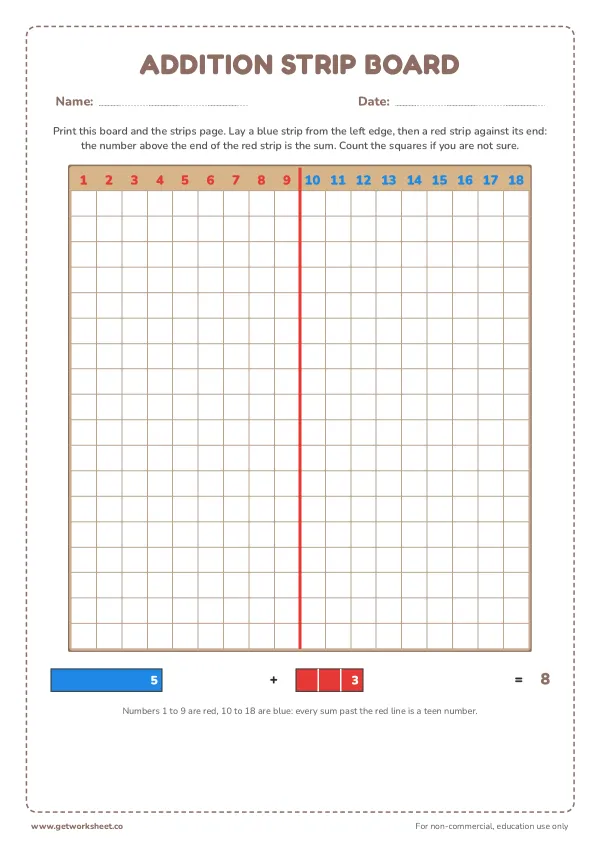
Free Montessori addition strip board worksheets
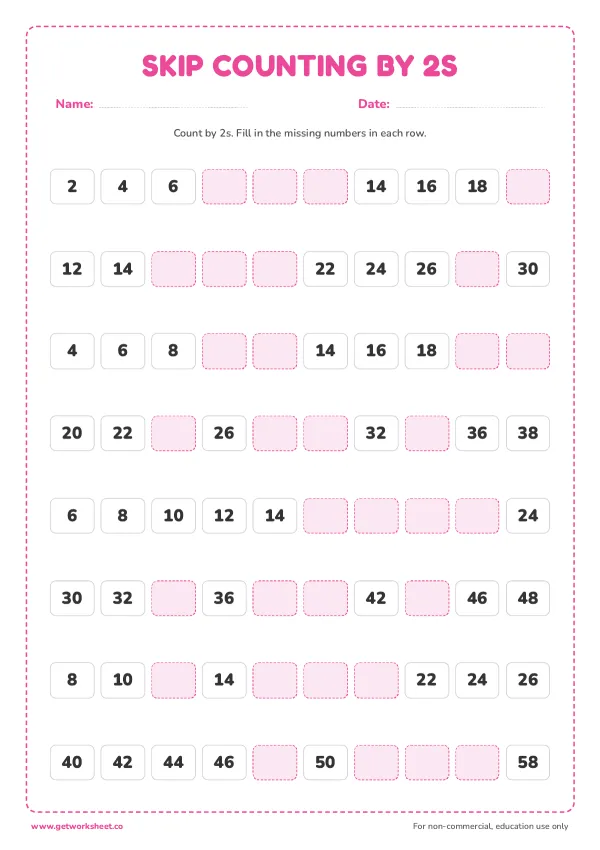
Free skip counting worksheets
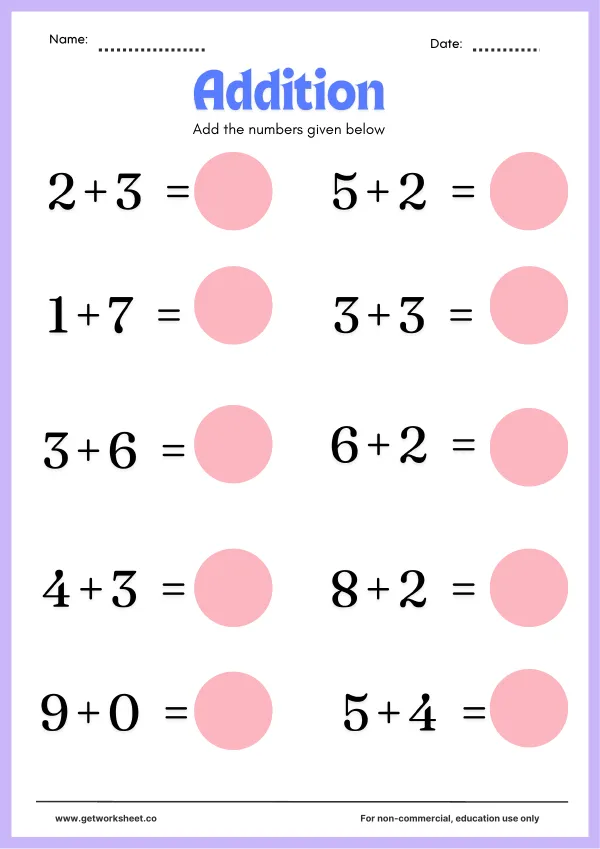
Free addition worksheets
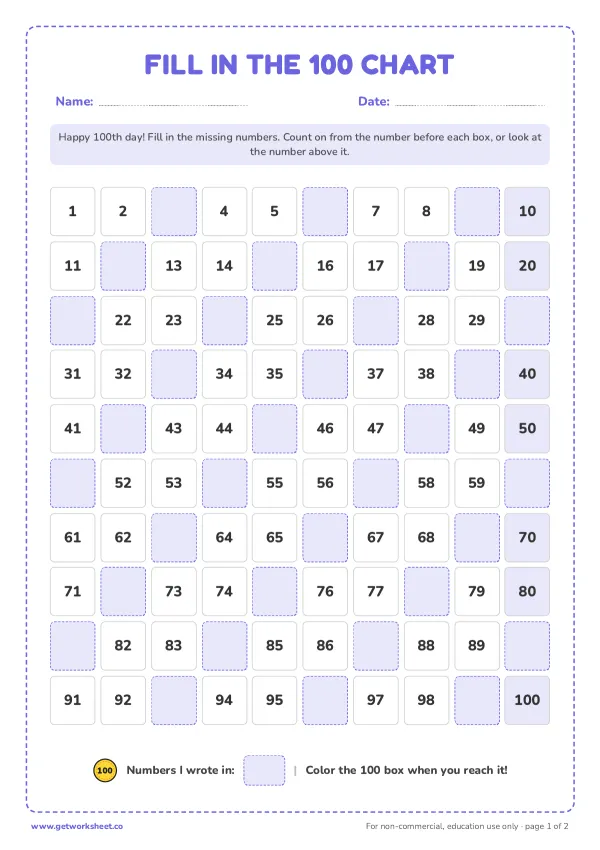
Free 100th day of school worksheets
Free winter break packet worksheets
Free Thanksgiving math worksheets
More worksheets
- Free greater than less than worksheets
- Free number line printables
- Free Halloween math worksheets
- Free Christmas math worksheets
- Free Montessori teen board and ten board worksheets
- Free Montessori place value worksheets (golden beads)
- Free Montessori hundred board worksheets
- Free repeating patterns worksheets
- Free before and after numbers worksheets
- Free subtraction worksheets (within 10 and 20)
- Free 3D shapes worksheets
- Free 2-digit addition worksheets