Maths · Preschool–Kindergarten
Free square tracing worksheets
Free square tracing worksheets for preschool and kindergarten. Practice drawing squares with guided tracing activities, printable PDFs for early learners.
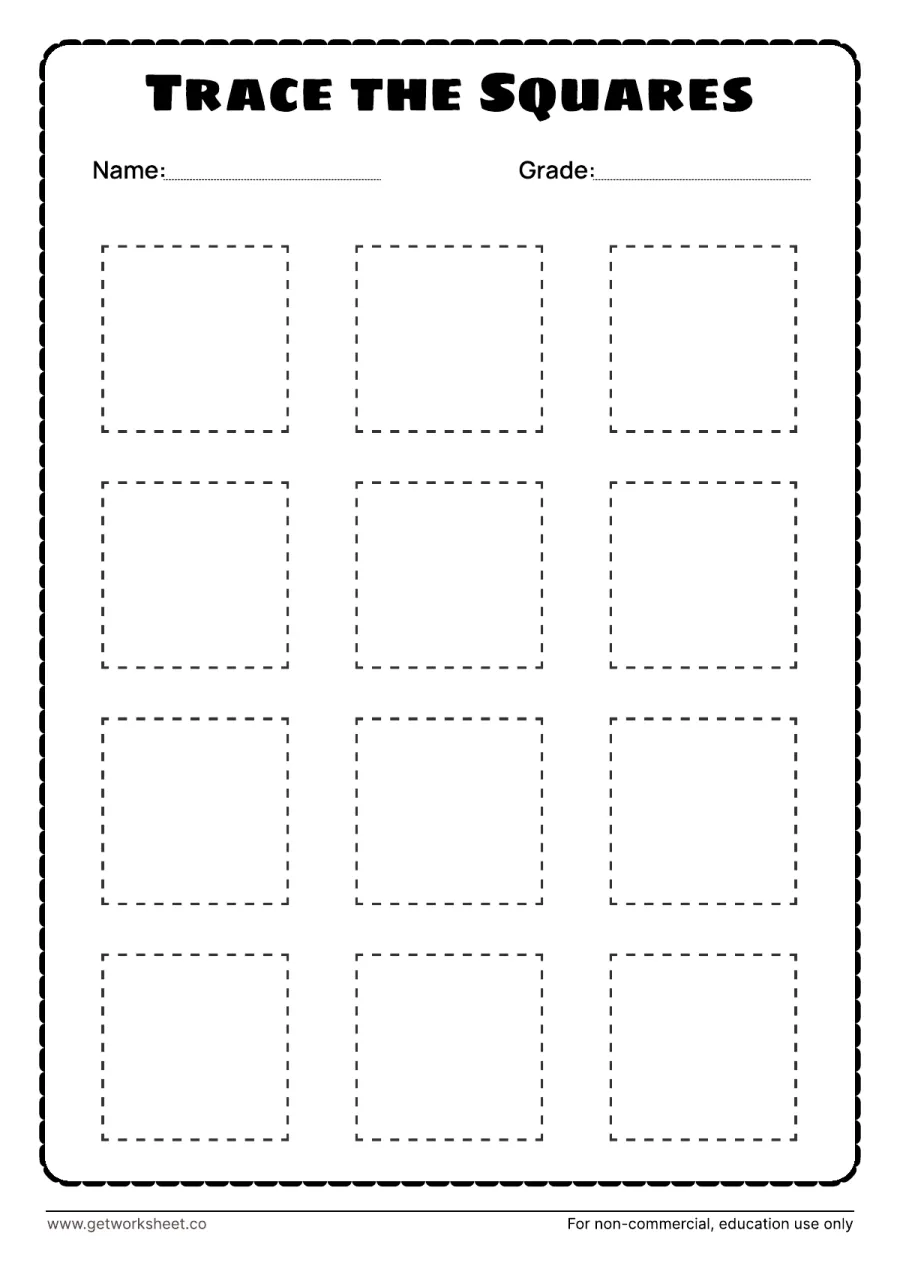
Trace 12 plain squares (dashed lines)
Twelve large dashed squares with nothing else on the page: the simplest first sheet for age 3. Free printable PDF.
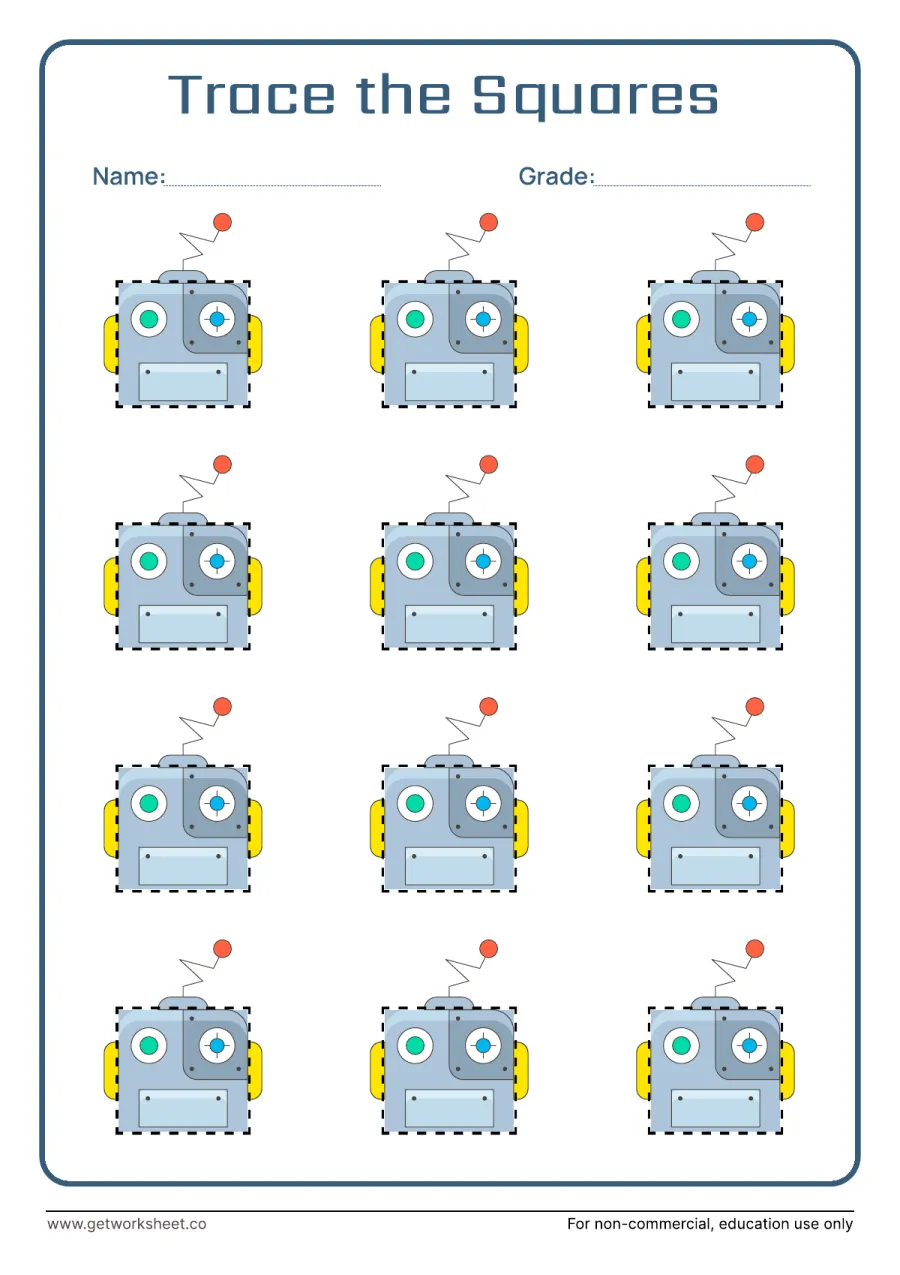
Trace the robots: 12 square faces
Twelve dashed squares that become robot heads once traced. Colour them in afterwards. Free printable PDF.
Complete pack
All 8 sheets + 6 bonus sheets in one PDF
Instant and ad-free. No account needed.
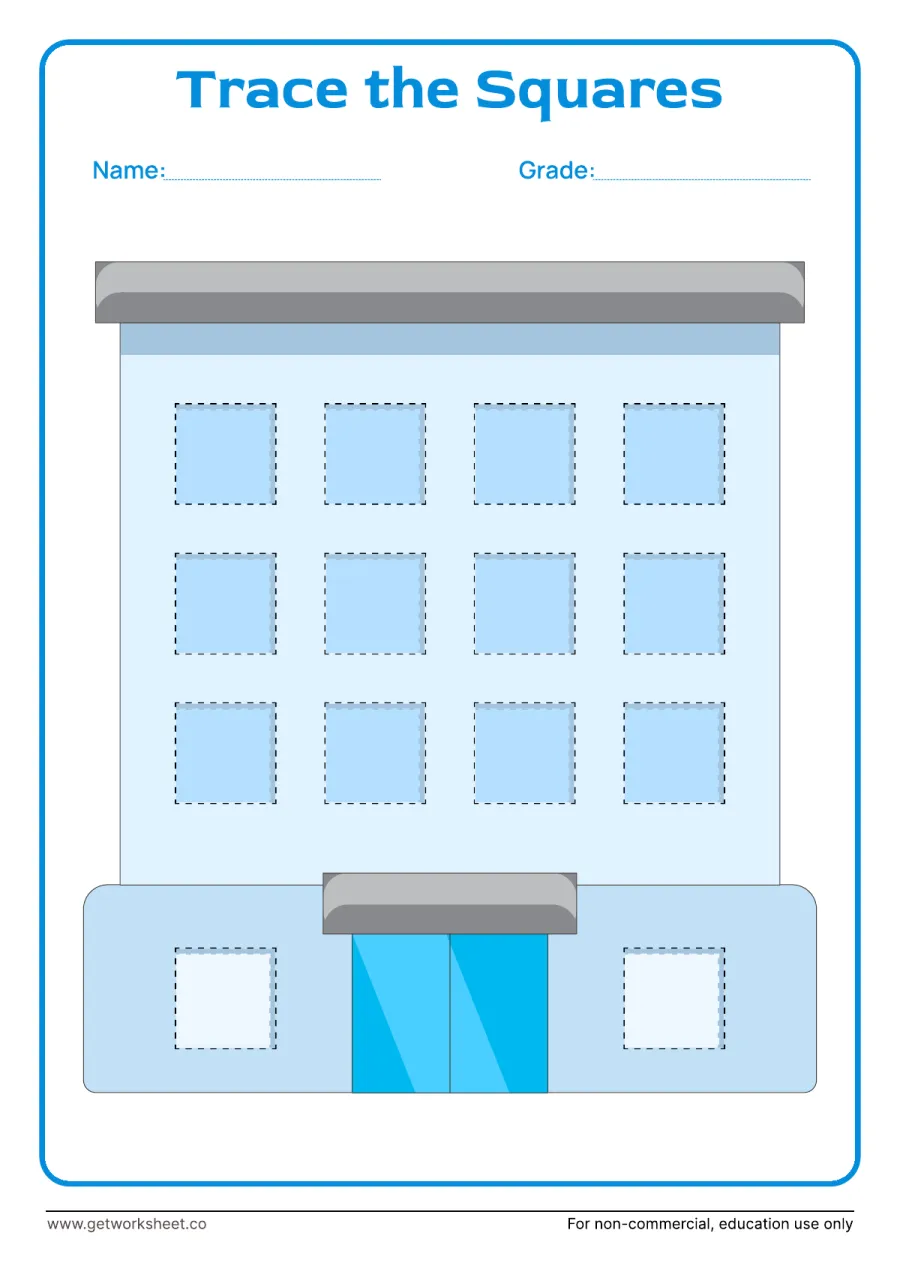
Trace the windows: a building of squares
Trace fourteen square windows to finish a tall building, then colour it. Free printable PDF.
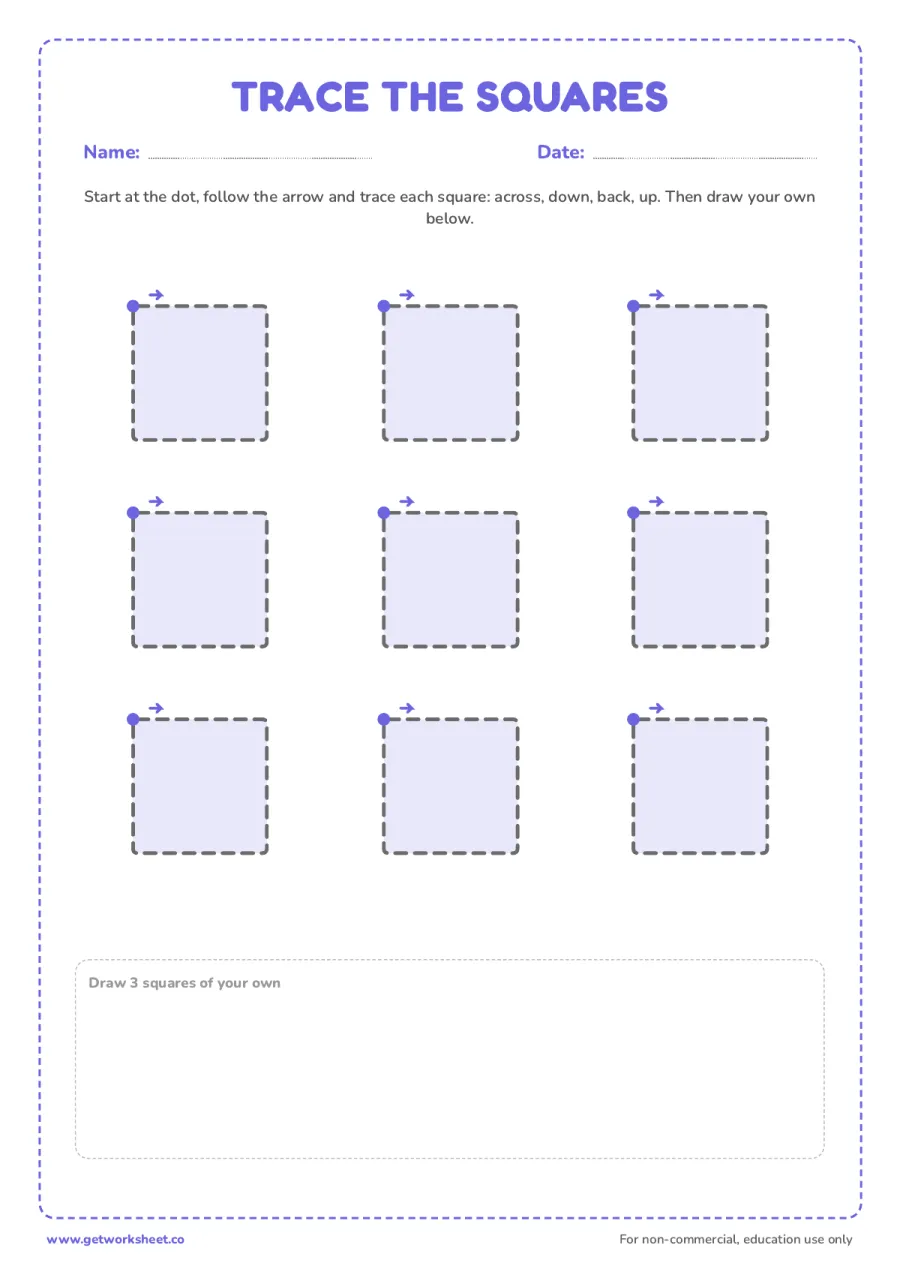
Trace 9 large squares (start dot and arrow)
Nine big dashed squares with a start dot and direction arrow, plus a box to draw your own. Best first sheet for age 3 to 4. Free printable PDF.
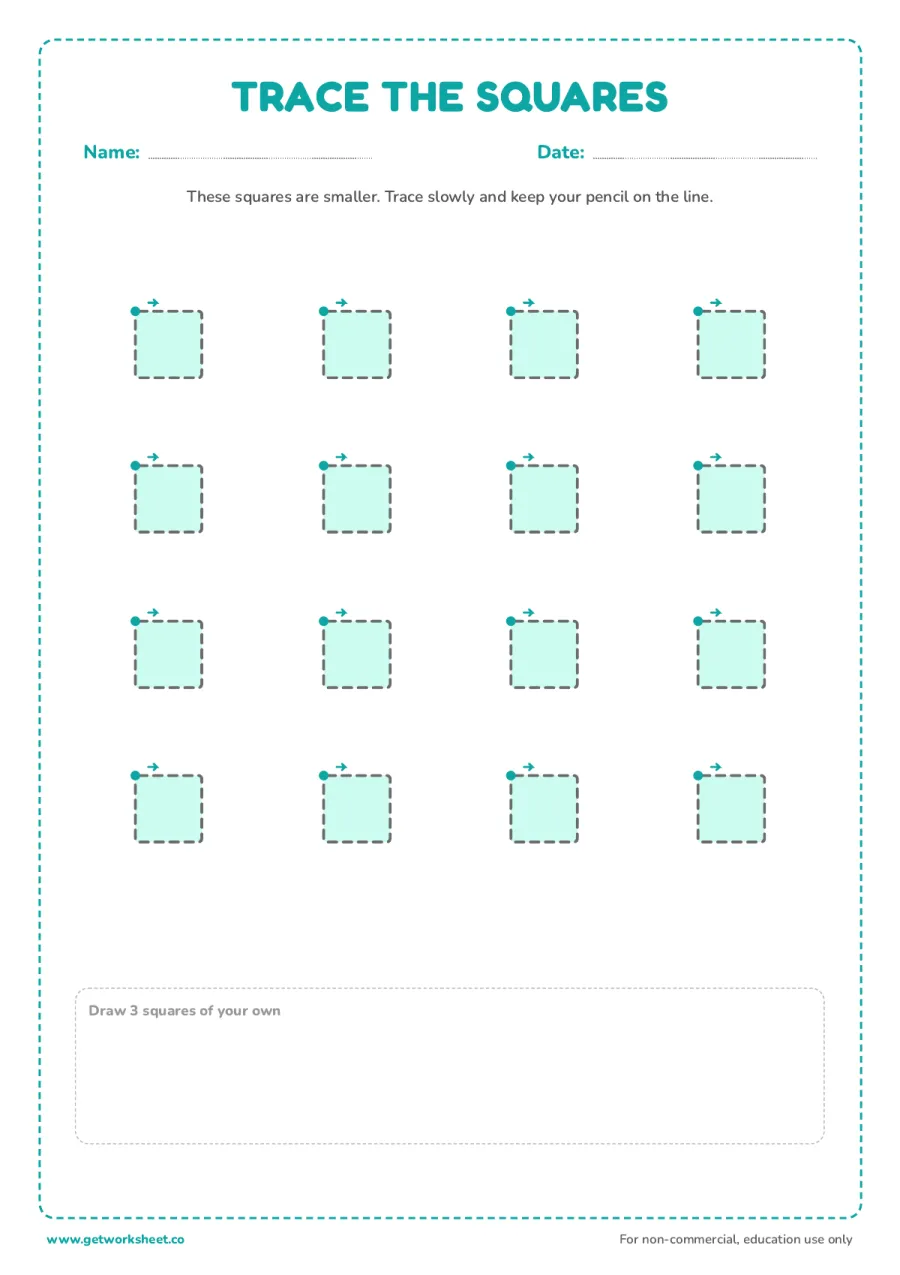
Trace 16 small squares
Sixteen smaller squares for more precise pencil control once the large ones are easy. Free printable PDF.
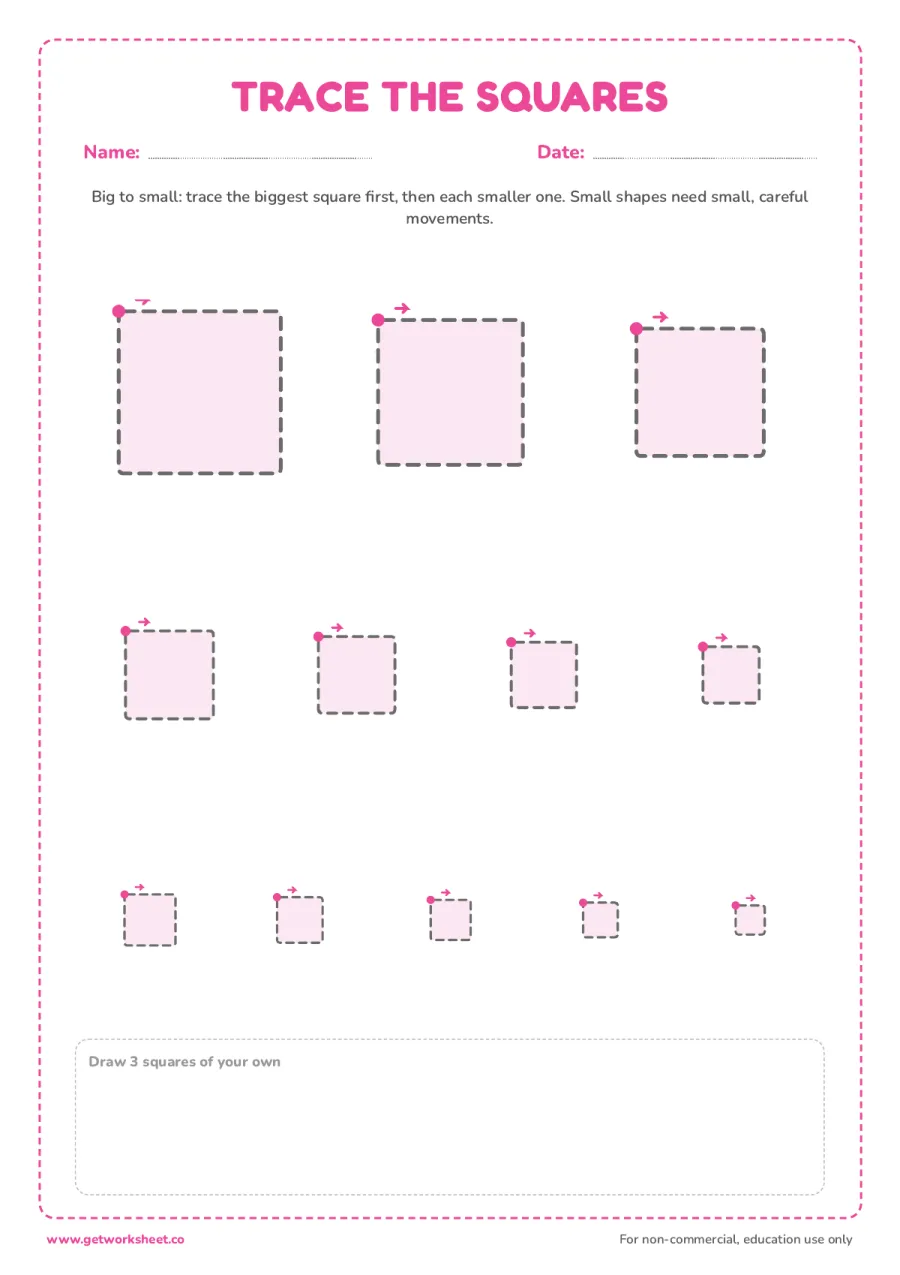
Squares big to small
Twelve squares that shrink row by row, from very large to tiny. Builds control of movement size. Free printable PDF.
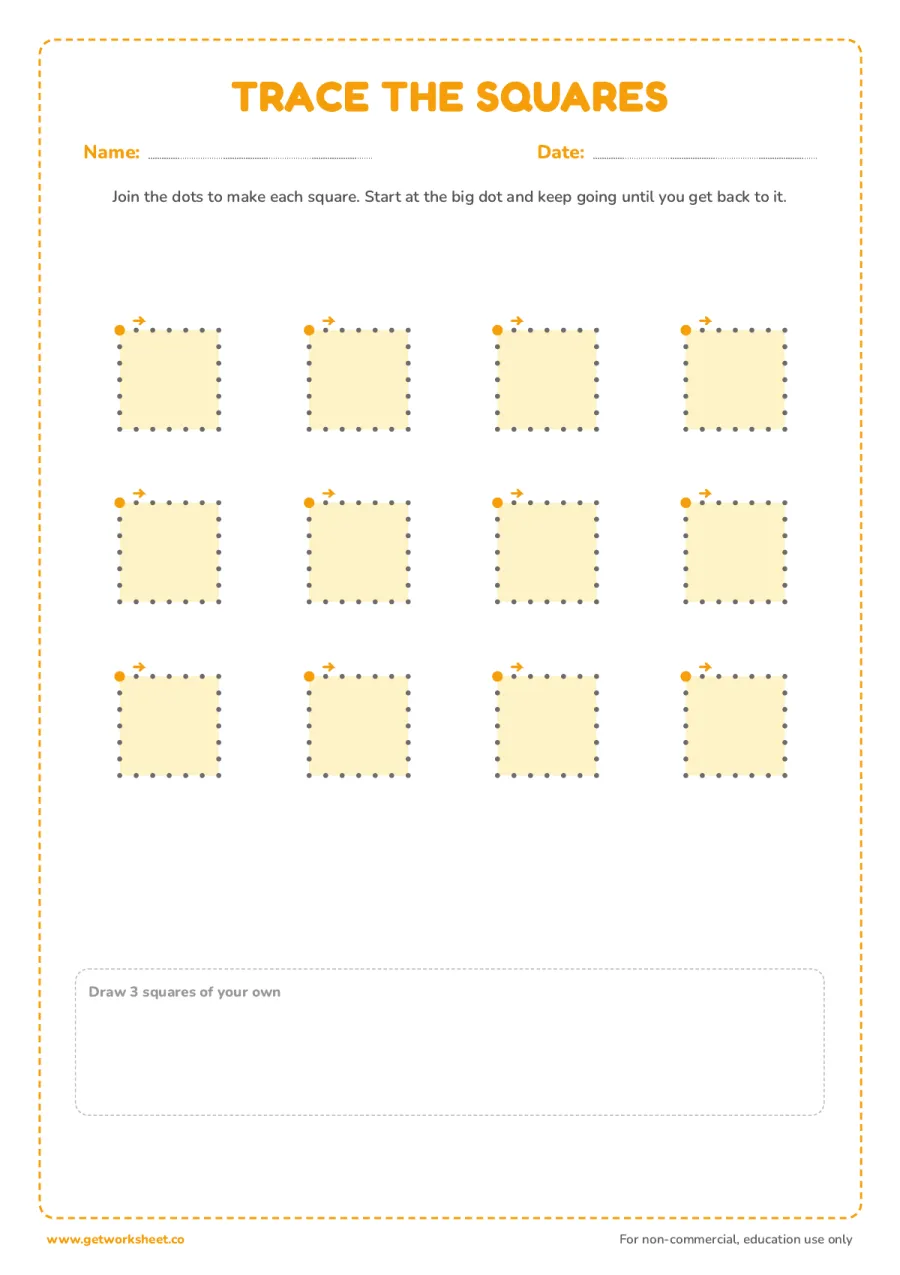
Dot-to-dot squares
Twelve squares drawn as dots instead of dashes: a lighter guide for children ready to draw the shape almost by themselves. Free printable PDF.
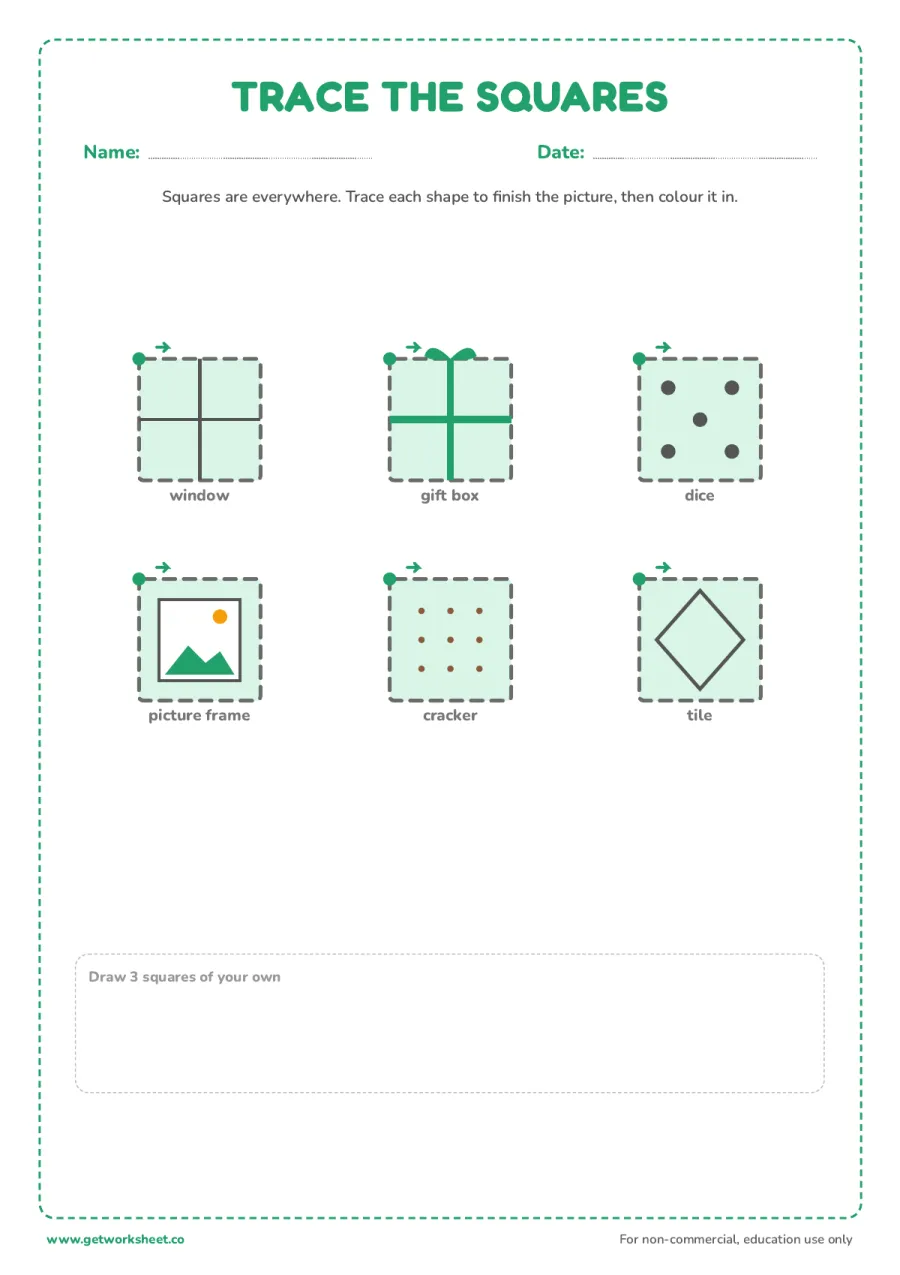
Squares all around us: trace and colour
Trace the square to finish a window, gift box, dice, picture frame, cracker and tile, then colour. Free printable PDF.
AI worksheet generator
Make a worksheet like this for your class
The 8 sheets above are fixed. The generator writes a new square tracing worksheet for your grade, with the question types and count you choose, in about 20 seconds. Pick a grade to start:
What you get
- A fresh set of questions on square tracing, not a copy of the sheets above
- Multiple choice, fill in the blanks, true or false, open ended
- Answer key and print-ready PDF with Pro
Free account, 1 worksheets a week. No card.
A square is the first shape with corners, and corners are hard: the pencil has to stop, turn and start again four times. That stop-and-turn control is exactly what children need later for the letters E, F, H, L and T. These eight worksheets move from twelve big dashed squares, through robots and a building full of square windows, to squares that shrink, dot-to-dot squares and everyday objects like a gift box and a dice.
What Students Will Practice
- Starting at the top-left dot and going across, down, back and up, one straight side at a time
- Stopping cleanly at each corner instead of rounding it off
- Keeping four sides the same length, which is what makes a square a square
- Working from dashes to dots to drawing freehand
- Spotting squares in real objects and finishing a picture with one
Square tracing supports the pre-writing goals of preschool programs and Kindergarten geometry standard K.G.A.2 (naming shapes regardless of size or orientation) and K.G.B.5 (drawing shapes).
Free printable makers
Make your own square tracing sheets
Type your own words or numbers and print in about 30 seconds. No account, no AI, answer key where it applies.
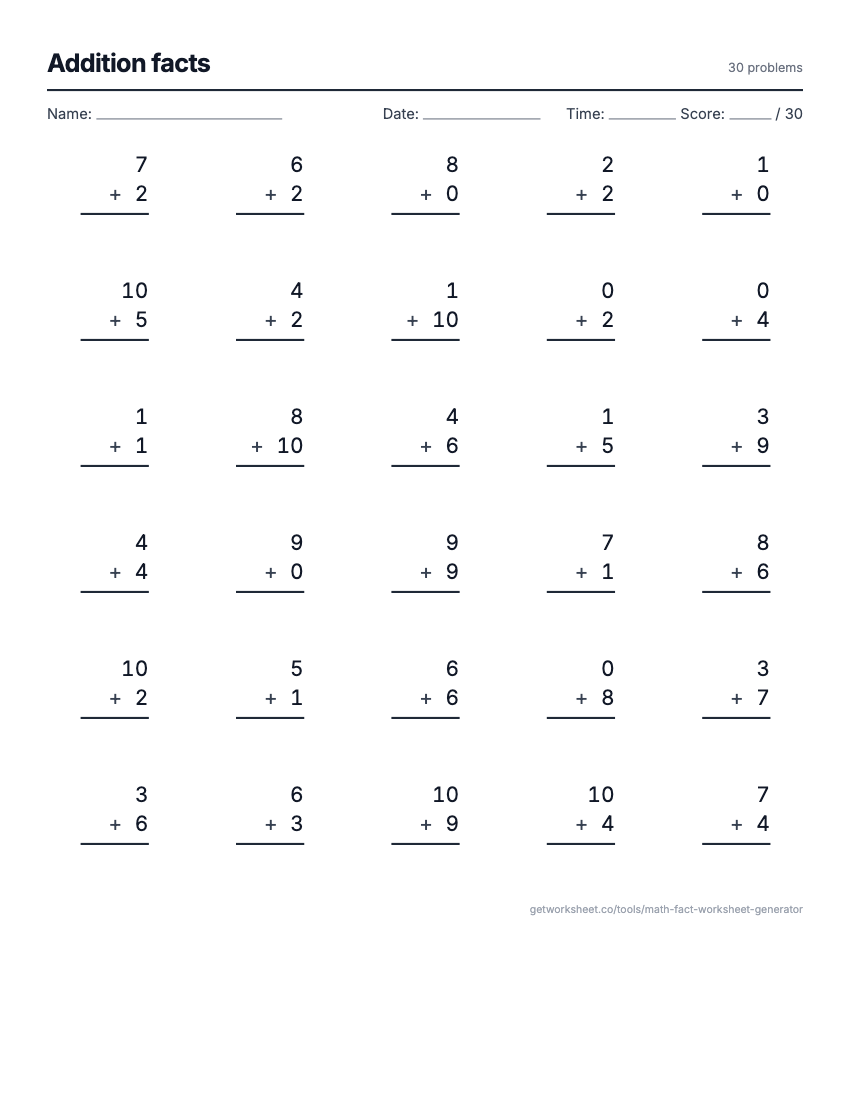 Math fact worksheet generatorAddition to division drills with an answer key. Free to print.
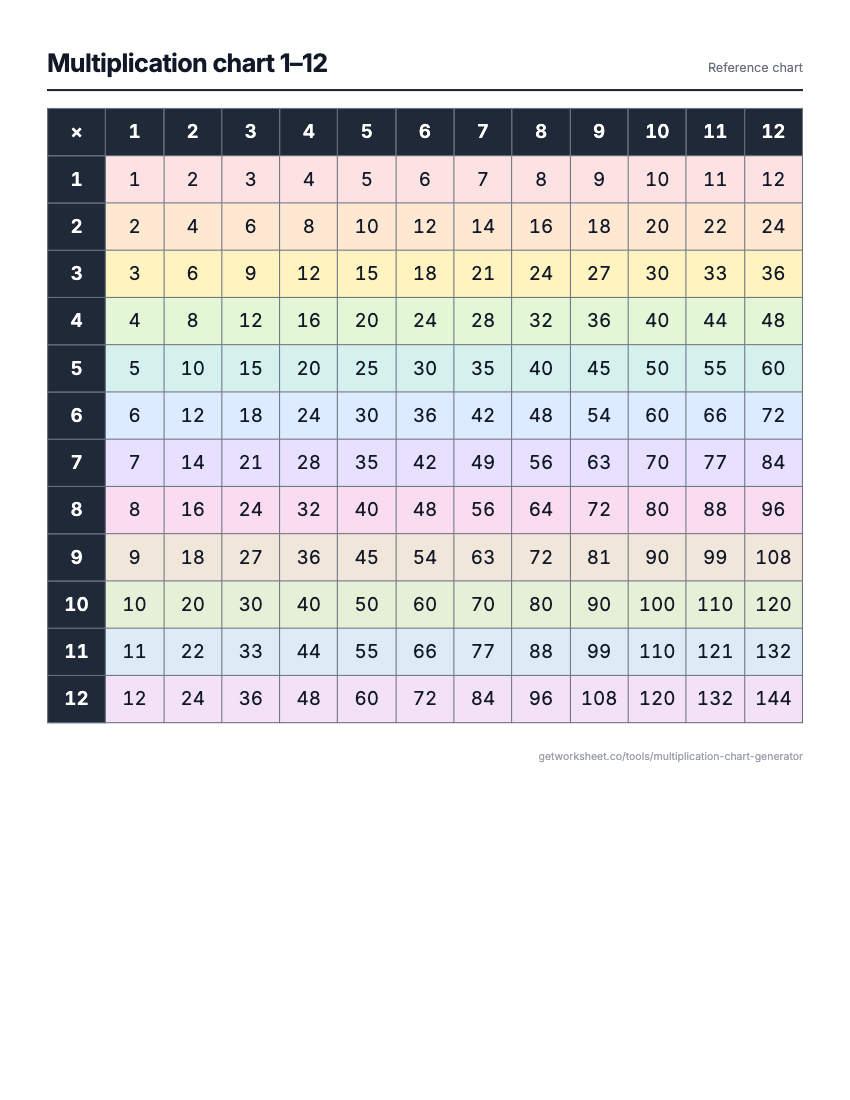 Multiplication chart generatorCharts to 15, full, blank or coloured, and times table tests with key. Free to print.
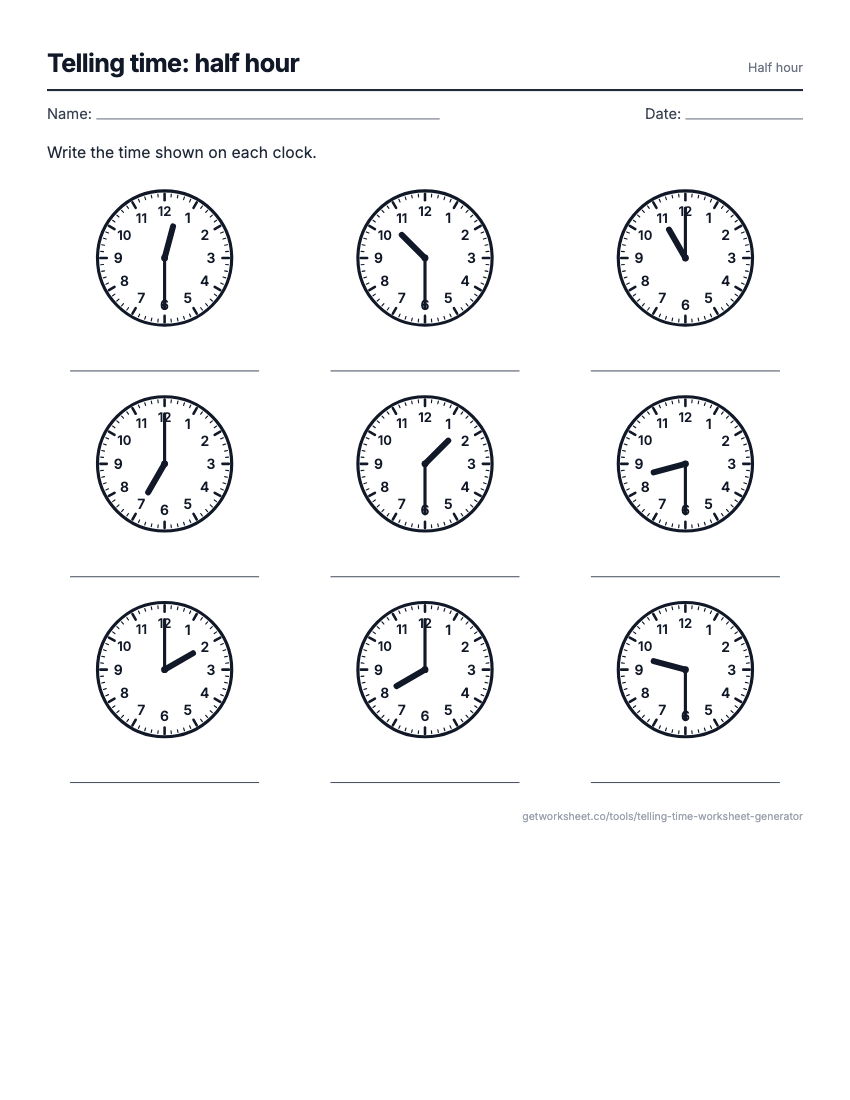 Telling time worksheet generatorAnalogue clocks to read, draw, match or add time to, with answer key. Free to print.
AI worksheet generator
Need a different square tracing worksheet?
Generate a custom square tracing worksheet: pick the grade, question types and count, and print it in about 20 seconds. Free accounts get 1 generation a week.
Complete pack · $1.99
All 8 sheets above, plus 6 bonus sheets you will not find on this page
8 free sheets + 6 bonus sheets in one print-ready PDF with a contents page. Instant, no ads, no account; the link is emailed to you so it works on any device. The 8 sheets above stay free.
- BonusRows of squares: 4 to 8 a row
- BonusTrace and count the squares (2 to 7)
- BonusSquares pattern strips
- BonusDraw your own squares (fading guide)
- BonusTrace the squares and write the word
- BonusTrace 9 rectangles: the long square
One-time payment of $1.99. Card, Apple Pay or Google Pay. For home and classroom use.
- Bonus
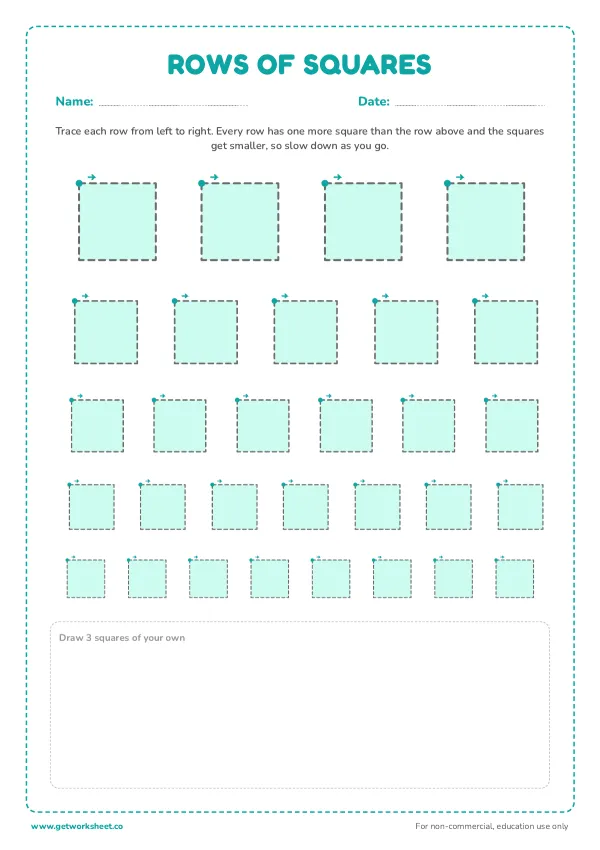 Rows of squares: 4 to 8 a row
 - Bonus
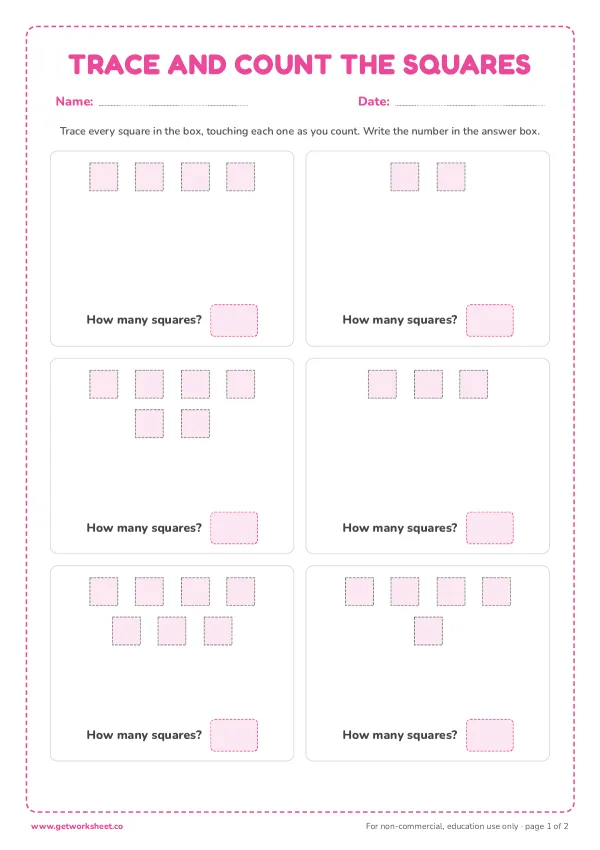 Trace and count the squares (2 to 7)
 - Bonus
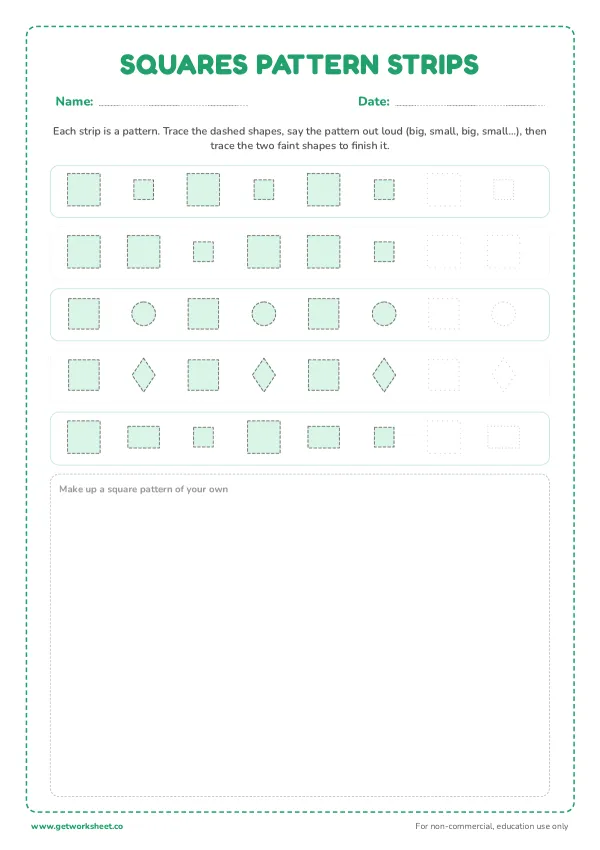 Squares pattern strips
 - Bonus
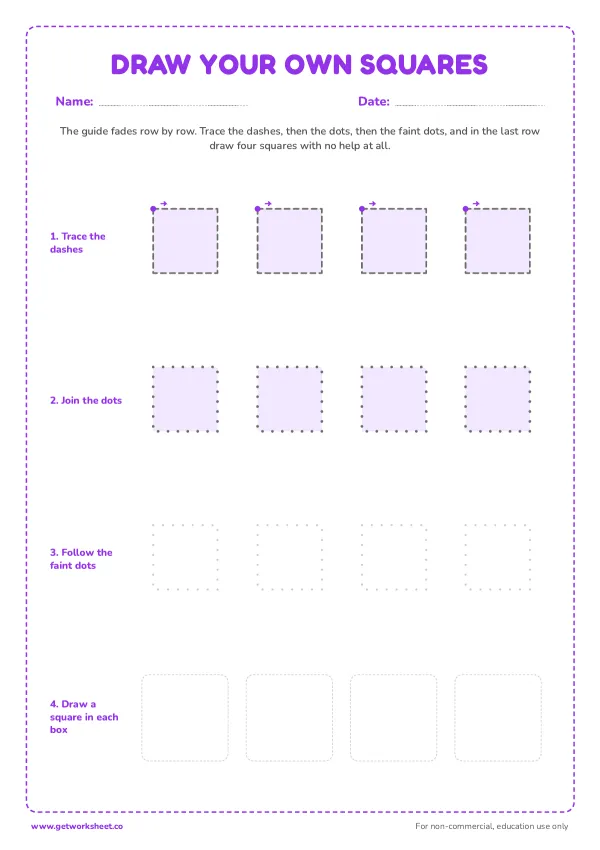 Draw your own squares (fading guide)
 - Bonus
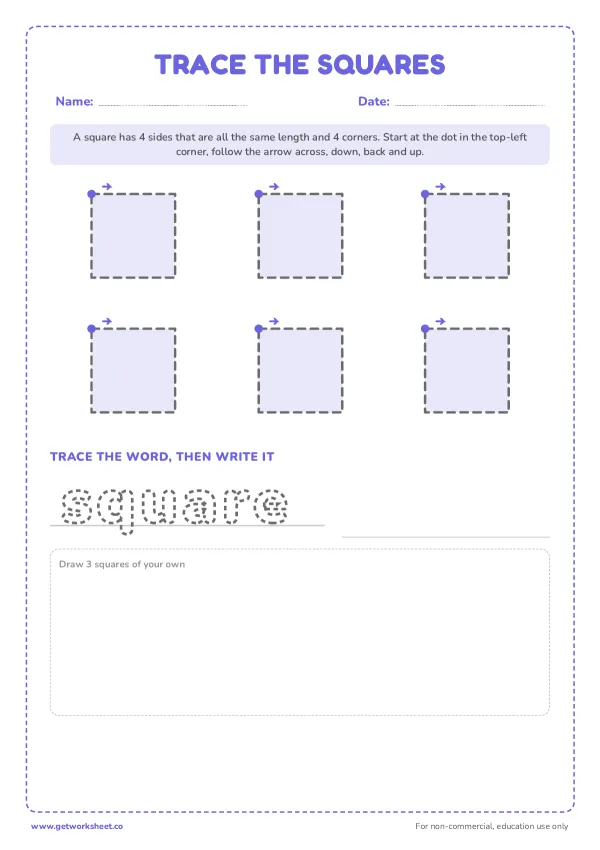 Trace the squares and write the word
 - Bonus
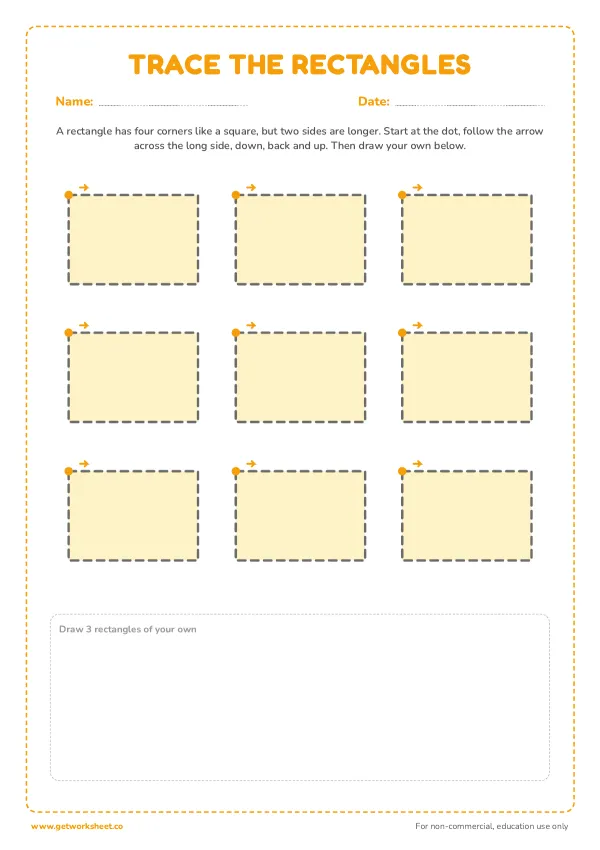 Trace 9 rectangles: the long square
How to Use These Worksheets
Print at 100% on A4 or US Letter. Do circles first if your child has not traced them yet; squares are the harder shape.
- Age 3 to 4: sheets 1 to 3. Plain squares, then robots and the building of windows. Say the four sides out loud together: “across, down, back, up”.
- Age 4 to 5: sheets 4 to 6. Large squares with a start dot and arrow, sixteen small squares, then big to small. The small squares are where corners get rounded; slow down rather than push on.
- Ready to draw: sheets 7 and 8. Dot-to-dot squares remove most of the guide, and the everyday objects sheet turns each square into a window, gift box, dice, picture frame, cracker or tile to color.
- Lift the pencil at corners. For the first few sheets, lifting at each corner makes the stop deliberate. Later the pencil can stay down.
- Use the drawing box. Three squares of your own at the bottom of each new sheet. Four straight sides and four corners is a pass; equal sides come with practice.
Common Mistakes to Watch For
- Rounded corners: the hand never stops. Tracing the square in the air with a big arm movement, pausing at each corner, usually fixes it.
- Sides that do not meet: a sign of speed. Ask for one slow line per side.
- Squares that lean into diamonds: the page has rotated. Tape it down or turn it back.
- Calling every rectangle a square: answer with “a square is a special rectangle with equal sides” rather than a correction.
Frequently Asked Questions
What age should a child be able to draw a square?
Copying a square is a typical skill at 4 to 4½, after circles (about 3) and crosses (about 3½). Tracing can start earlier; sheets 1 to 3 suit age 3 upwards.
Why is a square harder to trace than a circle?
A circle is one continuous movement. A square needs four stops and four changes of direction, and the sides must be straight and the same length. That planning is the skill these sheets build.
Where does the child start tracing a square?
Top-left corner, going across first. That is the same starting point as most capital letters, so the habit transfers to writing. The new sheets mark it with a dot and an arrow.
I was looking for square numbers, not the shape.
Square numbers (4, 9, 16, 25 ...) are a grade 4 to 6 topic. Search our maths worksheets for square numbers; a dedicated set is on its way.
Are the worksheets free for classroom use?
Yes. Print as many as you need for your own class or family. They may not be resold or reposted.
More Shape Tracing Practice
Squares pair naturally with rectangle tracing worksheets. Go back to circle tracing for the easier curve, on to triangle tracing for sharper corners, and to oval tracing for a stretched curve. The number tracing worksheets 1 to 20 use the same stop-and-turn control.
Free library
Related collections
Free oval tracing worksheets
Free rectangle tracing worksheets
Free number tracing worksheets (1-20)
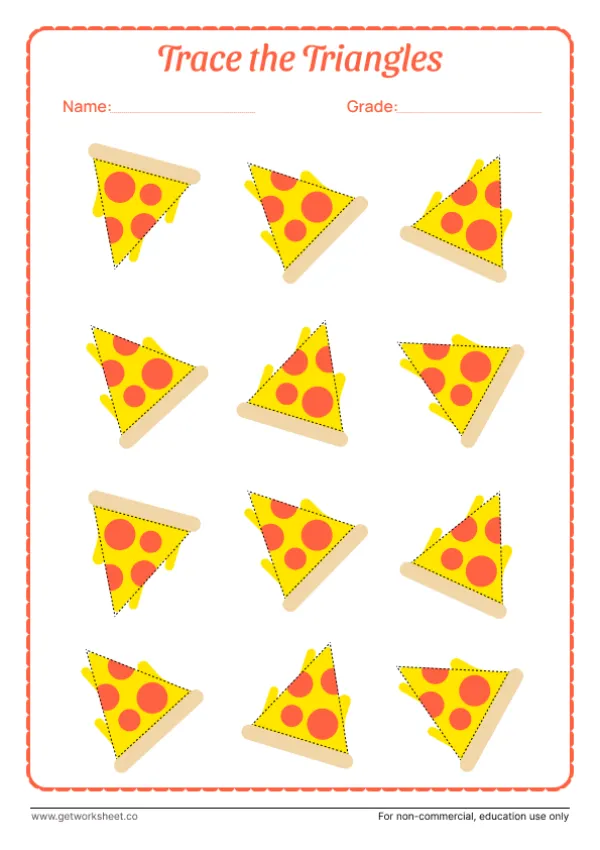
Free triangle tracing worksheets
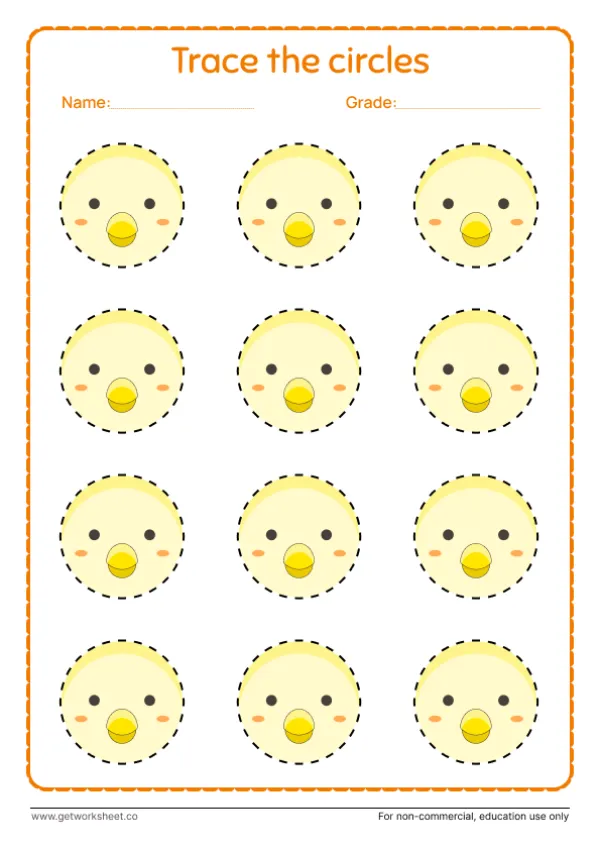
Free circle tracing worksheets
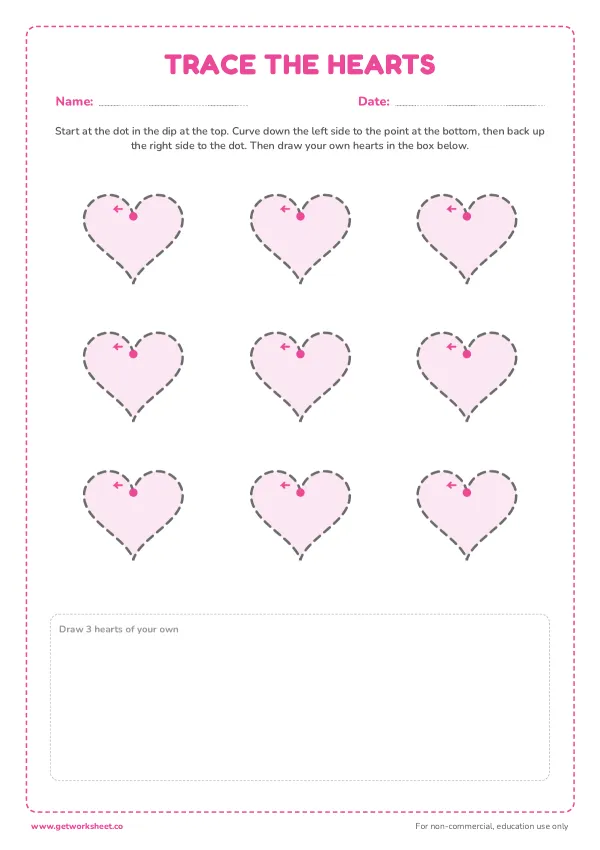
Free heart tracing worksheets
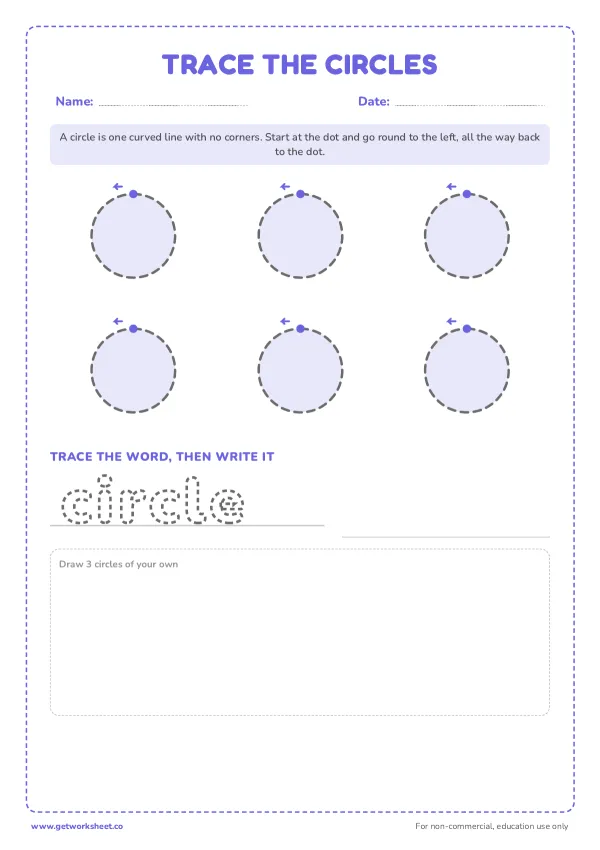
Free shape tracing worksheets
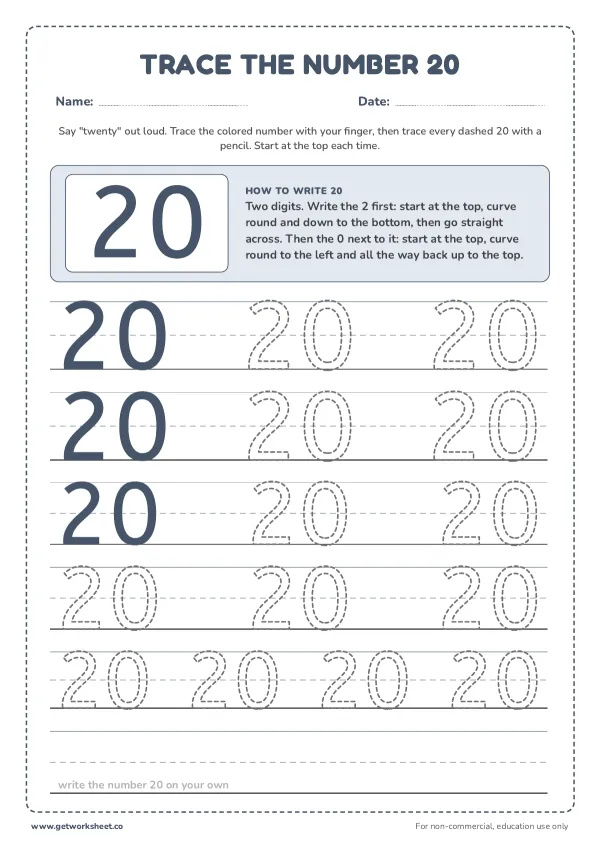
Free number 20 tracing worksheets
More worksheets
- Free number 19 tracing worksheets
- Free number 18 tracing worksheets
- Free number 17 tracing worksheets
- Free number 16 tracing worksheets
- Free number 15 tracing worksheets
- Free number 14 tracing worksheets
- Free number 13 tracing worksheets
- Free number 12 tracing worksheets
- Free number 11 tracing worksheets
- Free number 10 tracing worksheets
- Free number 9 tracing worksheets
- Free number 8 tracing worksheets