Free phonics worksheets
Free printable phonics worksheets with answer keys. Practice letter sounds, blends, digraphs, and word families. PDF download for grades K-2.
Phonics worksheets help children connect letters to the sounds they make — the fundamental skill behind reading. At this level, kids move from recognizing individual letter sounds to blending them into words. A child who knows that "c" says /k/, "a" says /æ/, and "t" says /t/ can blend those sounds into "cat." These worksheets provide the repetitive practice that makes this blending automatic.
What Students Will Practice
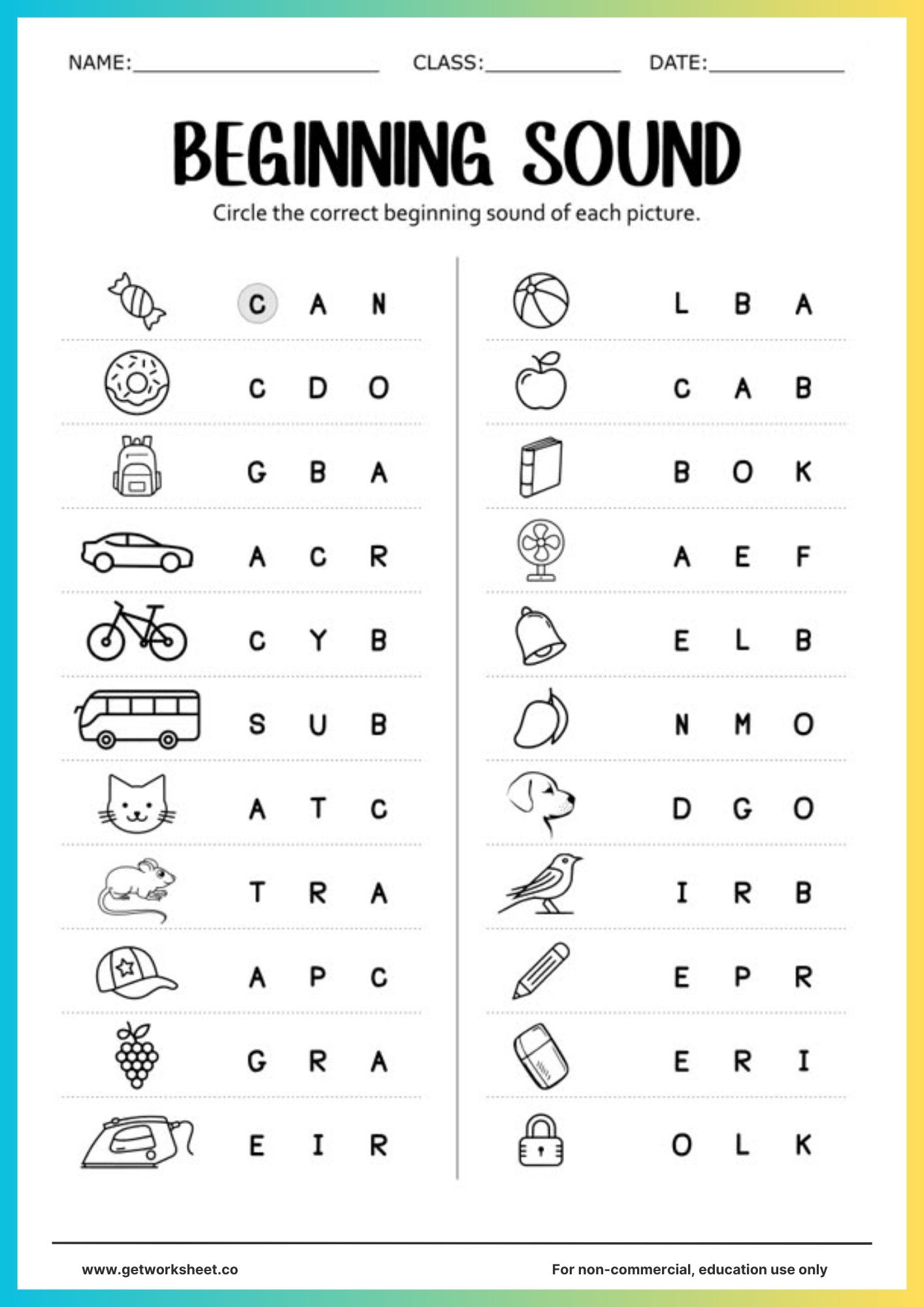
- Matching letters to their sounds (e.g., circling the picture that starts with the "b" sound)
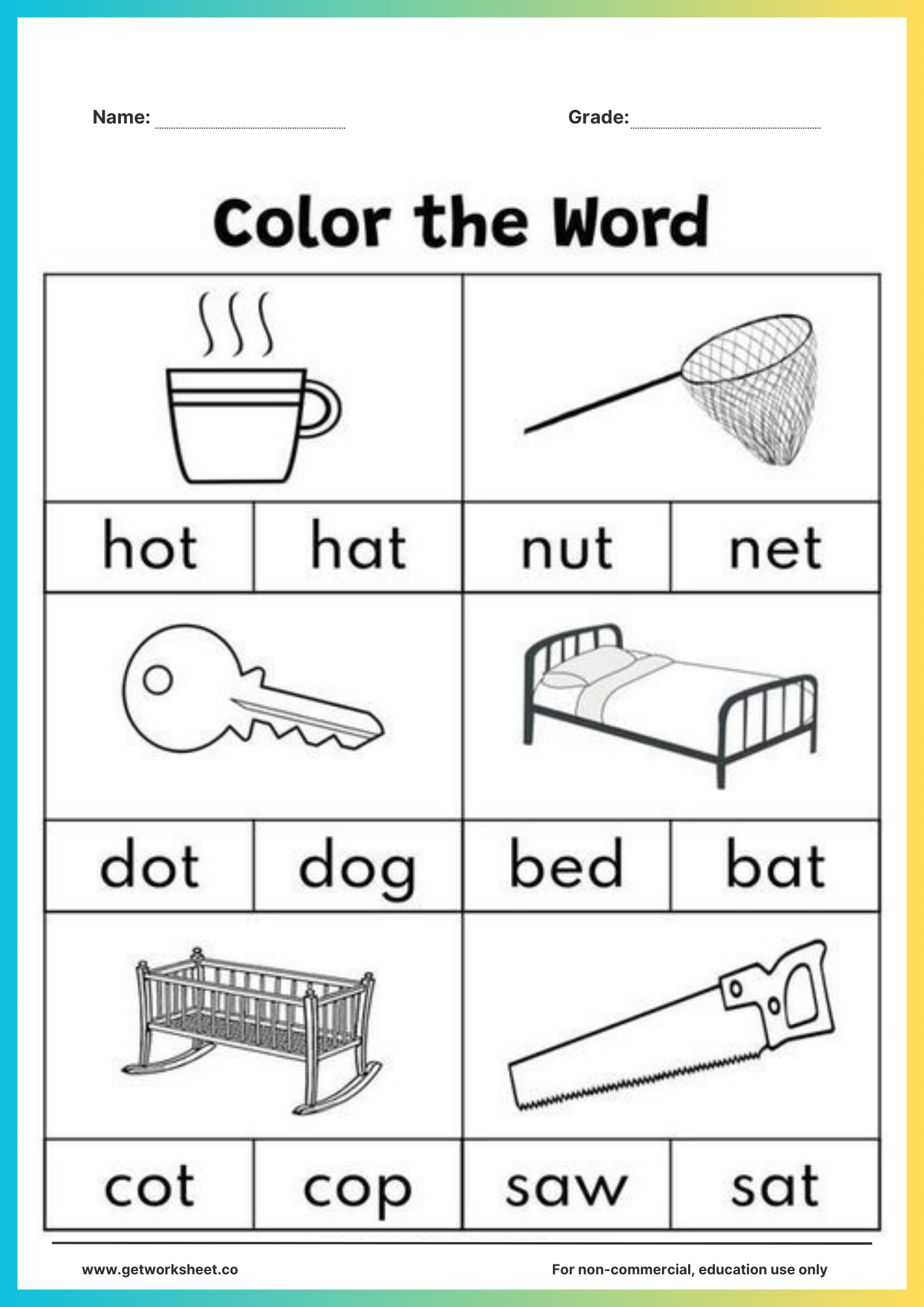
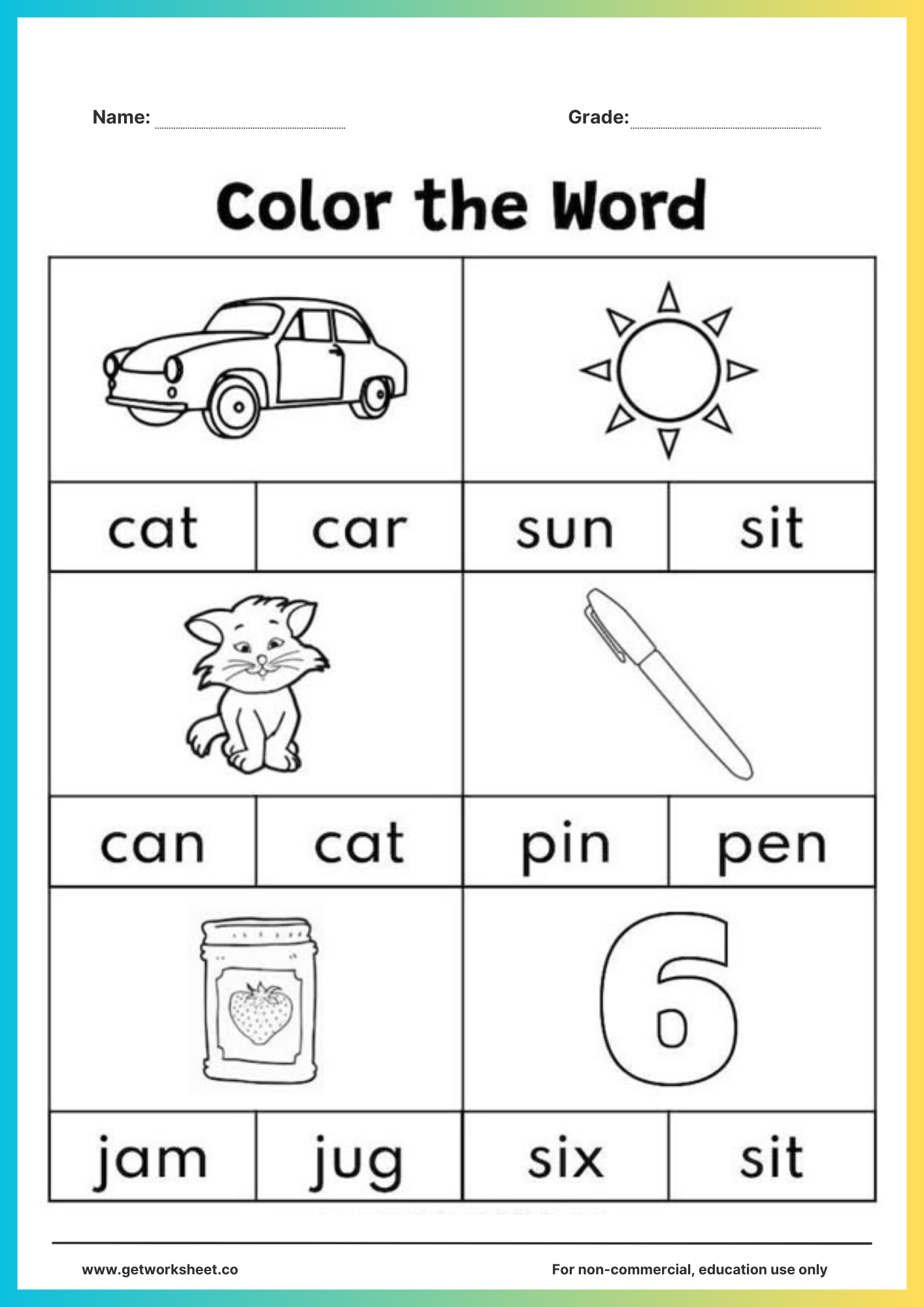
- Blending consonant-vowel-consonant (CVC) words (e.g., sounding out d-o-g, c-u-p, r-e-d)
- Identifying beginning, middle, and ending sounds in spoken words
- Reading and writing common word families (-at, -an, -ig, -op, -ug) to recognize patterns
- Working with consonant blends like bl, cr, st, and tr (e.g., "bl" in "black")
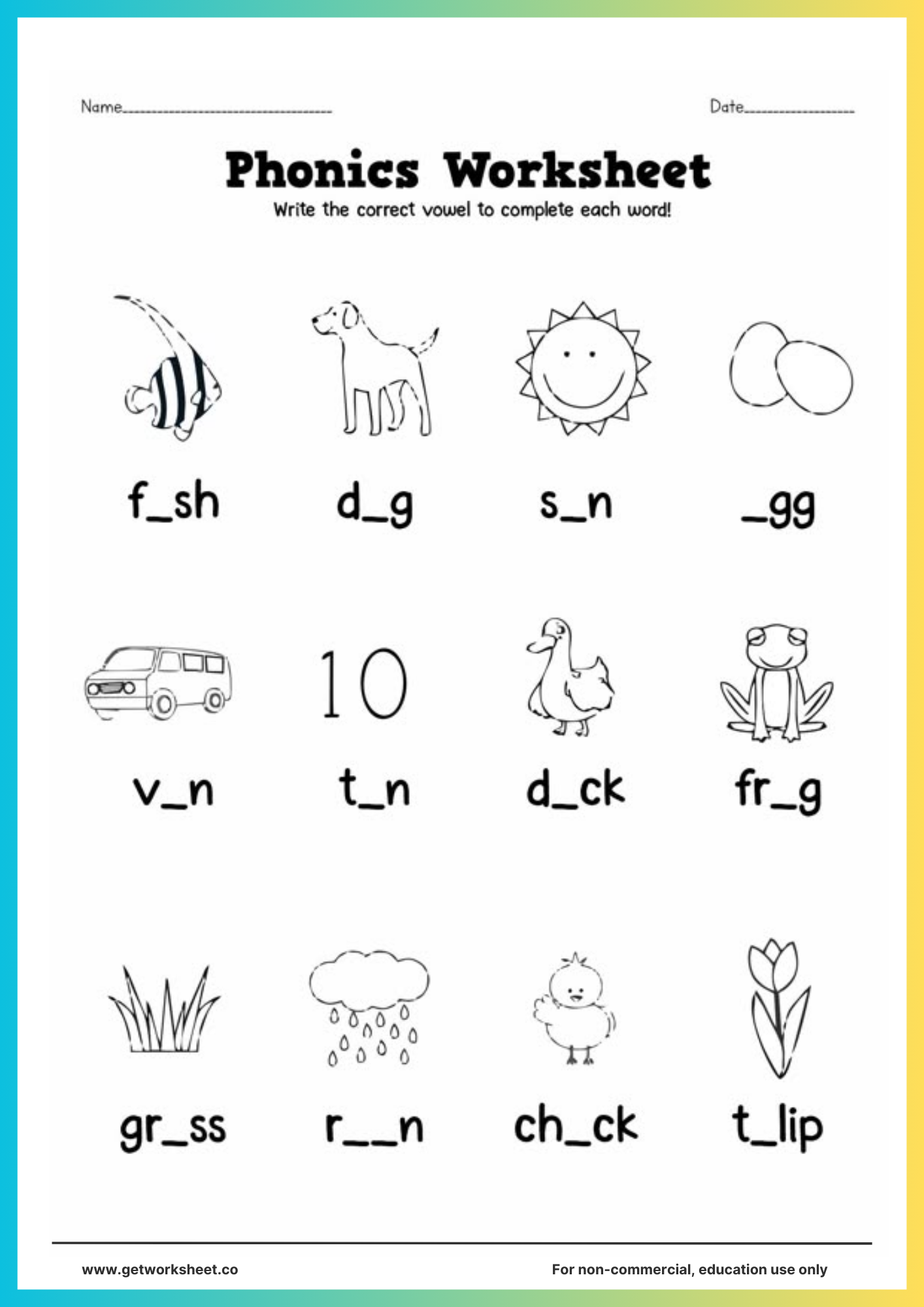
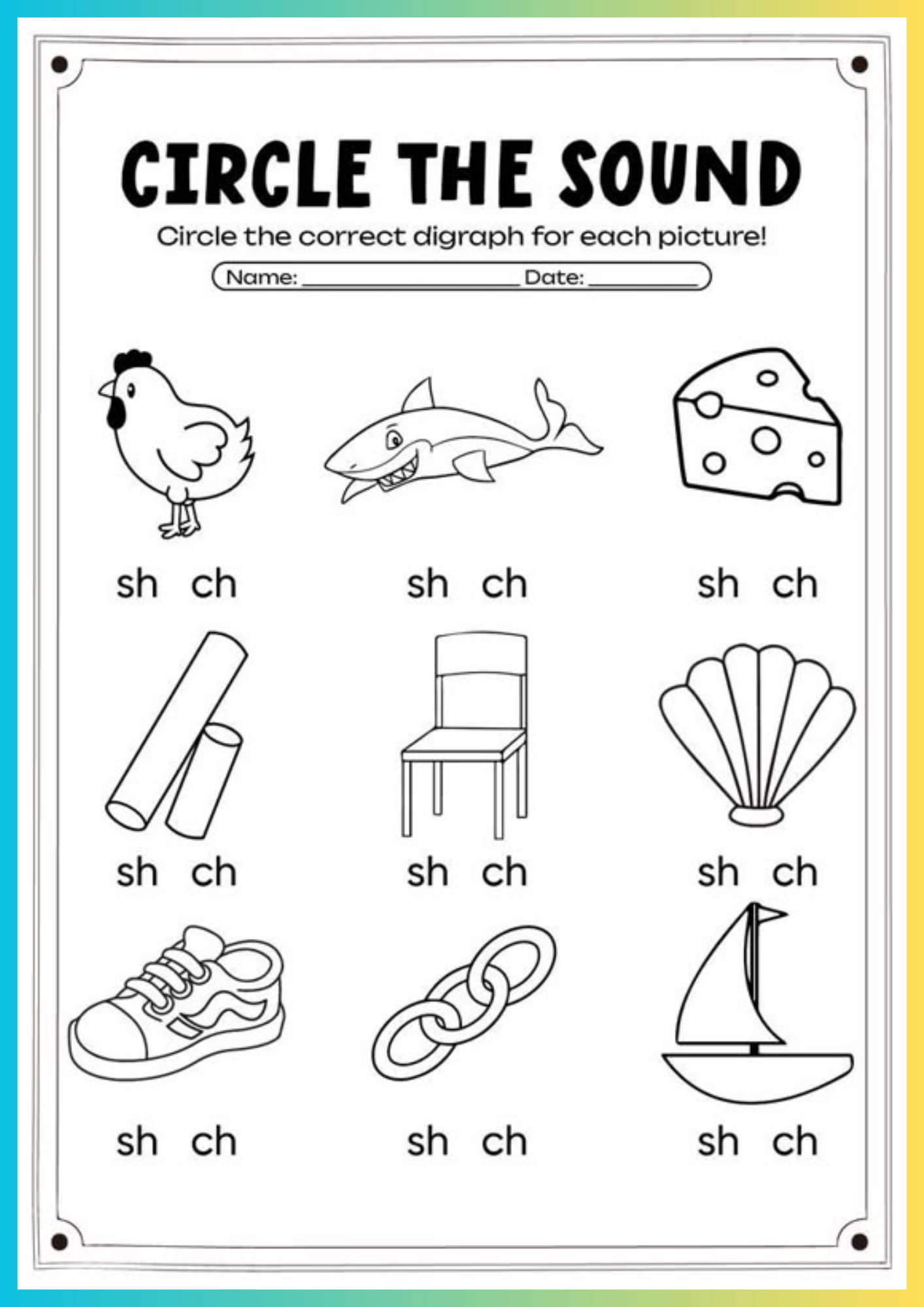
- Recognizing digraphs — two letters that make one sound (e.g., "sh" in ship, "ch" in chip, "th" in thin)
These skills align with kindergarten through 2nd grade reading standards, where students are expected to decode unfamiliar words using letter-sound knowledge.
Phonics worksheets 5
Phonics worksheets 5
Phonics worksheets 4
Phonics worksheets 4
Phonics worksheets 3
Phonics worksheets 3
Phonics worksheets 2
Phonics worksheets 2
Phonics worksheets 1
Phonics worksheets 1
How to Use These Worksheets
Tips for effective phonics practice sessions.
- Say the sounds out loud while your child writes or circles answers. Phonics is an auditory skill — kids need to hear the sounds, not just see the letters. Have them repeat each sound after you.
- Spend no more than 10-15 minutes per session. Young learners lose focus quickly, and short daily practice beats one long weekly session. Consistency matters more than duration.
- After finishing a worksheet, pick 3-4 words from it and find them in a real book. Showing kids that the sounds they practiced appear in actual stories connects the skill to its purpose.
- If your child struggles with a particular sound, isolate it. Spend a whole session just on that one sound with multiple examples before mixing it back in with others.
Common Mistakes to Watch For
- Confusing "b" and "d" — this is extremely common in K-1. The letters look nearly identical to young learners. Teach the "bed" trick: make two fists with thumbs up, and they form a bed shape — the left fist is "b", the right is "d".
- Guessing words from the first letter instead of sounding them out. A child sees a picture of a dog and the word "dig" and says "dog" because it starts with "d". Cover the picture and have them sound out each letter.
- Skipping the middle vowel sound when blending. Kids often say the first and last sounds but mumble the middle: "c...t" instead of "c-a-t". Emphasize the vowel by stretching it: "caaaaat."
- Mixing up short vowel sounds, especially "e" and "i" (saying "pin" for "pen" or "bed" for "bid"). Practice minimal pairs side by side so kids hear the difference clearly.
Frequently Asked Questions
What order should I teach phonics sounds in?
Start with the most common consonants (s, t, n, m, p) and short vowels (a, i, o). This lets kids form real words quickly (sat, mat, sit, pin). Save less common letters (q, x, z) and long vowel patterns for later.
My child knows the alphabet song but cannot sound out words. Is that normal?
Yes, very normal. Knowing letter names and knowing letter sounds are different skills. Many kids can sing A-B-C but do not know that "A" says /æ/ as in apple. Focus specifically on sounds, not names, during phonics practice.
How do I know when my child is ready to move past basic phonics?
When they can consistently blend CVC words without hesitation (reading "hat," "pin," "cup" smoothly), they are ready for consonant blends, digraphs, and eventually long vowel patterns. Do not rush — a solid CVC foundation prevents problems later.
Should I correct every mistake during phonics practice?
Correct gently and immediately so the wrong sound does not become a habit. But keep the tone positive — say "close! That letter says /t/, not /d/ — try again" rather than just "wrong." Kids need to feel safe making mistakes in order to learn.
After mastering basic phonics, children progress to reading fluency practice — reading connected text smoothly and with expression, which builds comprehension skills.