Free winter coloring pages
Free winter coloring pages for kids. Snowflakes, snowmen, ice skating, and cozy winter scenes — printable PDF coloring sheets for all ages.
Winter coloring pages capture the magic of the cold season — gently falling snow, cheerful snowmen, ice skating on frozen ponds, steaming hot cocoa, and bundled-up children playing outside. These pages give children a creative outlet during the indoor months while celebrating everything that makes winter special.
What Students Will Practice
- Developing fine motor control through coloring detailed winter scenes with snowflakes, icicles, and textured surfaces
- Exploring a cool color palette — blues, purples, silvers, and whites — and learning how to make white objects stand out on white paper
- Building concentration during calming, screen-free indoor activities
- Strengthening hand muscles and pencil grip through sustained coloring sessions
- Practicing creative problem-solving (how do you color snow? shadows on white? ice vs. water?)
- Learning about winter weather, animals in winter, and seasonal activities through themed imagery
Winter coloring pages support fine motor development and creative expression while providing a calming indoor activity during the cold months when outdoor play time may be limited.
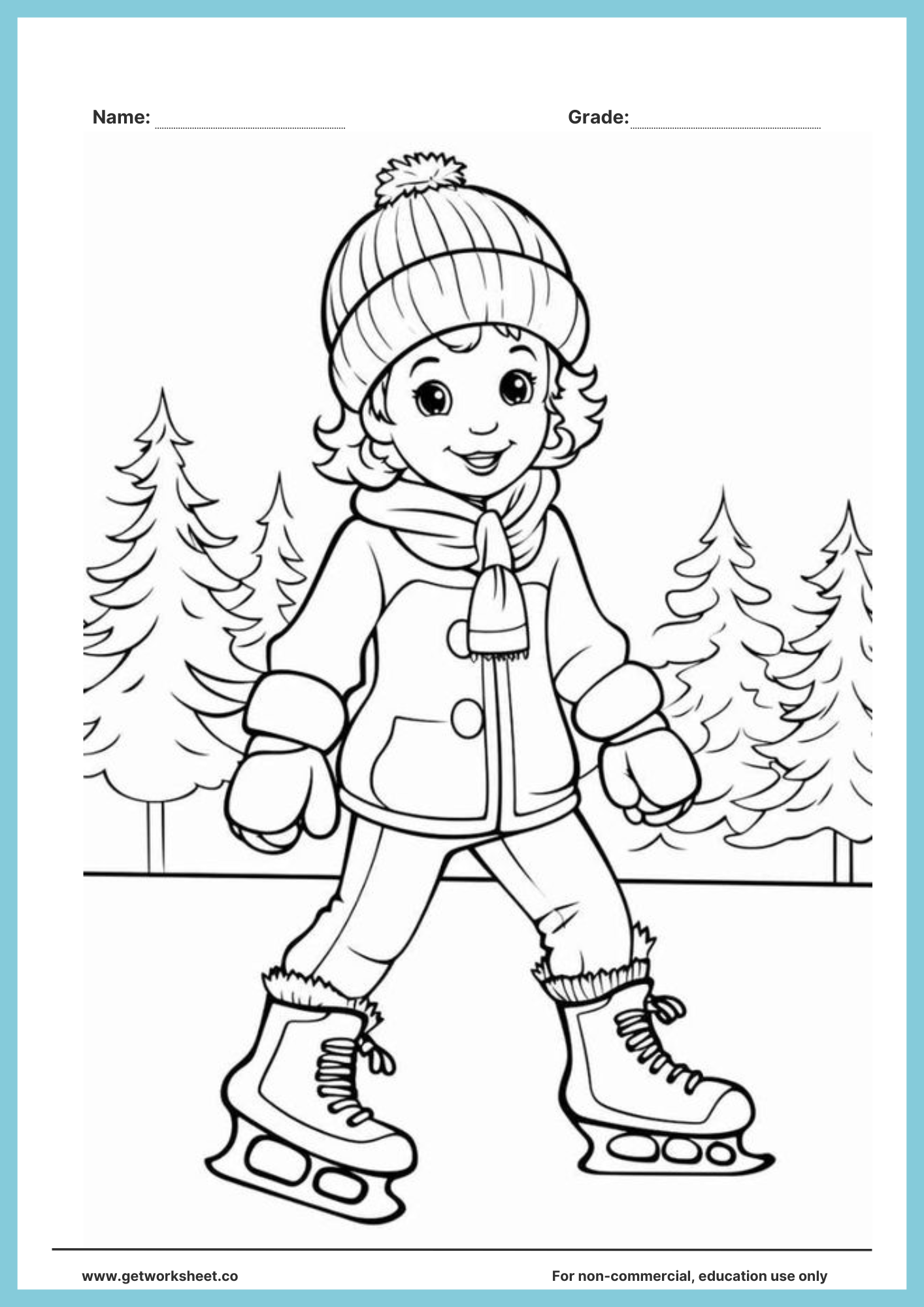
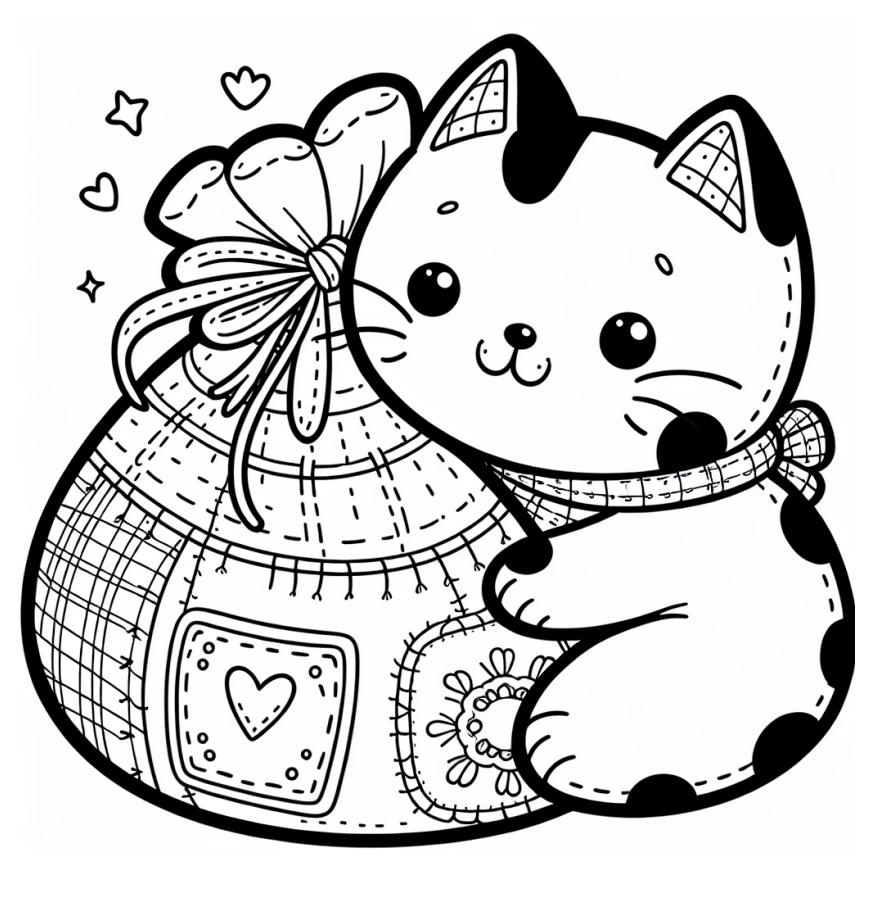
Winter coloring page printable 5
Winter coloring page printable 5
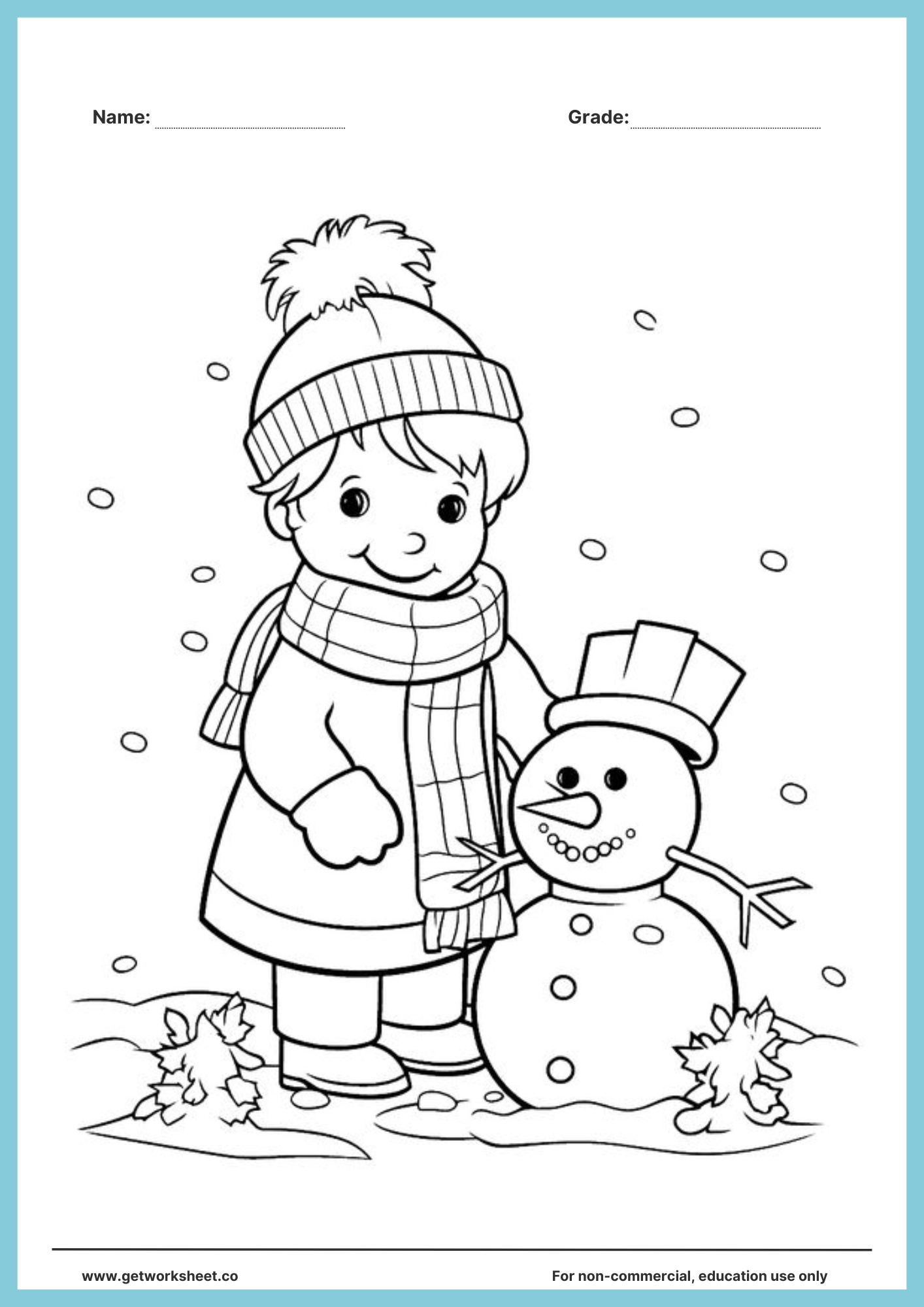
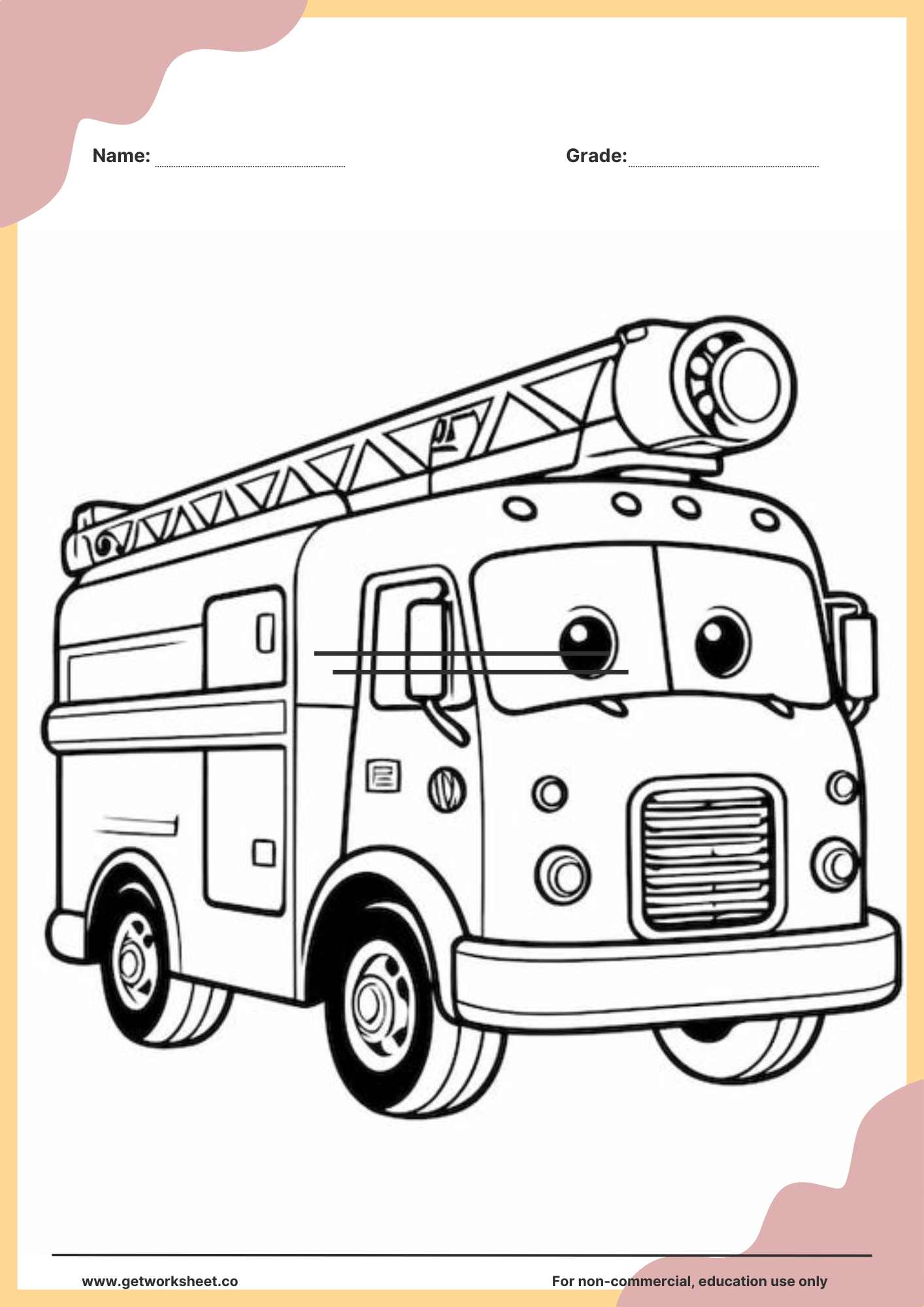
Winter coloring page printable 4
Winter coloring page printable 4
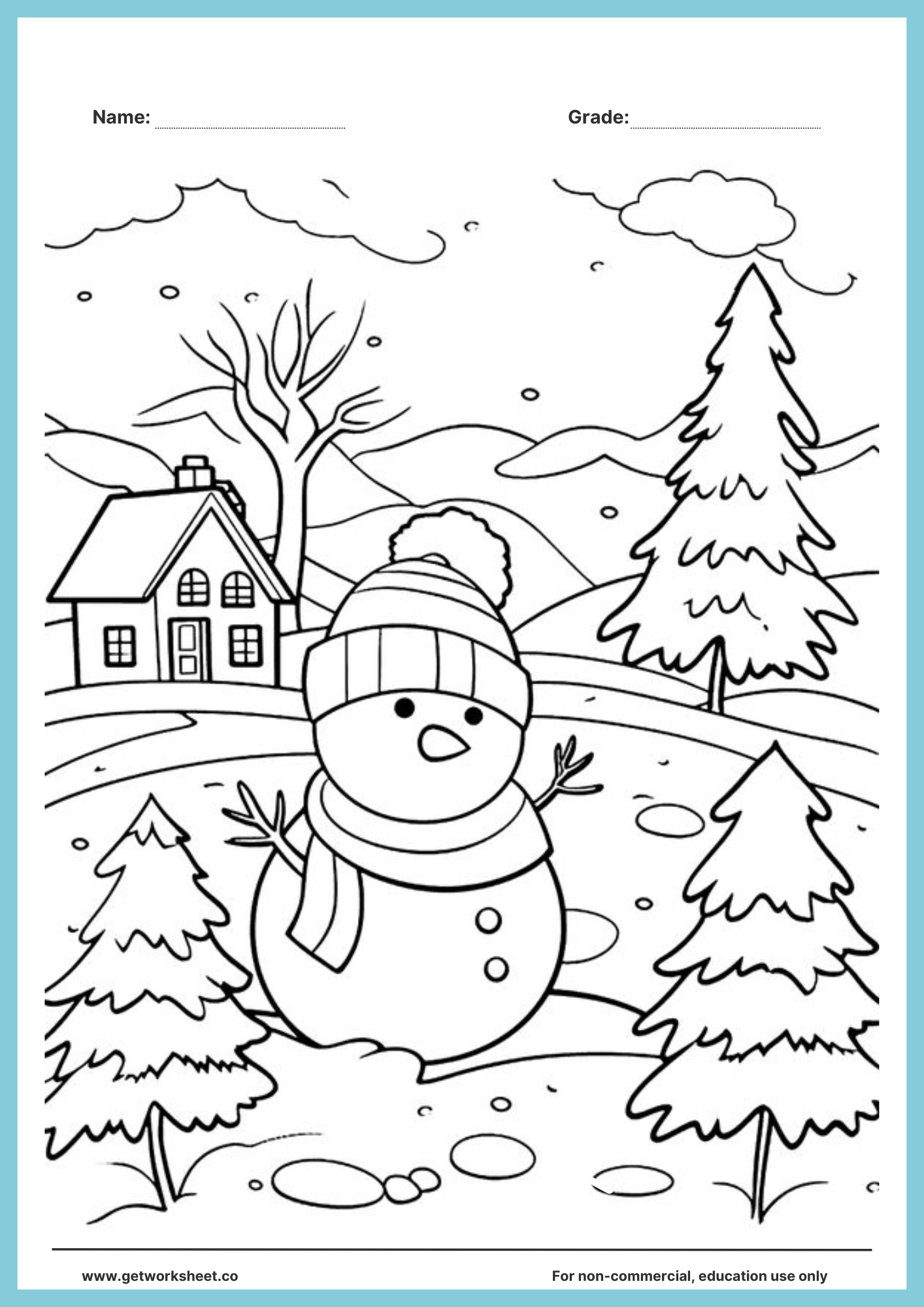
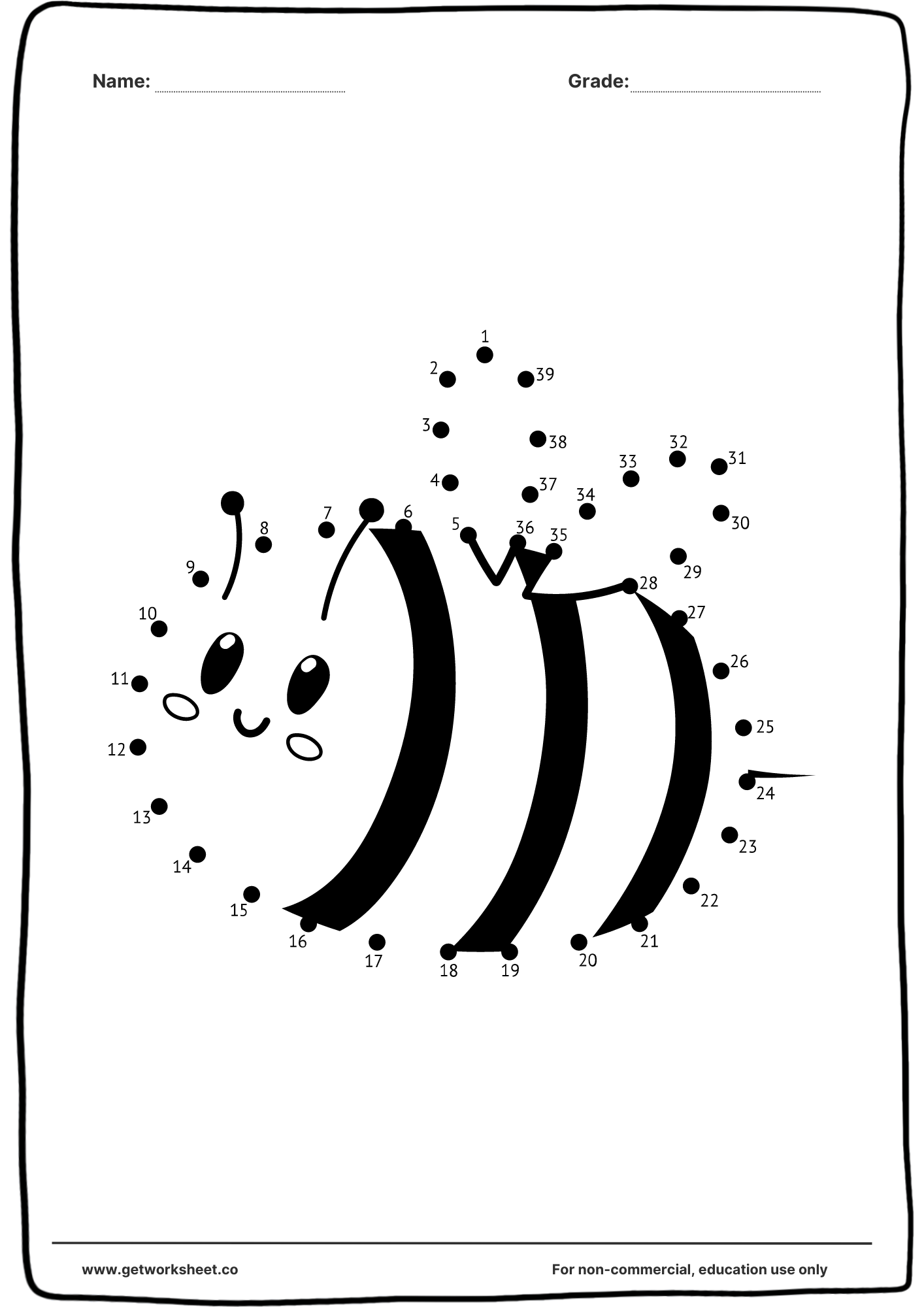
Winter coloring page printable 3
Winter coloring page printable 3
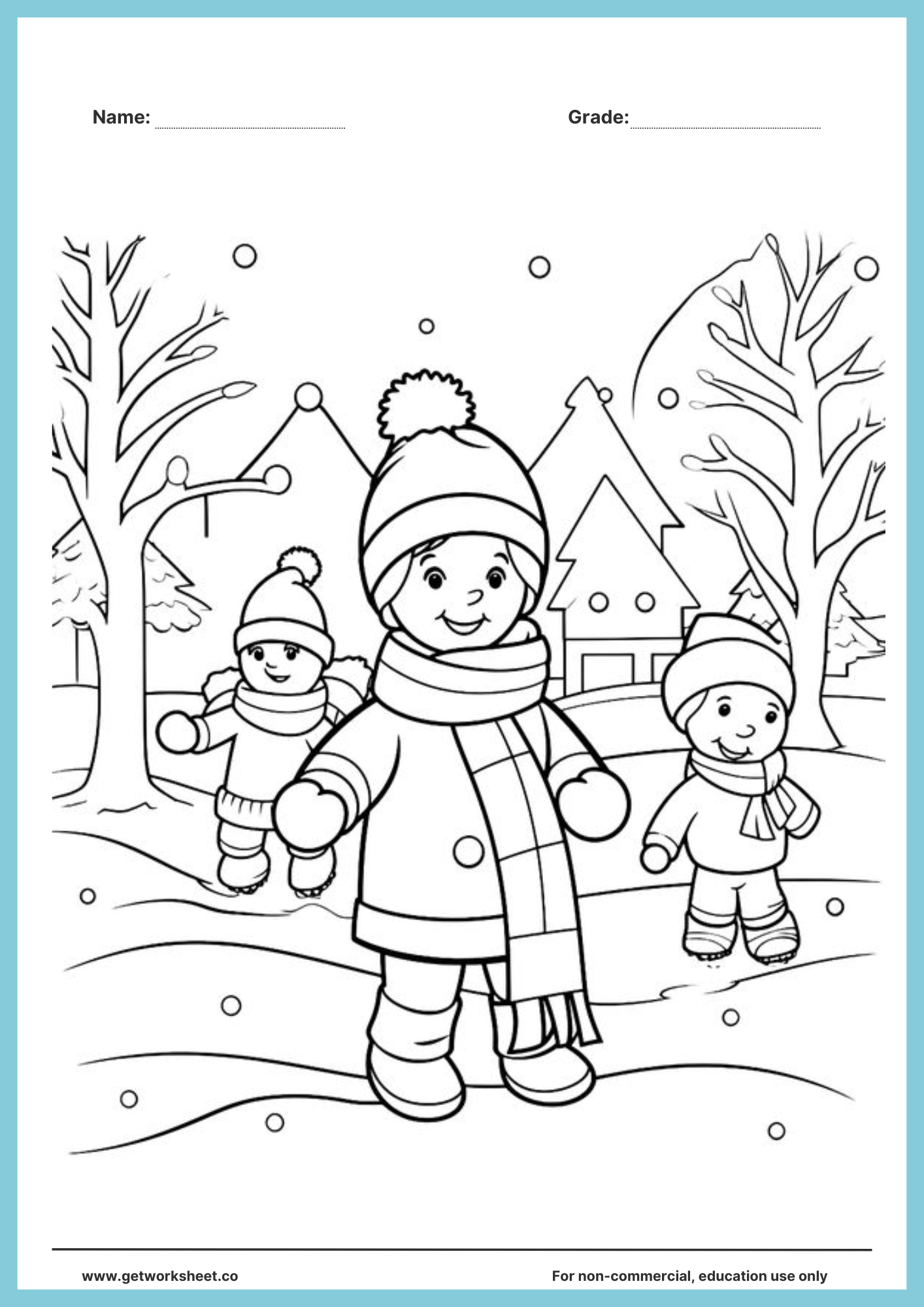
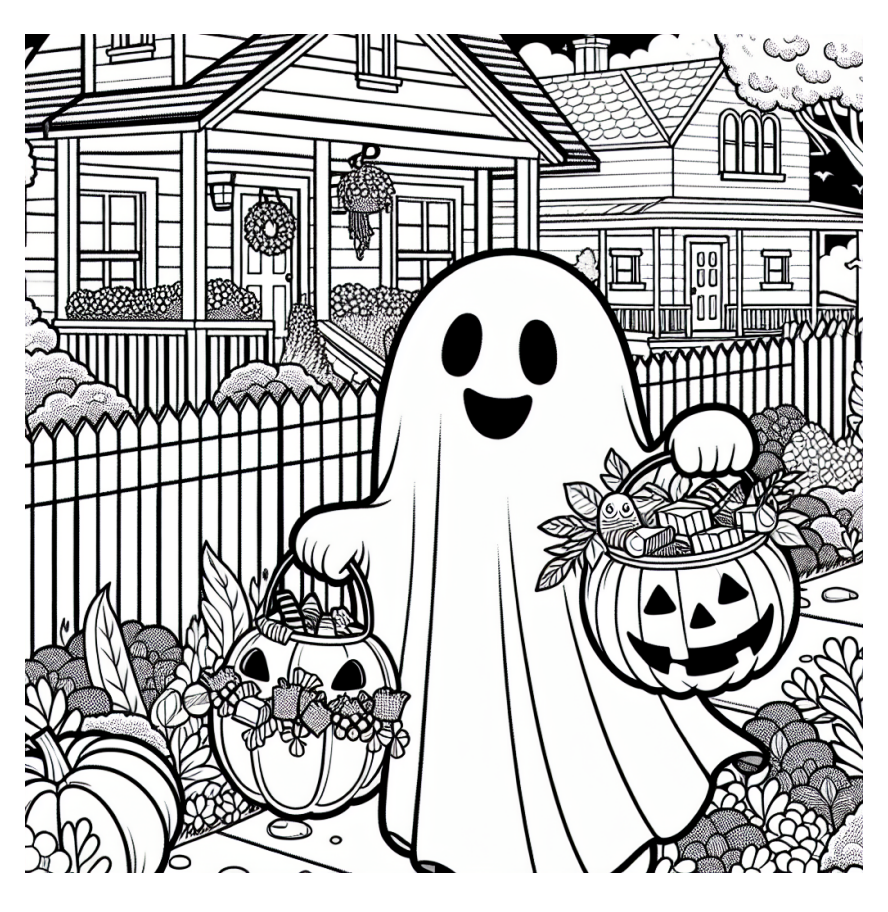
Winter coloring page printable 2
Winter coloring page printable 2
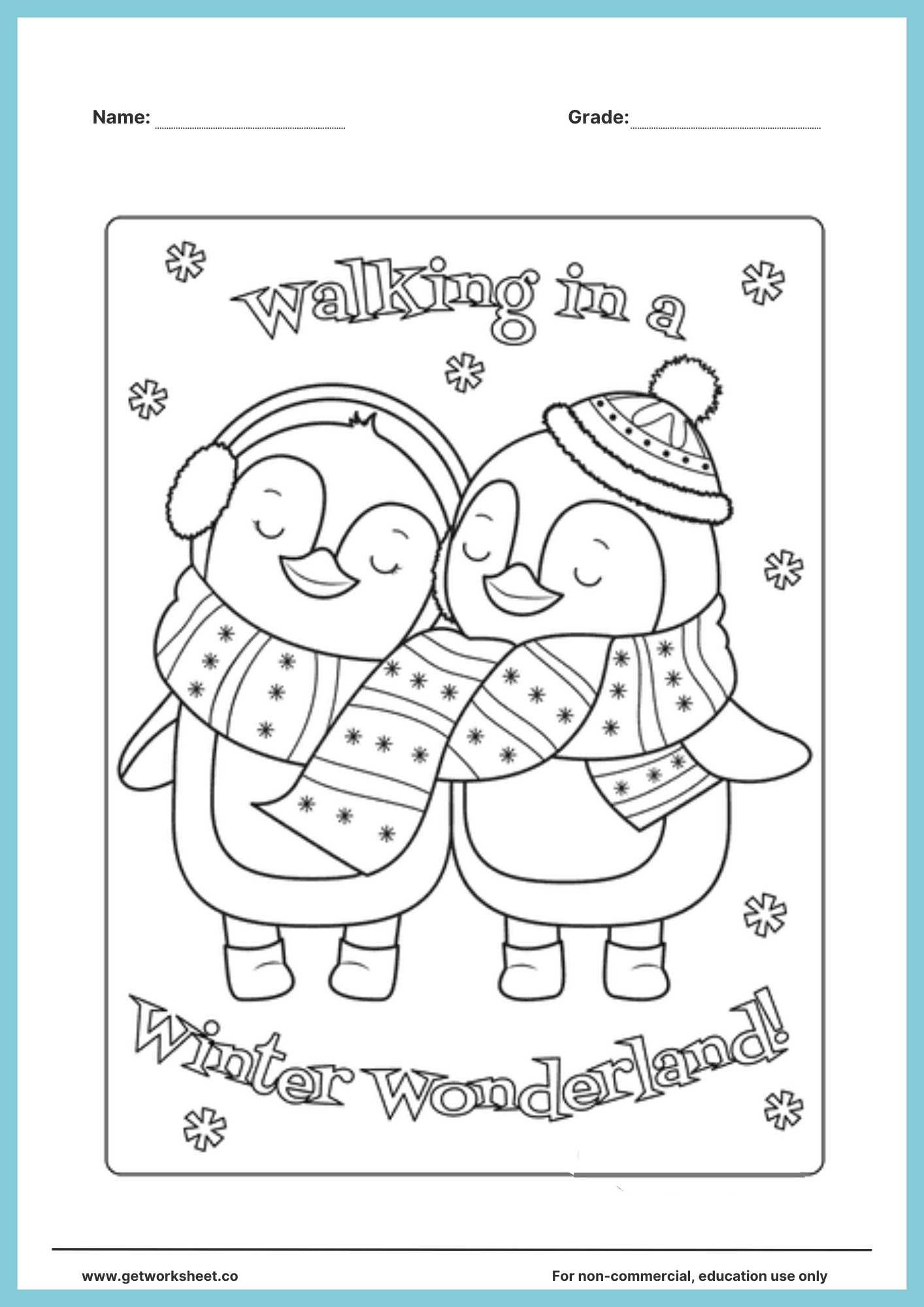
Winter coloring page printable 1
Winter coloring page printable 1
How to Use These Coloring Pages
Winter themes offer unique artistic challenges that other seasons don't.
- Talk about the "color of snow" challenge: snow isn't just white — it has blue shadows, pink highlights at sunset, and gray tones on cloudy days. Encourage your child to use light blue, lavender, and pale pink instead of leaving snow areas blank. This teaches observation skills and introduces the concept of color in shadows.
- Pair winter coloring with seasonal learning: "Do you know why snowflakes have six sides?" "Where do birds go in winter?" "What makes ice slippery?" Simple science conversations during coloring time add educational value without interrupting the creative flow.
- Use these pages during school winter breaks or snow days as a structured indoor activity. Set up a cozy coloring station with hot cocoa, winter music, and a variety of coloring tools for a screen-free afternoon.
- Try different media for winter effects: white crayon on blue paper for snowflakes, glitter glue for ice, cotton ball gluing for fluffy snow. Mixed media turns a simple coloring page into a winter art project.
Common Mistakes to Watch For
- Leaving snow areas completely blank: Children often skip snow sections because "snow is white and the paper is white." Teach them that even white objects need some color to show shape and depth. Light blue or pale gray in shadow areas brings snow to life.
- Using summer colors for winter scenes: Bright yellows and greens can feel out of place in a winter scene. Suggest cool colors (blues, purples, teals) and muted tones for a wintery feel, while keeping warm accents for scarves, hats, and mittens.
- Rushing through detailed snowflakes: Symmetrical snowflake patterns require patience and precision. If your child finds them frustrating, suggest starting from the center and working outward, or simply coloring the background around the snowflake and leaving it white.
- Only coloring in one shade of blue: A winter scene colored entirely in one shade of blue looks flat. Introduce variety: dark blue for the sky, medium blue for shadows, light blue for ice, and white for snow highlights. Multiple blues create depth and visual interest.
Frequently Asked Questions
What ages are winter coloring pages for?
Simple snowman and mitten outlines work for ages 2-4. Detailed winter scenes with landscapes, animals, and weather elements suit ages 4-7. Intricate snowflake patterns and detailed winter village scenes challenge ages 7 and up.
Can I use winter coloring pages in a classroom?
Yes. They work well as seasonal art activities, quiet time activities during indoor recess on cold days, or paired with winter science and weather units. They're also inclusive — winter weather is a secular theme that works for all students regardless of which holidays they celebrate.
How can I make winter coloring more educational?
Connect the images to science: discuss why water freezes, how animals survive winter (hibernation, migration), why we see our breath in cold air, or how snowflakes form. Connect to literacy by reading a winter-themed book before or after coloring. The themed context makes both activities richer.
What coloring tools work best for winter scenes?
Colored pencils are ideal for the subtle shading that winter scenes benefit from. White colored pencils or crayons on colored paper create striking snowflake effects. Silver and blue metallic crayons add a sparkly, icy touch. For younger kids, standard crayons in cool tones work perfectly well.
After winter coloring pages, children can explore other seasonal art themes — spring flowers, summer beach scenes, and autumn leaves — developing their color palette awareness and artistic skills across all four seasons.