Free copy the picture worksheets
Free printable copy the picture worksheets for kids. Practice drawing, symmetry, and visual-spatial skills. Download PDF grid drawing sheets for ages 4-10.
Copy the picture worksheets show a simple drawing on one side of a grid and an empty grid on the other side. The child reproduces the drawing square by square, copying what they see in each cell. This grid method breaks a complex picture into small, manageable pieces — making drawing feel achievable even for kids who say they "cannot draw."
What Students Will Practice
- Reproducing shapes and lines by looking at a model and drawing it in the matching grid square
- Developing visual-spatial awareness — understanding where lines start and end relative to the grid
- Building hand-eye coordination through precise pencil movements within small grid cells
- Practicing symmetry when the picture is mirrored rather than directly copied
- Following a systematic approach — working cell by cell from top-left to bottom-right
Grid drawing supports fine motor development and spatial reasoning skills used in math (coordinate grids), art, and writing. These worksheets work well for children ages 4-10 across different skill levels.
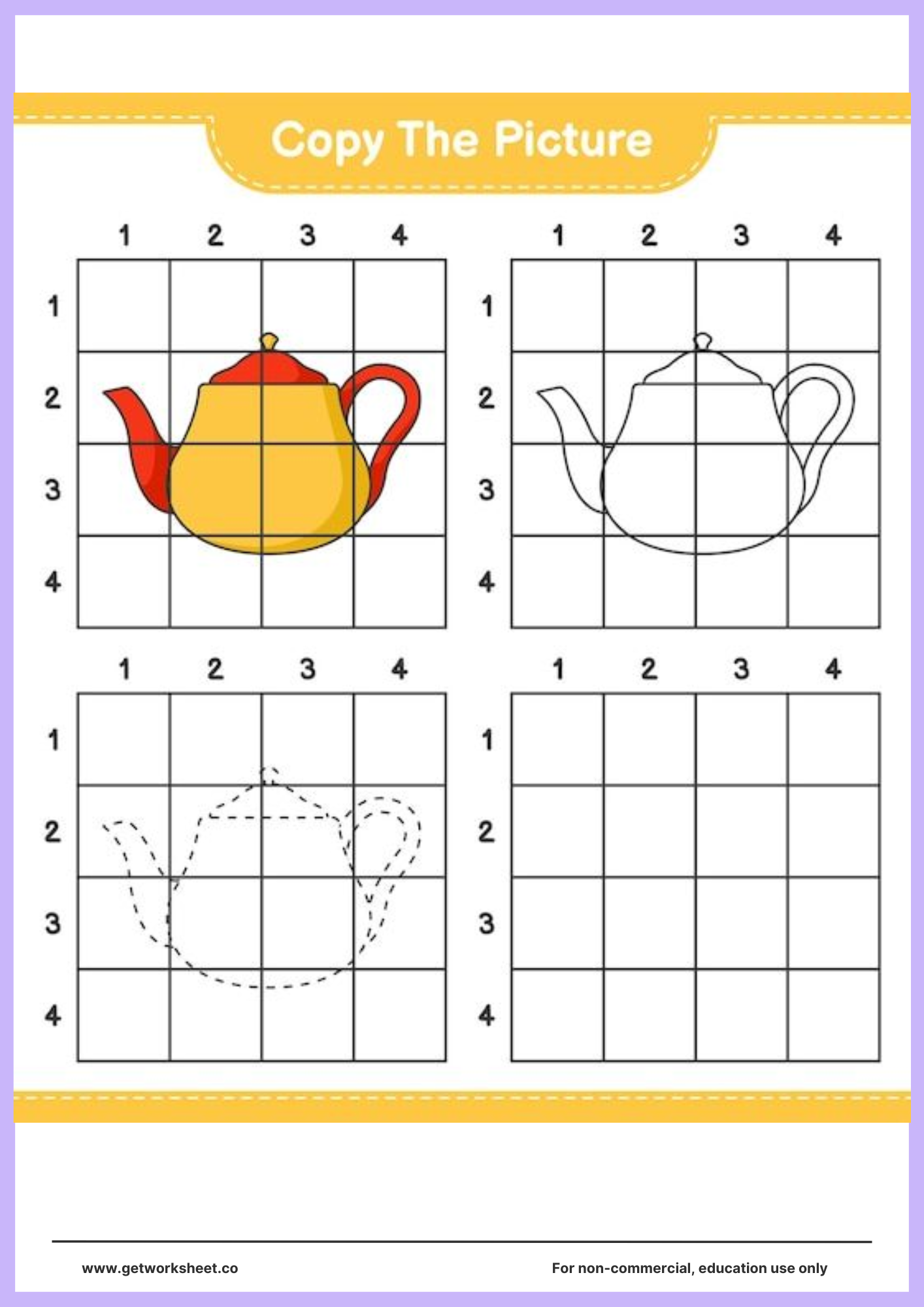
Copy the picture worksheet 5
Copy the picture worksheet 5
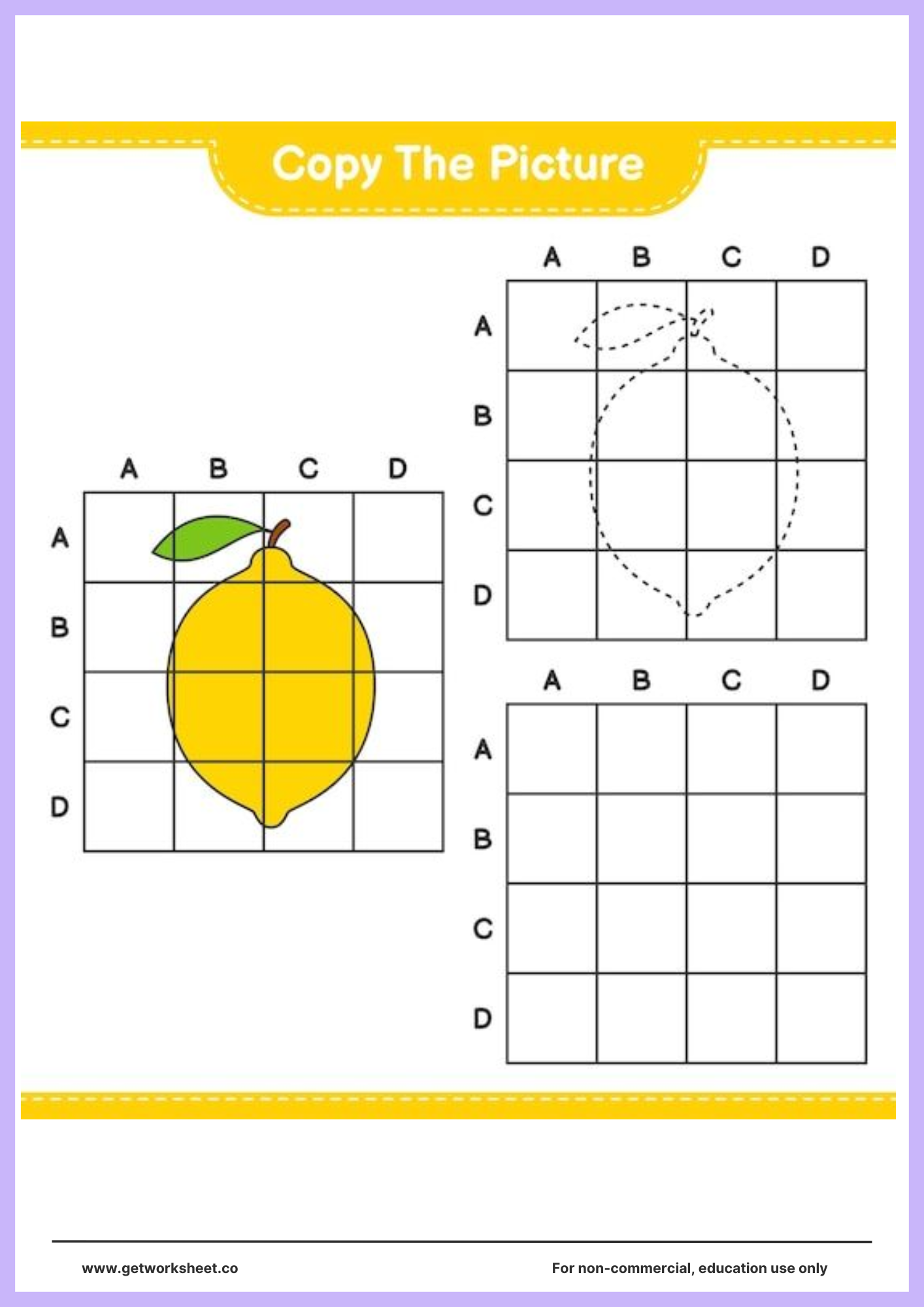
Copy the picture worksheet 4
Copy the picture worksheet 4
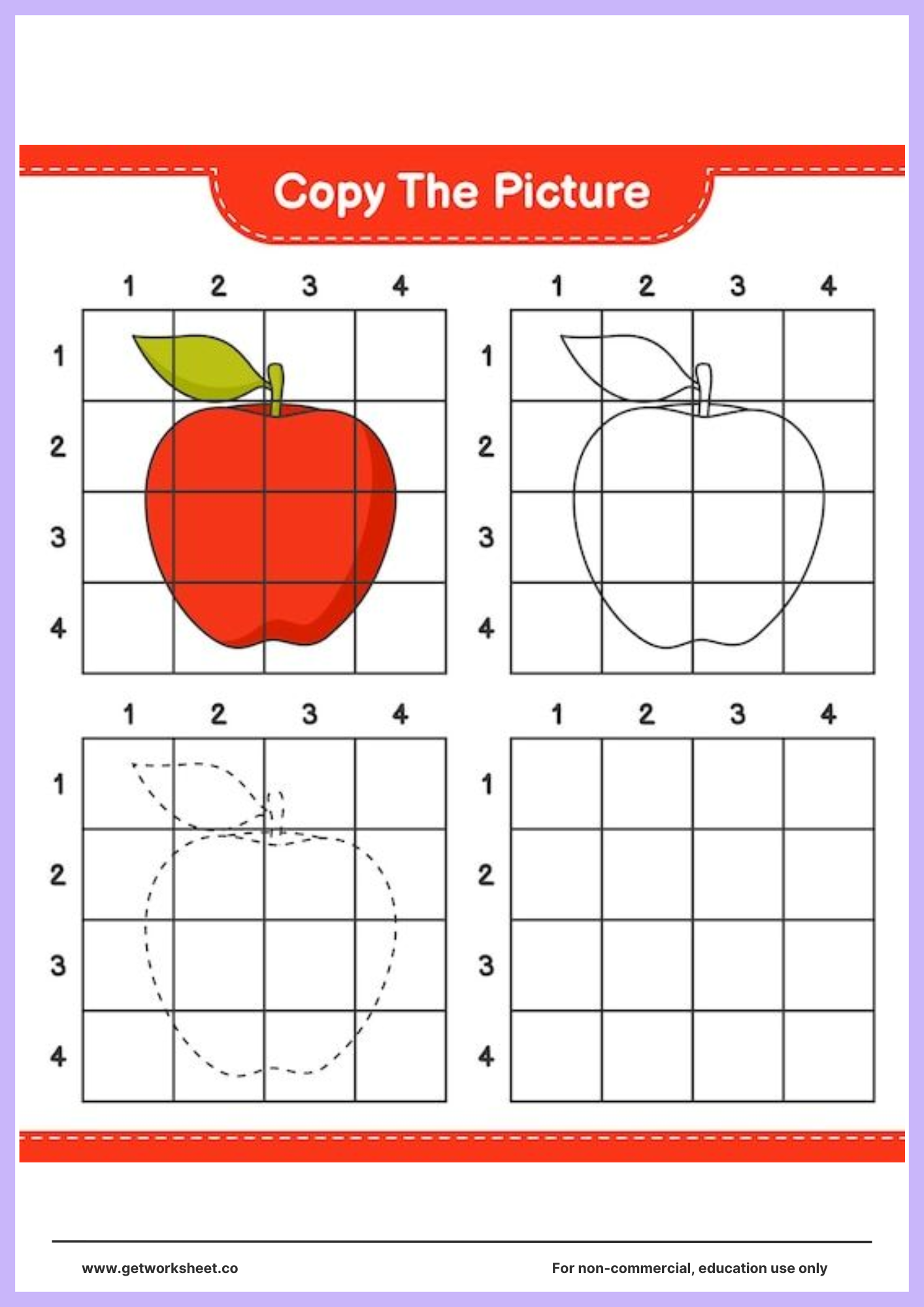
Copy the picture worksheet 3
Copy the picture worksheet 3
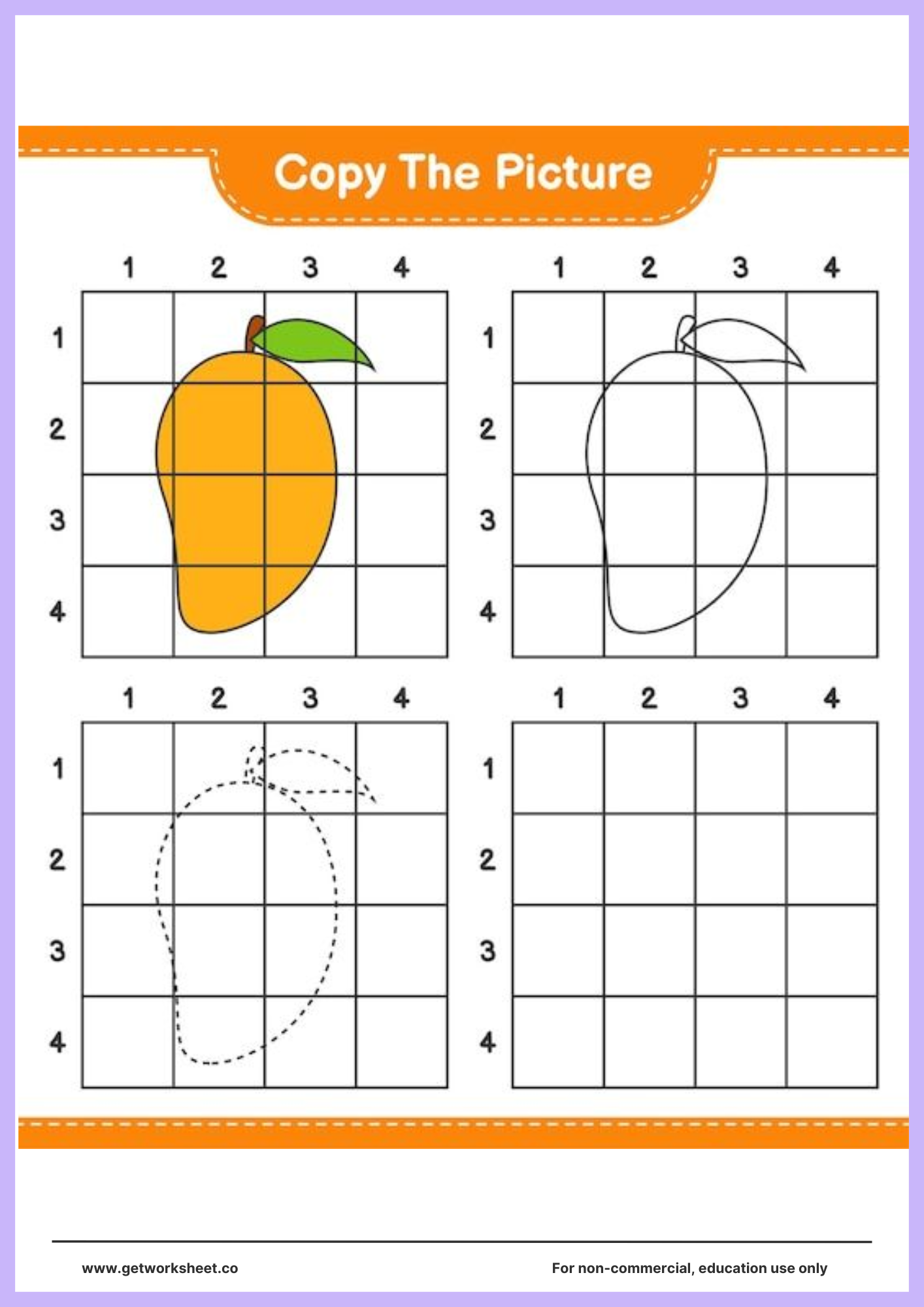
Copy the picture worksheet 2
Copy the picture worksheet 2
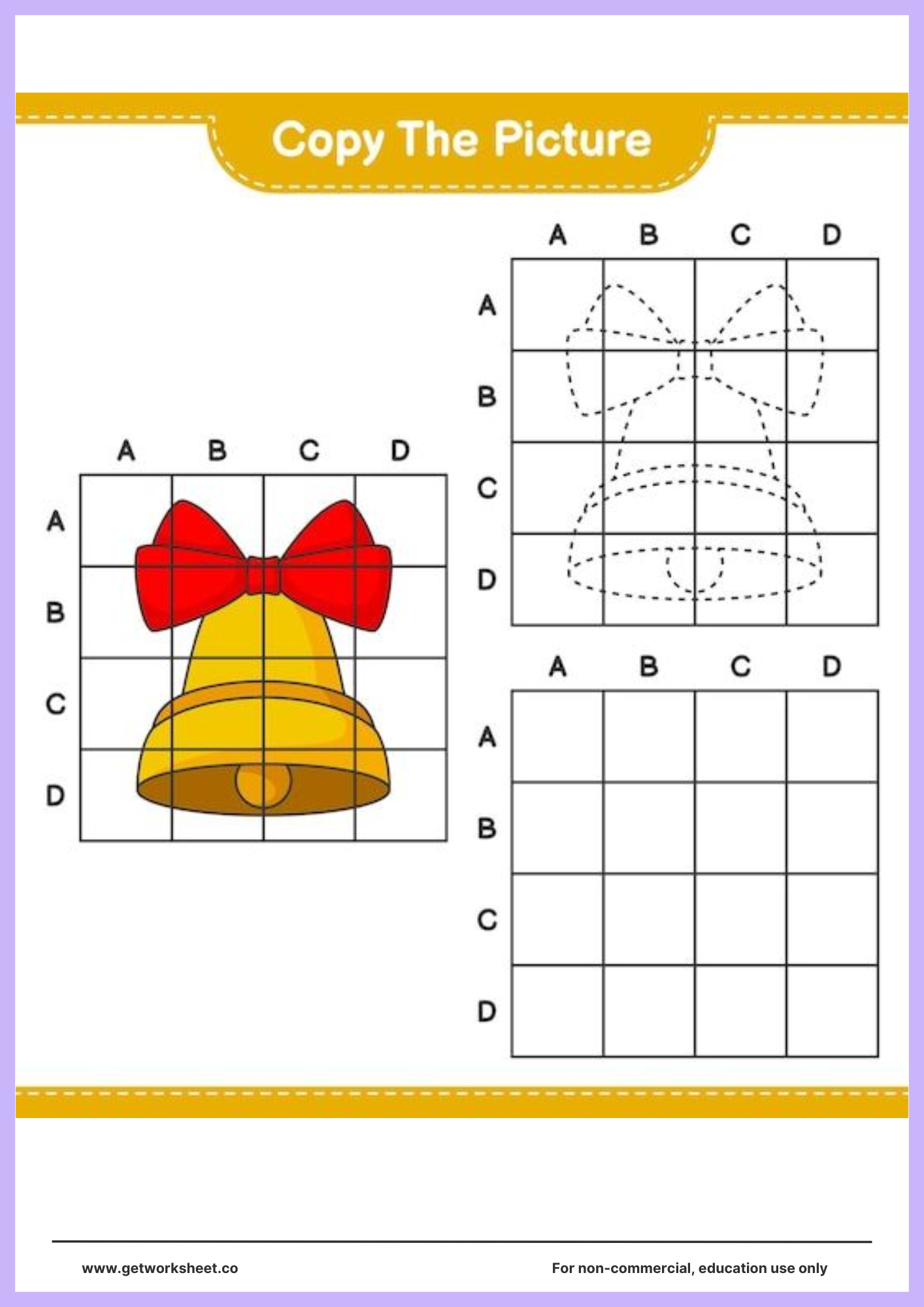
Copy the picture worksheet 1
Copy the picture worksheet 1
How to Use These Worksheets
Tips for getting the best results from grid drawing practice.
- Start by having your child identify what is in each square of the model before drawing anything. "This square has a diagonal line going from the bottom-left to the top-right." Describing what they see in words helps them translate it into pencil marks accurately.
- Use a pencil rather than a marker or pen. Grid drawing involves corrections — kids will need to erase and adjust as they learn to match the model. Pencils allow mistakes to be fixed without frustration.
- Work through the grid systematically — left to right, top to bottom — rather than jumping around to favorite parts. Random jumping leads to misaligned lines and frustration when sections do not connect properly.
Common Mistakes to Watch For
- Drawing in the wrong grid square. Kids sometimes lose track of which row they are on, especially in larger grids. Have them use a finger or ruler to mark their current row on both the model and the empty grid.
- Making lines too short or too long because they are not looking at where the line starts and ends within the square. Encourage them to note the starting point and ending point: "This line starts in the middle of the left side and goes to the top-right corner."
- Trying to draw the whole picture at once instead of one square at a time. Remind them that the grid is there to break the task into tiny pieces. One square at a time, and the full picture appears.
- Getting frustrated when their copy does not look exactly like the original. Praise effort and improvement, not perfection. Point out specific parts they got right: "This curve matches really well!"
Frequently Asked Questions
What grid size should I start with?
Begin with 4x4 or 5x5 grids for younger children (ages 4-6). These have fewer cells and simpler pictures. Move to 8x8 or 10x10 grids for older children (ages 7-10) who are ready for more detail and smaller cells.
My child says they cannot draw. Will these worksheets help?
Yes — that is exactly what grid drawing is for. By breaking a picture into small squares, the task becomes "copy this small line" rather than "draw a whole dog." Kids who struggle with freehand drawing often succeed with grids because the structure gives them a framework.
Can these worksheets improve handwriting?
Indirectly, yes. Grid drawing builds the same fine motor control and spatial awareness needed for forming letters. Kids who practice grid drawing tend to write more neatly because they are better at controlling pencil movements within defined spaces.
How often should my child practice grid drawing?
Two to three times per week is enough to see steady improvement. Each session takes about 15-20 minutes. Daily practice is fine if your child enjoys it, but do not force it — the goal is to build skill without creating resistance to drawing.
After mastering grid copying, children can try freehand drawing with light grid guidelines, gradually reducing the grid support until they can draw simple pictures without any grid at all.